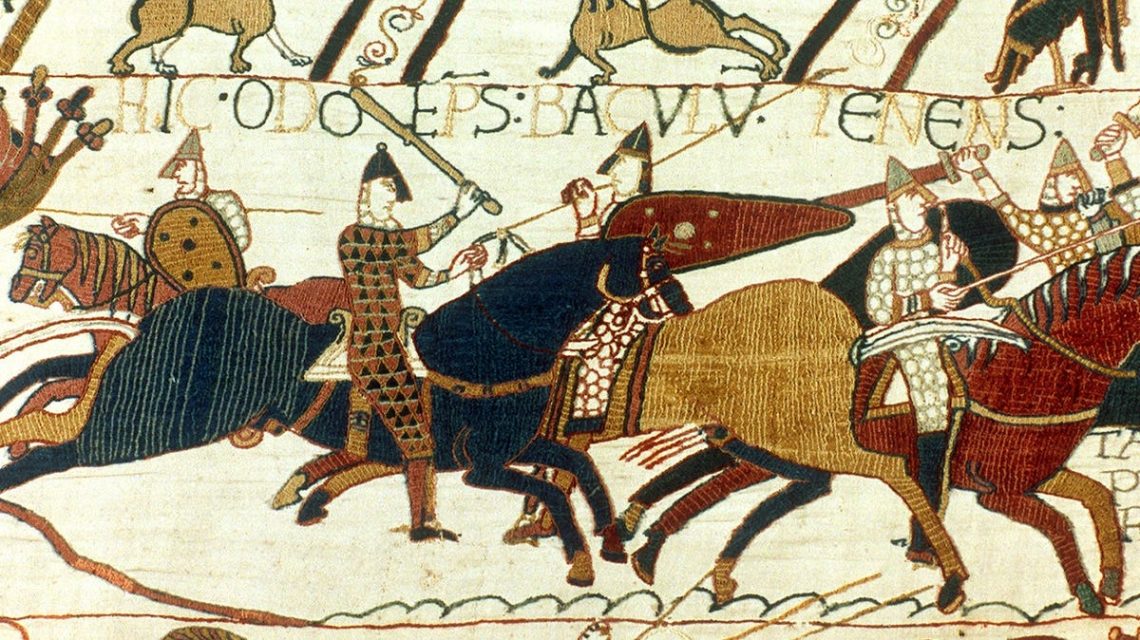
Recent research suggests a lost letter from Pope Alexander II could significantly alter our understanding of a historic battle nearly a millennium old. The University of East Anglia has unveiled research indicating a possible papal involvement in the Norman Conquest of England in 1066.
Professor Tom Licence, while examining historical records, discovered overlooked segments from a lost papal letter. These were preserved in the Vatican archives. The letter implies Pope Alexander II might have supported William the Conqueror’s invasion of England. The reason? England’s alignment with the Pope’s rival.
“Which papal faction England was aligning with at any given time is always in the back of my mind,” said Licence.
The letter describes England as misled by an “evil head,” and uses sharp religious language. Licence interpreted this as the English being depicted as “followers of Satan.” This new perspective could redefine historians’ views on the Norman Conquest and the 1066 Battle of Hastings.
The Battle of Hastings traditionally centers on who had the rightful claim to England’s throne: King Harold II or William of Normandy. It’s rarely viewed through the lens of a broader political and religious conflict involving the papacy.
Licence’s findings hint that England may have sided with Antipope Honorius II, Pope Alexander II’s competitor. Licence shared these insights with Fox News Digital, mentioning that his research connects England’s shifting papal allegiances to a possible papal motive for invasion.
Antipope Honorius II, though less known, was a “serious contender” in the papal power struggle, as Licence noted. Even as his position diminished in 1064, there were signs of a potential resurgence in 1065.
Reading the letter in this context, the references to England being led by an “evil head” become clearer. Previously, it was a mystery to historians what the pope meant.
Licence conveyed confidence that England had moved away from supporting Alexander II. Yet, the extent of open support for Honorius remains unclear. The rhetoric used by Alexander hints at England’s leanings.
Licence’s dual expertise in the Norman Conquest and ecclesiastical history was pivotal in making these connections. He believes this discovery shifts the understanding of Alexander’s involvement in 1066, hinting at a desire for regime change in England.
The findings are elaborated in Licence’s new book, “Harold: Warrior King.”
 Don McCullin’s Final Book: A Pioneering War Photographer’s Legacy
  Rep. Alexandria Ocasio-Cortez Defends Macklemore Amid Tour Controversy
  Google Fined for Breaching EU Privacy Rules
  South China Sea Tensions Rise after Collision between Chinese and Philippine Ships
  North Korea’s Hypersonic Weapon Test Amid Global Tensions
  Austin Tice: A Search for Answers