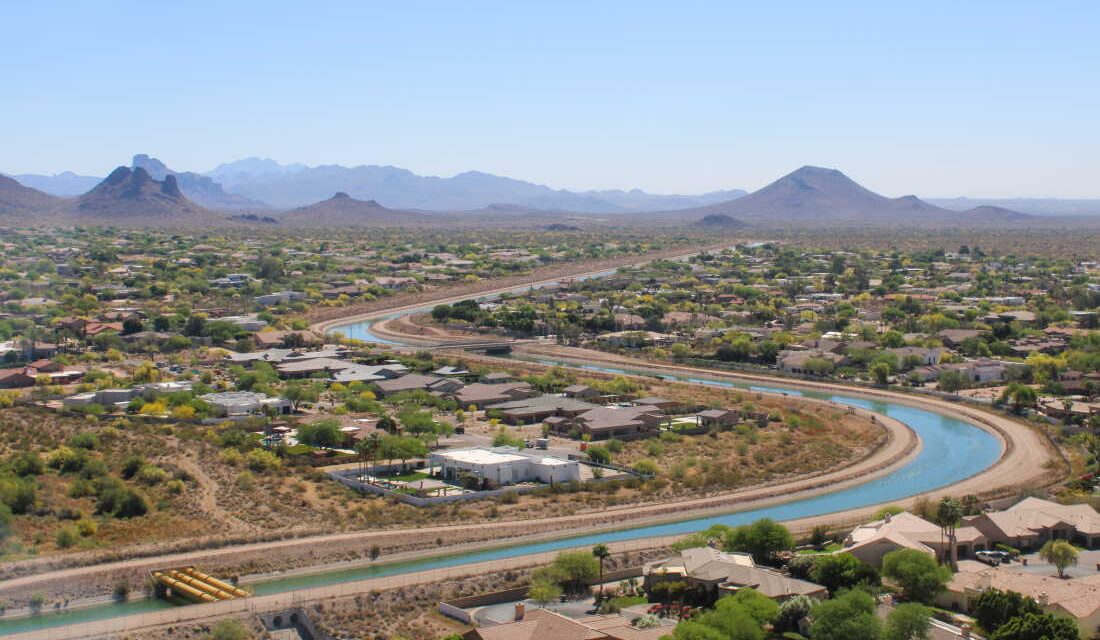
Impact of Water Cuts on Central Arizona
On March 26, 2026, the Central Arizona Project’s canal system winds through Phoenix, showcasing a crucial infrastructure that extends 336 miles. It transports Colorado River water to the Phoenix and Tucson areas. However, a new federal plan introduces significant cuts to this water supply, impacting users across the region.
The Challenge Ahead
Underneath the intense desert sun, Max Wilson, Phoenix’s water resources management advisor, monitors the canal’s flow in north Phoenix. Despite forthcoming water reductions designed to meet federal mandates, he’s optimistic about maintaining service to over 1.7 million residents. Wilson emphasizes Phoenix’s historic capability in overcoming water scarcity, assuring that household water flow will remain unaffected.
A Federal Plan Implementation
Starting January 1, mandatory reductions of 27% to Arizona’s Colorado River supplies will take effect annually through 2028. This shift follows years of discussions between seven states that rely heavily on this river. Unable to reach consensus, the federal government imposed its strategy to manage demand responsibly.
Resilience Through Preparation
The Phoenix metro has engaged in comprehensive planning and significant infrastructure investments, amounting to billions, to ensure water security. The Salt and Verde River systems alongside groundwater provide strategic backup, allowing Phoenix and its neighbors to adapt smoothly to reduced Colorado River allocations.
Financial Implications of Projects
The Central Arizona Project, pivotal in delivering Colorado River water across desert terrain, now faces the brunt of water reductions. Yet, through robust engineering solutions, Wilson assures uninterrupted water deliveries. Notably, these improvements are costly, ultimately impacting consumer water bills.
Alternative Water Sources
Phoenix secures approximately 58% of its water from the Salt and Verde Rivers. Historical infrastructure, including the Roosevelt Dam, has laid a foundation to support urban development and agricultural needs, and will aid in bridging the current supply gap.
Innovative Solutions
Phoenix’s substantial investment in the recent drought pipeline, completed in 2023 at a cost of $300 million, exemplifies forward-thinking water management strategies. It enables water flow from south Phoenix to areas previously dependent solely on the Colorado River.
Price Impacts on Consumers
Increasing water rates have proven effective. Over decades, peak summertime use decreased significantly as residents responded to economic incentives. Sorensen of the Kyl Center attests to this strategy’s success, asserting that pricing signals encourage conservation without legal restrictions.
Facing Uncertain Futures
Despite meticulous preparation, uncertainties loom. Climate trends suggest persistent dry conditions and massive reservoirs are unlikely to replenish soon. Negotiations may require states to adapt to further cuts beyond 2028.
Long-Term Strategic Planning
Storage programs via the Arizona Water Banking Authority have historically supported surplus water savings. Yet, retrieving these reserves remains contentious. The policy contradiction underscores the need for more flexible, predictable backup arrangements.
Expanding Water Reclamation Infrastructure
A remarkable effort is underway in Phoenix at the Cave Creek Water Reclamation Plant, slated to process sewage into potable water by 2029. This pioneering facility reflects the city’s investment in sustainable technologies. Wilson advocates for federal assistance to offset construction costs, preserving future water security.
Ultimately, Phoenix’s proactive management and advanced projects promise to help navigate current and future water challenges, ensuring residents remain well-supplied in the face of environmental shifts.
 American Public Opinion on Press Freedom
  St. Laurence High School’s Transformative Journey
  Significant Events in Chicago History on September 21
  Presley Gerber Passes Away at 27 in Rehab Facility
  Shooting of DoorDash Delivery Driver by ICE Agent Raises Questions
  Growing Concerns Over Food Safety and National Security