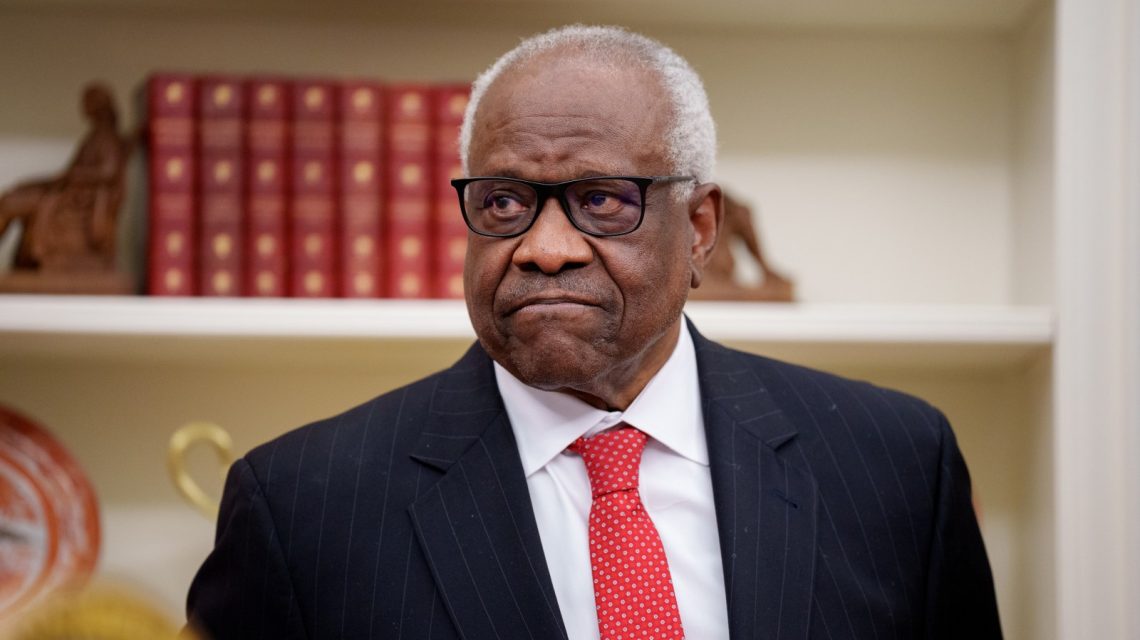
Justice Clarence Thomas could soon have another chance to address a decision he dissented against over 20 years ago. The issue involves a U.S. Supreme Court ruling that permits states to deny scholarship funding to students pursuing ministry degrees. A recent petition by Virginia college student, Bethany Hall, asks the court to overturn the 2004 decision in Locke v. Davey. This ruling allowed states to exclude students studying devotional theology from public scholarship programs without breaching the First Amendment’s Free Exercise Clause.
Hall’s filing argues that recent Supreme Court decisions on religious liberty have weakened the foundation of Locke, thus warranting its repeal. Steven Fitschen, Hall’s attorney, told Newsweek they are hopeful despite the slim 1% chance of the Court agreeing to hear the case and overturning Locke. Recent court actions have extended protections for religious schools and individuals claiming infringements on their free exercise rights. If accepted, Hall’s case would question if states can continue denying scholarships to students pursuing ministry and theology degrees. This decision could impact scholarship programs not only in Virginia but across several states with similar restrictions.
“If the Supreme Court grants cert, they are most likely to do it to reverse the Fourth Circuit and eliminate Locke,” stated Seth Chandler, Law Foundation Professor at the University of Houston Law Center.
About Bethany Hall
Bethany Hall, a student at Liberty University in Lynchburg, Virginia, qualified for the state’s Tuition Assistance Grant Program (VTAG), a financial aid program for residents attending eligible private colleges. Initially enrolled as a music education major, Hall later changed to Youth Ministries, then to Christian Leadership and Church Ministries, and finally to Music & Worship. Each major disqualified her from VTAG as they were deemed to provide religious or theological education.
Virginia withdrew Hall’s grant before she received funds, despite her eligibility in all other respects. Hall filed a lawsuit arguing that her exclusion from a public benefit was unconstitutional based on her ministry-related degree. Both a federal district court and the U.S. Court of Appeals for the Fourth Circuit rejected her claim, citing Locke v. Davey as binding precedent.
The Locke v. Davey Decision
In 2004, the court ruled 7-2 in Locke v. Davey, a case involving a Washington state scholarship recipient, Joshua Davey. Davey was denied scholarship funds after choosing a major in pastoral ministries. The majority, led by Chief Justice William Rehnquist, ruled that the state policy didn’t violate the Constitution. It was explained as a choice not to finance a specific type of instruction. The majority underscored an existing state interest to avoid using taxpayer money in ministerial training. This ruling established an exception allowing states to deny funding for religious vocation degrees while funding other educational forms.
Critics argue that recent cases have narrowed the precedents set by Locke. Fitschen pointed out that criticism began immediately after the case ruling. He remains hopeful the court will reconsider given its current stance on religious liberty issues.
Justice Clarence Thomas’s Dissent
Justice Thomas joined Justice Scalia in dissenting against Locke. Scalia posited that denying scholarships based on a student’s religious choice was unconstitutional discrimination. Thomas contended that studying theology was not inherently tied to religious devotion or faith. His later writings continued to question Locke and its interpretation of the Establishment Clause, supported by recent court trends prioritizing religious liberty.
Judges like Julius Richardson have critiqued Locke as incorrectly decided, calling it a “stain on Free Exercise jurisprudence.” Chandler suggests Thomas and others may support overturning Locke if the court takes Hall’s case.
Supreme Court’s Potential Review
The likelihood of the court taking Hall’s case is considered “better than average” despite circuits’ agreement on the issue. If the Supreme Court agrees to hear it, they would have a chance to directly address and possibly overturn Locke. The case could challenge existing state laws restricting scholarship funding for religious programs.
Chandler speculates that even if the court takes the case, it doesn’t guarantee Locke‘s overturn but suggests that if states have to fund religious studies, they might eliminate scholarships altogether. Newsweek’s Anthony Murray edited this story.
 The Impact of Arts and Closure on Democracy
 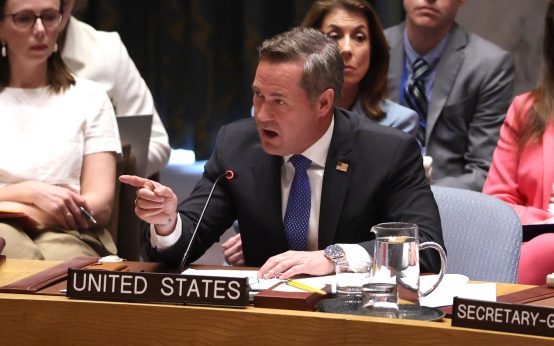 U.S. Ambassador Comments on Iran War Duration Amid Political Concerns
 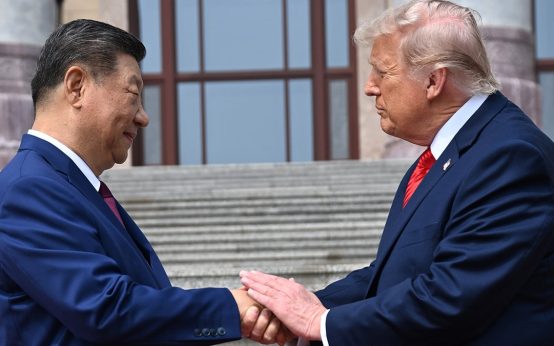 US-China Relations Under Scrutiny: Expert Warns of Escalating Tensions
  No Timeline for End of Iran Conflict
 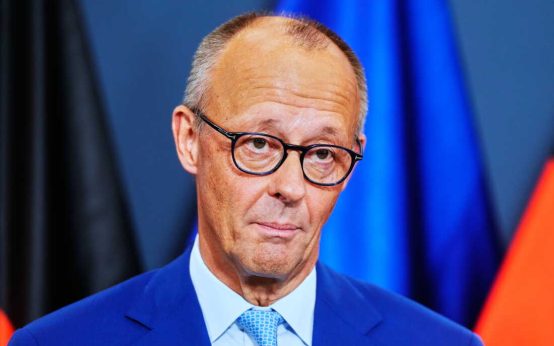 German Chancellor Merz Vows to Pursue Reforms Despite Election Setbacks
 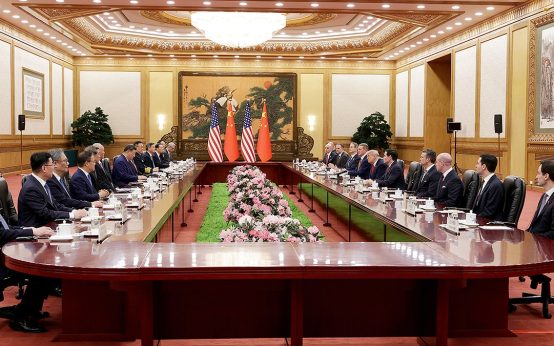 The Technology Rivalry: Trump’s Meeting with Xi and the AI Ecosystem Clash