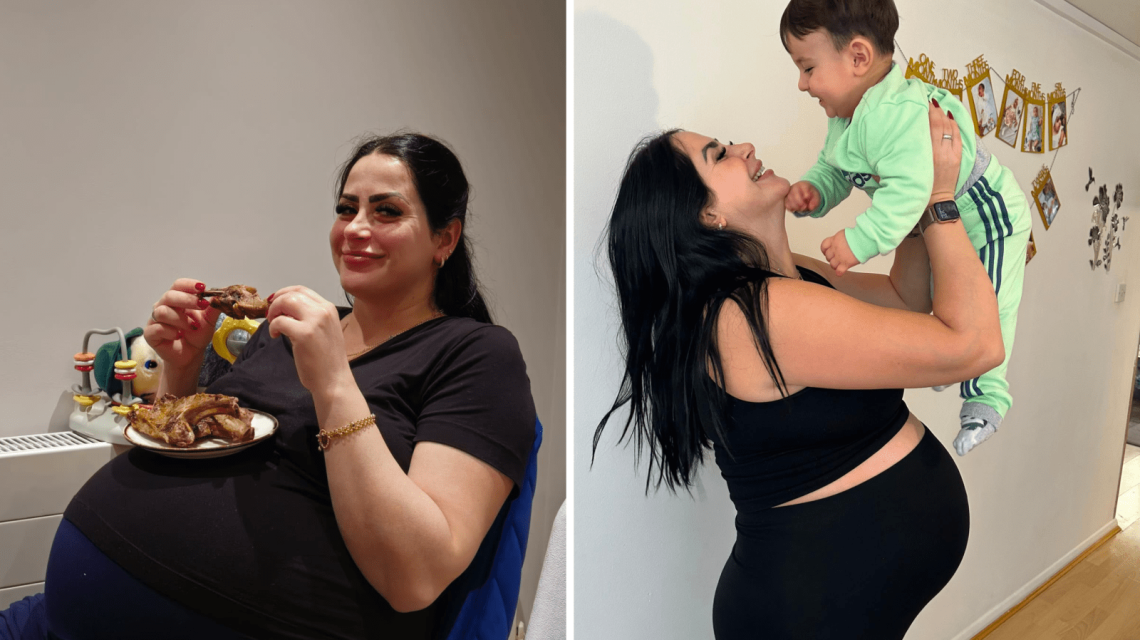
Experiencing pregnancy as the first in my family to conceive twins was nothing short of miraculous. However, at five months pregnant, a sudden sharp pain in my chest raised concerns. Initially, I assumed it was a normal pregnancy symptom.
The severe pain left me breathless and in shock. Sweating and trembling followed these episodes, which I dismissed as a pregnancy issue. When it recurred, doctors suggested the twins were pressing on internal organs. The condition escalated, becoming daily occurrences, impacting my life even after my sons were born 18 months ago.
Episodes increasingly interfered with daily activities. The fear of the pain striking while out with my children made leaving the house daunting. During the episodes, holding my babies became impossible, leaving me distraught and curled up, overwhelmed. Desperately, I tried easing the pain by physically pressing the afflicted area.
Realizing I could no longer endure this, I sought medical help two months post-birth. Doctors swiftly responded, referring me to gastroenterology where gallstones were diagnosed. Despite attempts to identify triggers, pain unpredictably erupted, even disrupting sleep.
Balancing motherhood and frequent attacks drained me mentally and physically. A year-long wait for gallbladder surgery ensued until further testing was proposed, leading to an MRI in April. Soon after, urgency presented itself with a call for a PET-MRI scan, which alarmed me upon learning its link to cancer detection.
Fears arose about worst-case scenarios, compounded by a subsequent DOTATATE PET scan request, designed for detecting neuroendocrine tumors. Distress peaked without direct communication from doctors, deepening anxiety fueled by uncertainty.
A moment of poignant realization came when my eldest son remarked, “Mommy has a sore belly,” amplifying my emotional turmoil. Support from family and friends was a lifeline, yet the burden felt isolating. When I finally met with a consultant, the confirmation of pancreatic neuroendocrine tumors (pNETs) was a jarring revelation.
The consultant’s mention of my “luck” felt hollow amidst the reality of hearing about the tumor on my pancreas’s tail. Shock absorbed details, leaving me speechless and overwhelmed by the implications for my family and future.
Preparing for my children as if I were absent, thoughts led to actions like purchasing clothes for their future, an irrational attempt to secure their future amid the uncertainty. Eventually, surgical removal of the spleen, part of the pancreas, and gallbladder was advised.
Fears grew in the two-month wait for surgery, anxiety intensified by the unknown trajectory ahead. The operation on June 29 marked by solidarity and well-wishes was a pivotal step. Tumor analysis post-surgery revealed growth to 2.5 centimeters.
Complications arose weeks later with fever and severe vomiting. The absence of a spleen heightened susceptibility to infections, necessitating lifelong vigilance and medications to prevent grave illnesses like sepsis. Hospitalization for fluid accumulation treatment followed.
Pathology results showed cancer’s presence in blood vessels and lymph nodes; lifelong monitoring for recurrence became essential. September will see further PET scans, potentially leading to chemotherapy, contingent on cancer’s progression. Monitoring initially every few months will extend to annual checks.
Surgery alleviated the pain, making me ponder my fortune in early detection. I recall the risk of ignoring symptoms or missed medical intervention, fearing consequences if ignorance prevailed.
Diagnosing pNETs altered my perspective, instilling gratitude for life. Ordinary existence reflects a newfound gift, propelling me to cherish the unknowns ahead.
Sultan Altun, aged 33, previously managed compliance in London’s healthcare sector. For inquiries related to this story, contact Newsweek editors Sirena Bergman and Emma Lee-Sang.
 Princeton Students Aid UN in Creating Digital Privacy Standards
  The War on Poverty: A Lesson on Intentions and Outcomes
  Florida Reports First Dengue Fever Death as Outbreak Expands
  Patrick Clancy Shares Insights into Tragic Family Loss
  Midair Altercation on Bangladesh to London Flight
  Florida Man Claims ‘Lion Diet’ Transformed Health and Life