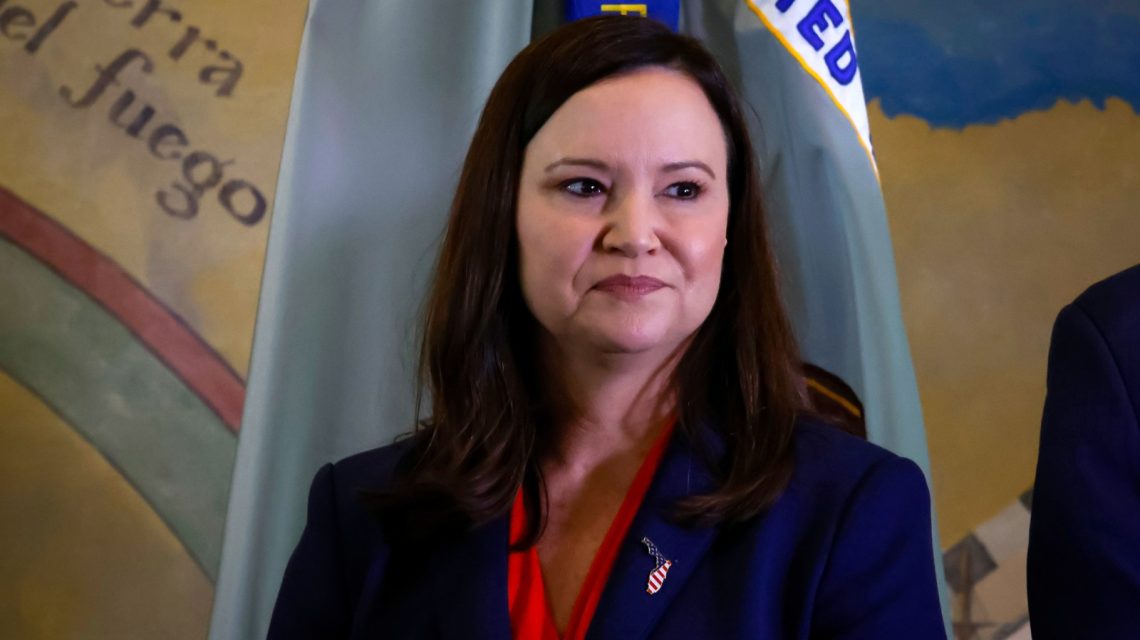
The Florida Senate race is poised to challenge progressive political power, as a progressive Democrat faces off against a Trump-backed Republican in President Donald Trump’s home state. Senator Ashley Moody assumed office after appointment by Governor Ron DeSantis, filling the vacancy left by Marco Rubio when he became Secretary of State. Moody’s incumbency provides an advantage in her first statewide election, but Democrats view it as an opportunity to capture a seat held by Rubio for over ten years.
Democratic Primary Results
On Tuesday, Angie Nixon emerged victorious in the Democratic primary election, securing 55.2 percent of the vote at the time the race was declared, defeating Alexander Vindman with 83 percent of the vote counted. Senate Democratic Leader Chuck Schumer and Senator Kirsten Gillibrand of the Democratic Senatorial Campaign Committee released a statement, emphasizing Nixon’s dedication to Florida, her lifelong roots in Jacksonville, and her commitment to prioritizing working families.
For Democrats, however, the task is daunting. Florida has gravitated toward Republicans for over a decade, as the GOP has established a voter registration advantage and won numerous statewide elections. While polling indicates Moody is the favorite, the margins are narrower than in some recent contests.
Nixon’s Chances Against Moody
Angie Nixon is among the most prominent progressive Democrats in Florida, renowned as a grassroots organizer and vocal critic of DeSantis and the Republican-led Legislature. Her campaign focuses on reducing costs, increasing wages, expanding healthcare access, and mobilizing working-class voters who typically abstain from elections.
Nixon’s connection to organized labor and progressive groups is a strength. She has garnered support from several left-leaning entities and officials, positioning herself as a candidate representing the Democratic Party’s activist faction. This backing could stimulate enthusiasm among younger voters and progressives who argue for a stark contrast to Republicans rather than shifting towards the political center.
A survey conducted in July by the University of North Florida’s Public Opinion Research Lab showed Moody leading Nixon 50 percent to 42 percent in a hypothetical general election scenario. In 2022, Rubio trailed his Democratic challenger, Val Demings, by 4 points in a similar poll, later winning the election with 57 percent of the vote.
Market odds are highly favorable to Republicans, with Polymarket assigning a 91 percent probability and Kalshi giving a 90 percent chance of Republican victory, highlighting trader beliefs in Republican success.
Democrats are hopeful that bold progressive messaging can energize Democratic voters and attract working-class Floridians frustrated by escalating living costs. Nixon frequently asserts that affordability issues could offer Democrats an advantage in a state burdened by high housing prices and insurance costs.
Nixon confronts significant challenges, as Republicans aim to define her as a far-left contender. Moreover, Florida’s electorate has historically shown resistance to progressive labels. The large Cuban American and Venezuelan American populations in South Florida have often been wary of candidates perceived as too far left, causing potential vulnerabilities for Nixon in a statewide race.
Fundraising poses another hurdle. Nixon has raised considerably less money than both Moody and Vindman. A sustained statewide campaign in Florida’s expensive media markets demands significant financial resources, and Democrats frequently struggle without substantial national investment. Nixon’s route to victory might hinge on achieving unusually high Democratic voter turnout while convincing enough independent voters that economic issues outweigh ideological divides.
Historical Context of Democratic Success in Florida Senate Elections
The most recent Democrat to win a U.S. Senate election in Florida was Bill Nelson in 2012. Nelson, the incumbent, defeated Republican Connie Mack IV, securing a third term. In 2018, Rick Scott defeated Nelson, ending the Democrats’ hold on the seat. Since then, Republicans have strengthened their position across Florida, winning gubernatorial races, Senate contests, and numerous down-ballot elections, creating a voter-registration advantage that challenges Democrats in statewide races.
This historical backdrop highlights the obstacles Democrats face in November. To succeed, Nixon must not only overcome Moody’s incumbency and statewide profile but also reverse a political trend that has favored Republicans for over a decade. Currently, Moody remains the favored candidate for the general election. Polling, fundraising, and recent electoral history point to her advantage. However, with affordability concerns dominating voter discussions and uncertain national political dynamics, Democrats believe the race merits contestation.
 Challenges Facing Mayor Brandon Johnson’s Re-election Bid
  Federal Crackdown on Alleged Noncitizen Voter Fraud in California
  U.S. Officials Advise on Potential Election Interference
  Supreme Court Declines Case on NLRB Authority
  Judge Faces Presidential Criticism and Threats
  Federal Investigation into Rep. Ilhan Omar’s Immigration Status