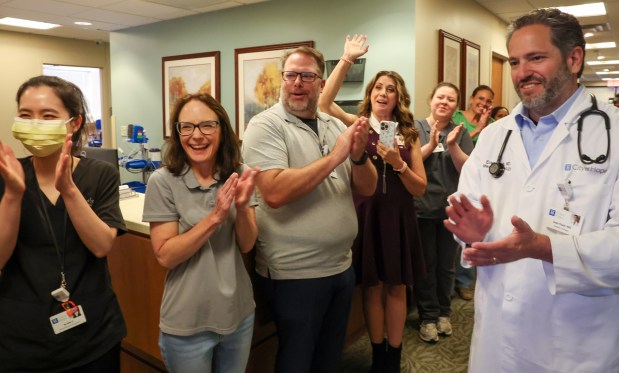
Rachelle Gardner, a Milwaukee teacher for visually impaired students, learned about a new experimental drug for pancreatic cancer. Unsure if she would be eligible to receive it, she anxiously awaited answers to her questions. In late July, she found out she could indeed try the medication. At City of Hope Cancer Center Chicago, Gardner took three light blue pills, one by one. Her optimism shone through as she cheerfully exclaimed, “To good health and getting rid of that cancer bug!”
The drug, named daraxonrasib, represents hope for pancreatic cancer patients. Although it does not cure this aggressive cancer, it helps extend life. When pancreatic cancer spreads beyond the pancreas, patients usually have limited time left. However, in clinical trials, patients who received daraxonrasib lived a median of 13 months, compared to just six months for those on additional chemotherapy.
Dr. Evan Pisick, a medical oncologist at City of Hope Cancer Center Chicago, stated that daraxonrasib marks the most significant advance in pancreatic cancer treatment in decades. This targeted therapy offers patients a new option beyond chemotherapy. Although the drug has not been approved by the FDA, it is available under an expanded access program for eligible patients.
Revolution Medicines, the drug’s manufacturer, provides daraxonrasib at no cost to patients. Under the expanded access program, doctors can request the drug for individual patients. Dr. Pisick believes this program is crucial since many patients cannot afford to wait for standard approval.
Gardner is one of several patients at City of Hope Cancer Center Chicago starting this treatment. Other healthcare systems in Illinois, including Advocate Health Care and UChicago Medicine, also offer the drug to patients. UChicago Medicine was involved in the clinical trial, where daraxonrasib extended patient lifespans significantly and improved symptoms.
Mary Louise McAdams, an 84-year-old patient at UChicago Medicine, now benefits from the drug. She initially faced bleak prospects with a diagnosis that predicted just six months to a year to live. After enduring harsh treatments, she enrolled in the expanded access program for daraxonrasib. McAdams hopes to enjoy more years with her family.
Since her diagnosis three years ago, Gardner’s cancer journey has included tough chemotherapy sessions and a complex Whipple procedure. Following treatment, she experienced a temporary respite until the cancer returned in 2025 at Stage 4. With chemotherapy and radiation no longer effective, daraxonrasib brought renewed hope.
Robert Stone, CEO of City of Hope, highlights the significance of clinical research. While approval processes can be lengthy, clinical trials and expanded programs often provide crucial treatment options. Gardner’s experience emphasizes the importance of access to emerging therapies.
With a positive outlook, Gardner hopes daraxonrasib will grant her more time. Time for road trips, teaching, and sharing moments with her family. Her message is clear: “There’s hope out there.”
 Cardiologist Highlights Unusual Symptoms Linked to Heart Issues
  Healthcare Challenges in Abyei Amidst Conflict
  A Stroke Survivor’s Journey and the Importance of Quick Response
  Mother Shares Crucial Signs for Detecting Childhood Cancer
  How to Maintain Motivation and Effectiveness in Your Workout Routine
  Joe Biden’s Prostate Cancer Progression and Current Healthcare Insights