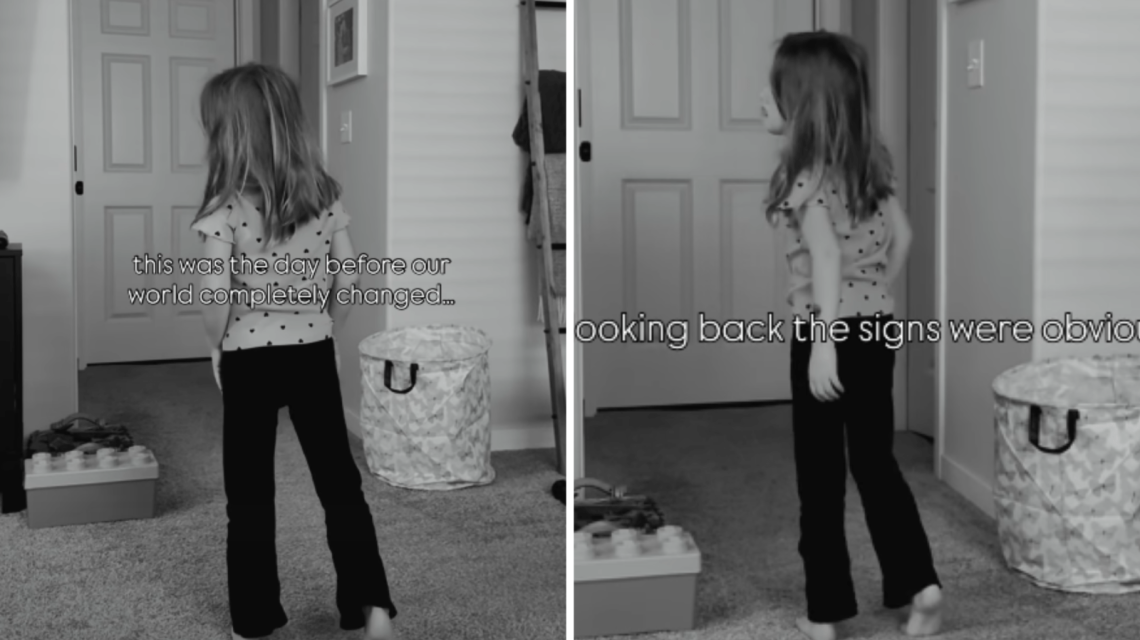
A mother from North Dakota, Emily Koska, has opened up about the early symptoms her seven-year-old daughter exhibited before being diagnosed with stage 4 nodular ganglioneuroblastoma. This type of cancer affects nerve tissue and is typically found in children aged two to four. Koska’s daughter, Miriam, was diagnosed in October 2025.
Koska explained that several warning signs were missed. One telling sign was a video shared on her Instagram account, @emilykoska, where Miriam appeared to limp across a room. Koska captioned the clip: ‘This was the day before our world completely changed. We had no idea she had cancer that spread to her bone marrow.’ She urged other parents to pay more attention to subtle signs.
Early Symptoms Overlooked
Initially, the Koskas dismissed Miriam’s leg pain as normal growing pains. However, when the pain persisted and Miriam developed a limp, Koska realized that something was amiss. Over time, Miriam experienced other symptoms like unexplained fevers, night sweats, abdominal pain, and fatigue.
Despite seeking medical advice from pediatricians and a neurologist, the doctors proposed various non-cancerous causes. Eventually, a pediatrician who took a holistic view of Miriam’s symptoms referred them to an emergency department. Within hours, Miriam was diagnosed with high-risk ganglioneuroblastoma.
Comprehensive Assessment Critical
According to the Cleveland Clinic, neuroblastoma can result in a variety of symptoms. Children might feel full quickly, experience swelling, have trouble using the toilet, or face problems with balance and movement. Other symptoms can include coughing, a drooping eyelid, or smaller pupil size, among others. If the cancer spreads, additional symptoms may appear, including swollen lymph nodes and dark circles around the eyes.
Koska emphasized that while childhood cancer is rare, it is not impossible. ‘When symptoms persist, worsen, or don’t make sense, they deserve another look,’ she said.
Positive Outlook Amid Challenges
Despite the diagnosis, there is hope. Koska shared that Miriam has been responding well to treatment and recent scans show minimal remaining disease in her bone marrow. Treatments are expected to continue into 2027.
Koska expressed admiration for her daughter’s resilience. ‘It’s an honor to be her mom and walk alongside her. She inspires us every day,’ she said.
Koska aims to raise awareness so that other parents do not overlook persistent symptoms in their children. She encourages continual questioning and advocacy until someone listens and provides answers.
 Improving Funding for Psychiatric Hospitals
  California Ends Child Marriage with New Legislation
  USCIS Adjusts Immigration Fees Amid Policy Changes
  Trump Administration Distributes Refund Payments to ACA Enrollees
  Study Links Ultra-Processed Foods to Increased Health Risks
  Looking Back at Significant Events in Chicago on October 1