
Recent voting in Missouri has shown strong opposition to proposals aiming to dismantle the state’s individual income tax. This represents a departure from the tax reduction trend prevalent in states governed by the GOP. On Tuesday, Missouri residents decisively rejected Amendment 5, which proposed constitutional changes to gradually eliminate the state’s income tax, currently standing at 4.7% for top earners. It also sought to empower legislators to increase sales and other taxes to compensate for the lost revenue.
Voters also considered Amendment 4, designed to make citizen-led constitutional changes more challenging. Advocates of Amendment 5 argued that the measure would enhance Missouri’s competitiveness and allow families to retain greater earnings. However, opponents highlighted potential budget shortfalls and perceived it as effectively benefiting wealthier individuals.
Scott Charton, spokesperson for opposition groups Missourians for Fair Governance and Missourians for Fair Taxation, stated, “Amendments 4 and 5 have been buried so deep in citizen rejection, they should never come back,” as reported by the Missouri Independent.
Missouri’s Republican Governor, Mike Kehoe, an ardent supporter of eliminating the state’s income tax, expressed his commitment to continuing efforts despite the setback. He remarked, “This work is far from over.” According to The Associated Press, Amendment 4 was defeated 80% to 20% and Amendment 5 by 83% to 17%, preserving the current tax structure and preventing lawmakers from proceeding with plans to substitute income tax revenues with increased sales taxes.
Individual income tax generates over $9 billion annually for Missouri, as noted in the Department of Revenue’s latest report, making it the largest source of state revenue. As such, many remain skeptical about lawmakers’ ability to fill the budgetary gap left by eliminating this tax.
A fact sheet from Missourians for Fair Taxation explains: “About two-thirds of Missouri’s general fund comes from state income tax. To replace revenue lost from phasing out the income tax, the largest possible source of new money comes from raising the current sales tax on goods such as your groceries and gas, plus adding a new sales tax on services you use every day, from haircuts to car repairs to health care.”
This outcome signifies a significant blow to Governor Kehoe’s tax reform agenda, though he remains dedicated to pursuing tax cuts with the General Assembly. He reiterated his commitment on social media, promising to work on tax reduction initiatives that benefit Missouri families.
The Missouri vote is noteworthy because unlike most states where such tax changes occur without constitutional amendments, Missouri elected to empower its voters with the decision. Consequently, Missouri persists among the majority of states that rely heavily on income tax to support government operations and services.
In contrast, various Republican-led legislatures have enacted significant income-tax reductions, aiming for permanently lower tax rates. For instance, North Carolina’s Democratic Governor Josh Stein ratified a budget diminishing income taxes starting next year until reaching a final rate of 2.99% by 2033. States like Mississippi, South Carolina, Kentucky, and West Virginia continue efforts towards a complete phase-out.
 The Impact of Arts and Closure on Democracy
  U.S. Ambassador Comments on Iran War Duration Amid Political Concerns
  US-China Relations Under Scrutiny: Expert Warns of Escalating Tensions
  No Timeline for End of Iran Conflict
 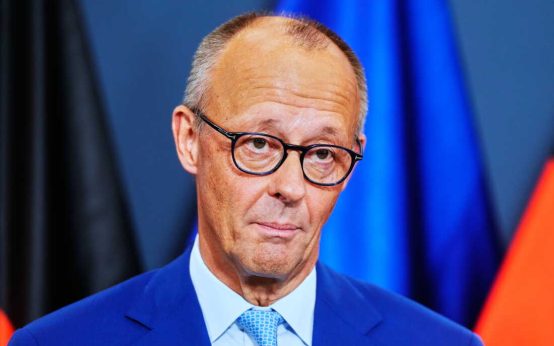 German Chancellor Merz Vows to Pursue Reforms Despite Election Setbacks
  The Technology Rivalry: Trump’s Meeting with Xi and the AI Ecosystem Clash