
Global stock markets showed mixed performances on Monday. This followed the U.S. and Japan’s decision to intervene in stabilizing the yen against the dollar. This intervention came after the dollar’s rise to historical highs against the yen. The yen’s value affects international profits for Japanese companies and tourist spending power in Japan.
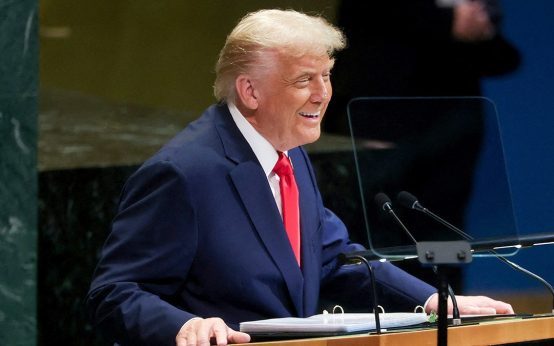
As U.S. President Donald Trump announced a possible agreement to reduce conflict in the Middle East, oil prices fell significantly. Just a day prior, Trump had expressed doubts about reaching a resolution with Iran and warned of potential military action. The dollar’s decline to approximately 155.20 yen followed confirmation from Trump and Japanese officials regarding last week’s intervention to control the dollar’s rise.
By late Monday in Tokyo, the dollar stood at 156.68 yen. A weaker yen benefits Japanese exporters but increases import costs. A strong dollar generally appeals to investors seeking security during uncertain times but reduces U.S. export competitiveness. Trump welcomed the dollar’s strength but acknowledged the strategic adjustment.
The U.S. Treasury engaged the Federal Reserve Bank of New York to purchase yen, signaling enhanced cooperation with Japan. “Washington is willing to collaborate directly with Tokyo,” remarked Stephen Innes of SPI Asset Management.
European markets experienced gains, with Germany’s DAX rising 1.3% and France’s CAC 40 climbing 1%. The UK’s FTSE 100 showed minimal change. U.S. futures pointed to slight increases in the S&P 500 and the Dow Jones Industrial Average.
In Asia, Japan’s Nikkei 225 fell by 0.9%, while South Korea’s Kospi dropped 5.1%. The Kospi, heavily influenced by tech giants Samsung Electronics and SK Hynix, had soared on Friday after recent losses. Both tech firms saw significant share drops on Monday.
Other indices showed varied results: Hong Kong’s Hang Seng index rose 0.5%, China’s Shanghai Composite fell 0.6%, and Australia’s S&P/ASX 200 increased by 0.2%. Taiwan’s Taiex and India’s Sensex advanced by 0.6% and 0.8%, respectively.
The easing tension in the Middle East influenced oil prices positively, with Brent crude dropping 4.7% to $83.92 per barrel. U.S. crude fell by 5.6% to $79.89 per barrel. Last Friday, strong market performances marked the end of a volatile July, with gains in the S&P 500, Dow, and Nasdaq. Concerns persist about AI investment returns and chipmaker stock valuations. Amazon notably boosted the market with a 15.3% rise, exceeding expected profits, driven partly by its cloud computing growth.
The report included contributions from Associated Press reporters Mayuko Ono and Mari Yamaguchi in Tokyo.
 Investigation into Lion Deaths in Tanzania
  Merz Stays Resolute Amid Electoral Shifts in Germany
  U.S.-Iran Relations and Diplomacy at Upcoming U.N. Assembly
  US-China Relations Under Scrutiny: Expert Warns of Escalating Tensions
  Extradition of Suspects in Haitian President’s Assassination
  No Timeline for End of Iran Conflict