Helping special education students succeed in classrooms involves understanding their specific needs. Parents, teachers, and therapists often choose special education school supplies to support these needs. Various supplies, from adaptive pencil grips to visual planners, are available to assist these students.
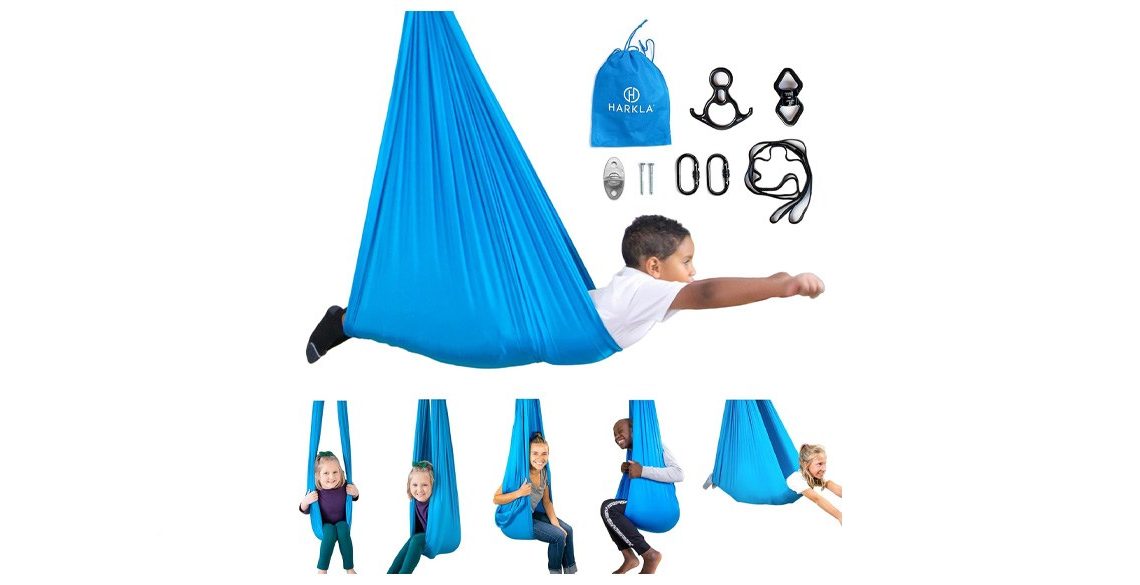
Tools like swaddle swings make a difference by providing security, helping manage anxiety. Fidget toys also aid students with ADHD, allowing them to focus better by keeping their hands busy. Below is a guide on choosing special education school supplies, including popular categories and recommended options. Our top choice, the Harkla Sensory Swing for Kids & Adults, acts as a versatile therapeutic cradle, offering comfort and security promptly.
Understanding Special Education School Supplies
Fine and Gross Motor Skills
Fine motor skills involve the small muscles of the hands and fingers, used for tasks like holding or manipulating objects. Special education students benefit from tools like jigsaw puzzles, art sets, or modeling dough to improve these skills.
Gross motor skills involve larger muscles for activities such as walking or lifting. Balance boards, ride-on toys, and balls can help enhance muscle control and coordination.
Sensory Integration
Students with sensory integration needs find value in positive sensory experiences. Products like snuggle wraps, swaddle swings, weighted blankets, and headphones provide calming environments to help avoid overwhelming situations.
Language Development
Tools for language development assist students in communicating more effectively. Items such as conversation flipbooks, whiteboards, flashcards, and emoji tools provide alternative methods for expression.
Behavioral Support
Behavioral needs focus on building self-esteem and self-control. Supplies like pocket charts, reward boards, facial expression posters, and reminder bracelets assist students in managing and monitoring their behavior.
Costs of Special Education School Supplies
Basic supplies like pencil grips or sensory squishies cost $10 or less. More complex items, such as balance boards or flashcard sets, range from $12 to $50. Higher-end supplies like swaddle swings or deluxe fidget toy sets range from $50 to $150. The most expensive items, including interactive whiteboards or tablets, can cost between $300 and $1,000.
Popular Supplies for Middle and High School Students
Students in these age groups may benefit from using voice or audio recorders to revisit lectures and lessons at their leisure. Tablets are advantageous due to the extensive range of adaptive learning apps available.
Building the Right Set of Supplies
Special education teachers regularly update their supplies based on evolving needs. They often join online forums and follow educational product companies on social media to stay informed about new products.
Top Recommended Supplies
Harkla Sensory Swing for Kids & Adults
What you need to know: Offers therapeutic comfort with a flexible design that allows comfortable positioning. Provides vestibular input and helps calm distress.
What you’ll love: The swing helps with motor control and anxiety management.
What you should consider: Some users have reported issues with stitching.
Show to Tell Communication Cards
What you need to know: A 24-card flipbook assists in communication using text and images.
What you’ll love: Easy to use in various social settings, helping kids express themselves efficiently.
What you should consider: May not be suitable for younger kids like kindergarten students.
Teacher Created Resources Fidget Box
What you need to know: Offers a variety of quiet fidget toys to engage students’ hands.
What you’ll love: Includes different textures and functions, enhancing focus during learning.
What you should consider: Toys are small, potentially not suitable for all users.
Pricing and availability are subject to change. For top deals and ideas, subscribe to the BestReviews weekly newsletter. Purchases via our links support BestReviews and its partners.
 The Importance of Financial Responsibility in Higher Education
  The Financial Expectations on Universities: A Parental Perspective
  Nikole Hannah-Jones Reflects on Educational Choices for Her Daughter
  The Rising Trend of GLP-1 Medications Among College Students
  Seton Hall National Security Graduate Fellowship Provides Hands-On Experience
  California High School Coach Arrested Over Secret Recording in Locker Room