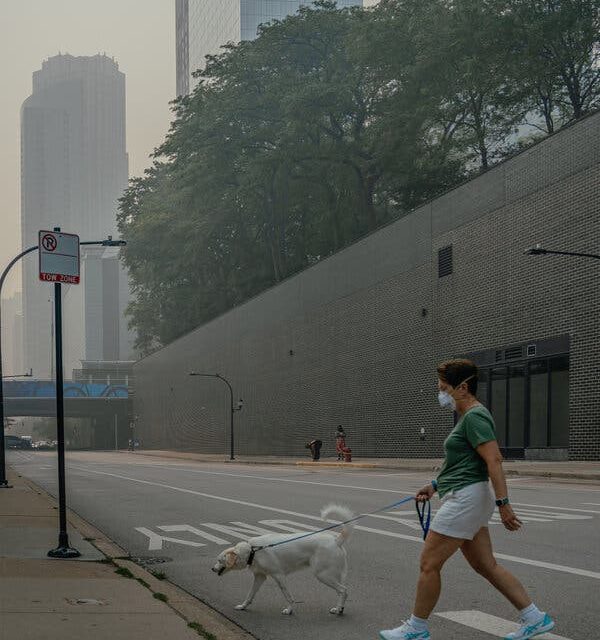
On Sunday, acrid smoke from wildfires in Ontario and Minnesota cast shadows over the Midwest, extending into the Northeast and Mid-Atlantic regions. Forecasters identified the Great Lakes area as facing the most severe conditions. Air quality alerts were active in this region, affecting Minnesota, Wisconsin, Illinois, Indiana, Michigan, and parts of Ohio.
The Northeast experienced a temporary respite on Saturday due to thunderstorms and downpours that helped clear some of the smoke, though new polluted air moved into the upper Midwest. By Sunday, a fresh plume spread across Wisconsin and Northern Illinois, heading towards the Ohio Valley. Although the smoke was anticipated to reach the East Coast later, the pollution levels in the Northeast were expected to be lower than before the weekend.
Richard Bann, a meteorologist with the Weather Prediction Center, noted that cleaner air from eastern Canada would soon benefit the Northeast.
Air quality alerts persisted on Sunday for parts of the Northeast and Mid-Atlantic, including western and central New York and western Maryland. On Monday, conditions were predicted to remain largely unchanged. Frank Pereira, another meteorologist at the Weather Prediction Center, indicated that high concentrations of smoke would continue to affect the Great Lakes area, particularly in Michigan, Northern Illinois, and Indiana, but some reprieve was likely later in the day.
A strong system would move through the area by late Monday, bringing widespread rain across the Great Lakes, improving conditions and starting to clear the air,
Pereira commented.
However, he warned that this improvement might be temporary. Northwesterly winds from central Canada could introduce another wave of smoke into the Great Lakes and the Northeast by mid-week.
Additional information on the wildfires:
- Canada is dealing with over 900 wildfires, with Ontario having some of the most active ones. Smoke from these fires is moving south across the Great Lakes and into the U.S.
- Fires in northern Minnesota are also contributing to the smoke problem.
- Research suggests wildfire smoke is connected to tens of thousands of deaths annually, with human-driven climate change increasing these occurrences.
You can track the latest air quality maps and smoke forecasts for updated information.
Reporters Amy Graff and Nazaneen Ghaffar provide updates on weather, wildfires, and earthquakes for The Times.
 Communities Continuing Recovery from Hurricane Helene Explored through Graphic Novel
  Fat Bear Week 2026 Highlights: Meet the Competitors
  Annual Fat Bear Week Begins at Katmai National Park
  Understanding Hurricane Development
  California Prepares for El Niño-Fueled Storms with Emergency Declaration
  California’s Growing EV Adoption: Challenges and Benefits