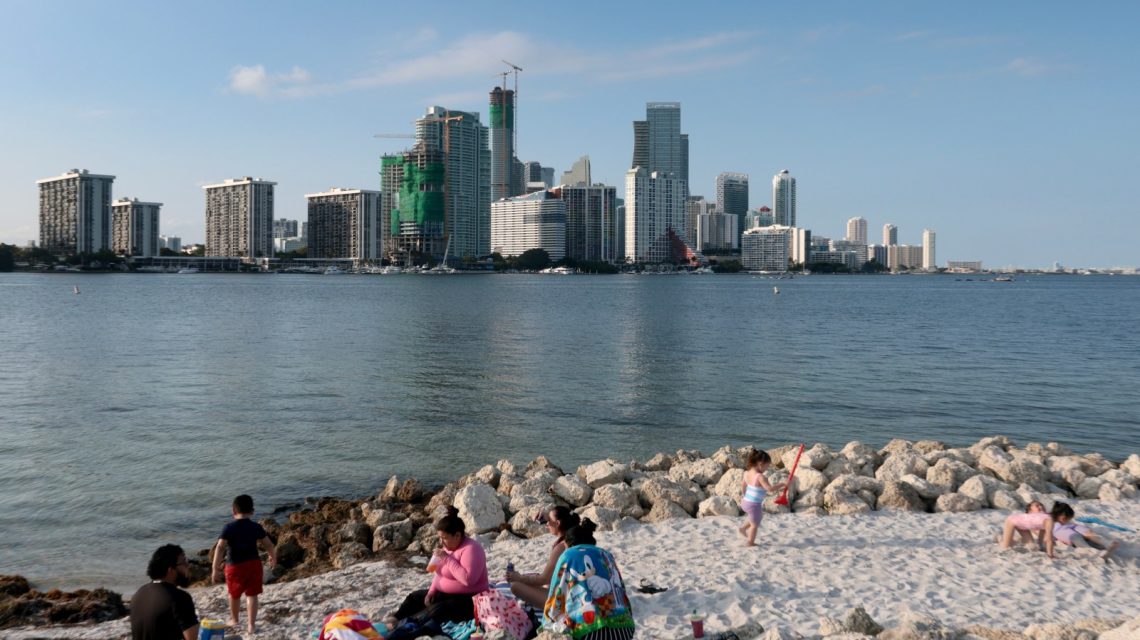
While U.S. home prices continue climbing, hitting an all-time high in June, certain parts of the country give buyers a stronger negotiating position. Miami, Florida exemplifies this shift as data from real estate brokerage Redfin indicates there were almost 140 percent more sellers than buyers in June. This makes Miami the strongest buyer’s market nationally, where supply surpasses demand, enabling buyers to secure lower offers.
At the national level, there were 48.5 percent more sellers than buyers, displaying a slight drop from previous months when it was over 50 percent. This situation technically defines the U.S. housing market as a buyer’s market, as any market with over 10 percent more sellers than buyers holds this status. Despite this, buyers nationwide face challenges leveraging this advantage due to elevated borrowing costs, with the average 30-year fixed-rate mortgage around 6.5 percent and ongoing price hikes.
Currently, only those who can afford home acquisitions experience the benefits of a buyer’s market. However, several markets, particularly in the South, exhibit significant seller-buyer imbalances, allowing buyers to better negotiate or abandon unfavorable deals.
Former Pandemic Boomtowns as Buyer’s Markets
Approximately 70 percent of U.S. housing markets analyzed by Redfin are identified as buyer’s markets. Many of these, such as cities labeled ‘boomtowns’ during the pandemic due to high demand, are now witnessing sellers outnumbering buyers significantly.
The top 10 strongest buyer’s markets based on Redfin’s data included:
- Miami, FL: 139.7 percent
- Nashville, TN: 128.8 percent
- Houston, TX: 123.8 percent
- San Antonio, TX: 117.4 percent
- Austin, TX: 101.3 percent
- Orlando, FL: 98.3 percent
- Dallas, TX: 95.8 percent
- Phoenix, AZ: 94.2 percent
- Las Vegas, NV: 92.8 percent
- West Palm Beach, FL: 86.3 percent
These cities, including Nashville and Austin, were in high demand during the pandemic, driven by affordable housing needs, lower living costs, favorable climates, and beneficial tax environments. States like Florida and Texas responded by leading residential construction nationwide.
As the market adjusted with rising mortgage rates and employer demand for office presence, former booming markets like Miami saw high inventory levels, contributing to price corrections.
Challenges Despite Buyer’s Market
In Miami, buyers face challenges despite advantageous conditions. The median sale price remained high at $652,110 in May. In addition, elevated insurance premiums averaging $14,520 annually and rising homeowners association fees complicate matters. These factors, worsened by natural disasters and safety regulations after the Surfside collapse, drive many to sell.
Other metros like Nashville and Houston confront similar issues, with new constructions resulting in oversupply amidst declining demand. However, rising median sale prices ($474,716 in Nashville and $349,791 in Houston in May) reflect their attractiveness during the pandemic.
Affordability persists as a significant barrier, with the U.S. median sales price reaching $440,600 in June while the sales rate dropped 2.4 percent from May.
Asad Khan, senior economist at Redfin, noted that buyers with means have leverage given fewer bidding wars, more inventory, and room for negotiation. He advised aggressive shopping and seeking concessions as many sellers remain flexible amid prolonged buyer’s market conditions.
 Amazon Offers Discounts to Employees at Whole Foods
  Hidden Fees in Real Estate Transactions: A Growing Concern
  Trump’s Childhood Home Sells for Nearly $2 Million After Renovation
  Luxury Five-Bedroom Home with Rooftop Deck in Edgewater
  Trump’s Housing Affordability Agenda Faces Challenges
  Easing Mortgage Standards: A Complex Debate