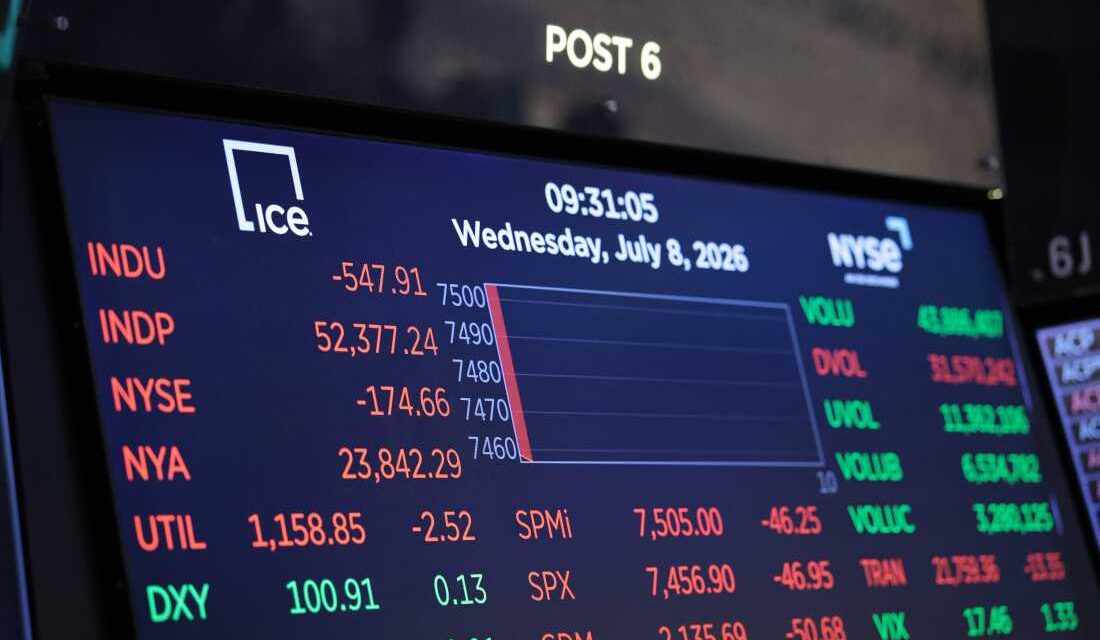
Tanker traffic in the Strait of Hormuz is at risk following the end of a ceasefire between the U.S. and Iran. Oil prices, which had reduced to pre-conflict levels, have started to rise. Conversely, stock values are falling.
The escalation between the U.S. and Iran has added new unpredictability to the global economy. Following President Trump’s announcement on ceasing hostilities, crude oil prices surged and stock indices dropped. The U.S. military targeted multiple sites along Iran’s coast, responding to perceived Iranian assaults on ships passing through the strait.
This conflict threatens to extend global market volatility, which had subsided after a temporary ceasefire. Both U.S. and international crude oil benchmarks increased by approximately 7% on Wednesday. Even so, prices remain significantly lower than their peaks in spring. The Dow Jones Industrial Average plummeted more than 800 points or 1.5% after recently achieving a record high.
Renewed hostilities raise the likelihood of inflation pressures, after a period of declining gasoline costs. However, the initial spike in oil prices was minimal, indicating that markets are not anticipating a full-scale conflict. According to AAA, U.S. retail gasoline prices rose by less than a penny per gallon overnight, though further increases may occur as natural outcomes of higher crude oil expenses.
Since the U.S. and Israel’s attacks on Iran in February, global markets have been unstable. Bond yields surged overnight, reflecting investors’ expectations of continued uncertainty.
Federal Reserve Under Scrutiny
Continuing tensions with Iran complicate matters for the Federal Reserve, led by Chairman Kevin Warsh. The CME FedWatch tool shows that the likelihood of a Fed interest rate hike this month has increased to more than one in three odds, up from Tuesday’s one in four. The Fed is closely tracking energy price increases, which have already exceeded its 2% inflation target.
The Trump administration is preparing another phase of global tariffs, potentially heightening import prices later in the year. Prior to these recent attacks, the International Monetary Fund (IMF) had already reduced its economic growth forecast for the year. The IMF projects a global economic growth rate of 3% for 2026, down from 3.5% last year.
The IMF’s latest outlook warns, “Renewed Middle East conflicts loom large, extending commodity price volatility, threatening supply chains, increasing prices, and affecting financial conditions.”
 U.S. Strategic Goals Remain Unmet Amid Prolonged Conflict
  New Photos Reveal Damage from Iranian Strikes in the Middle East
  Assassin of Chilean Diplomat Orlando Letelier Faces Deportation 50 Years After Assassination
  Gorillaz and Macklemore Respond to Controversy Over Israel-Palestine Statements
  Investigation into Lion Deaths in Tanzania
  Merz Stays Resolute Amid Electoral Shifts in Germany