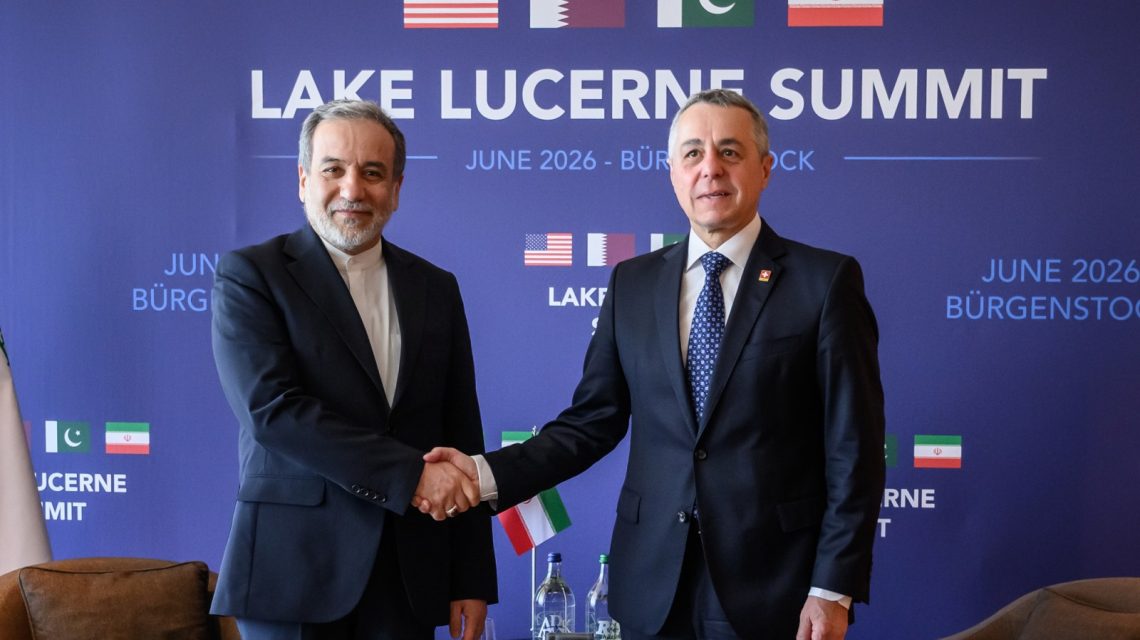
The agreement signed between Iran and the United States may unlock billions of dollars in Iranian assets frozen worldwide. Both countries have differing accounts of the amount and terms. This is what is currently known about the location of these frozen funds.
Understanding Frozen Assets
Frozen assets are funds or financial holdings blocked legally from access or transfer, often due to sanctions. For Iran, these primarily consist of oil revenues and foreign currency reserves in foreign banks.
Iran’s Economic Context
Iran has faced U.S. sanctions and trade restrictions since the 1979 Iranian Revolution. Additional measures have been imposed over time, addressing concerns about its nuclear program, human rights record, and support for militant groups in the Middle East.
Decades of sanctions have battered Iran’s economy, contributing to high inflation and currency depreciation. The recent war has further strained its economic condition. The release of frozen assets could provide Iran with substantial resources during this challenging period.
Estimations of Frozen Assets
Estimates of Iran’s foreign assets vary significantly. Iranian officials claim up to $100 billion may be frozen, while other reports suggest less than $50 billion. China is believed to hold the largest share, with estimates ranging from $20 billion to $50 billion according to The Wall Street Journal. Historically, China has been a leading purchaser of Iranian oil. India, prior to the JCPOA nuclear agreement, was the second-largest oil importer from Iran.
Additional assets are held in Iraq, estimated at around $15 billion due to purchases of electricity and natural gas. Other countries with notable frozen assets include Japan, Luxembourg, the U.S., South Korea, Qatar, and Oman.
Details of the MOU
The 14-point memorandum of understanding (MOU) signed between Iran and the U.S. includes provisions for the potential release and utilization of Iran’s frozen assets abroad. The agreement was signed on Friday, June 17.
Paragraph 11 states, “The United States of America undertakes to make fully available for use the frozen or restricted funds and assets of the Islamic Republic of Iran upon the implementation of this MOU. The United States of America and the Islamic Republic of Iran will mutually agree on the procedures related to the release of these funds during the negotiations. Such funds, whether retained in the original account or transferred, shall be made fully usable for payment to any ultimate beneficiary designated by the Central Bank of the Islamic Republic of Iran. The United States of America undertakes to issue all necessary licenses and authorizations accordingly.”
Statements from Iran and the U.S.
President Donald Trump remarked on Monday that Iran should use its released funds to purchase American food products, saying, “All that money’s coming back in the form of purchases of food which they desperately need. They have 91 million people; they can’t feed them. So, the money that we lift is going to go to our farmers.”
However, Tehran countered that with their own perspective. In Geneva, Ali Bahreini, Iran’s ambassador to the United Nations, stated, “Iran is the only country to decide what to do with its assets, which are going to be defrozen, and so I reject any claim about that if there would be any role for any other country to have an influence on those decisions or on those processes.”
Additionally, Iranian Parliament Speaker Mohammad Bagher Ghalibaf indicated the agreement would release $12 billion of frozen assets, split into two tranches of $6 billion each, according to reports cited by The National.
 Investigating France’s Student Protests: A Web of Far-Left and Socialist Influences
  Recovery of Stolen Renoir Paintings
  Washington’s Strategic Choices Amidst Gulf Tensions
  Nobel Peace Prize Awarded to Navi Pillay
  South Africa Withdraws Asylum Order After Protests
  Escalating Conflicts and Diplomatic Efforts in the Middle East