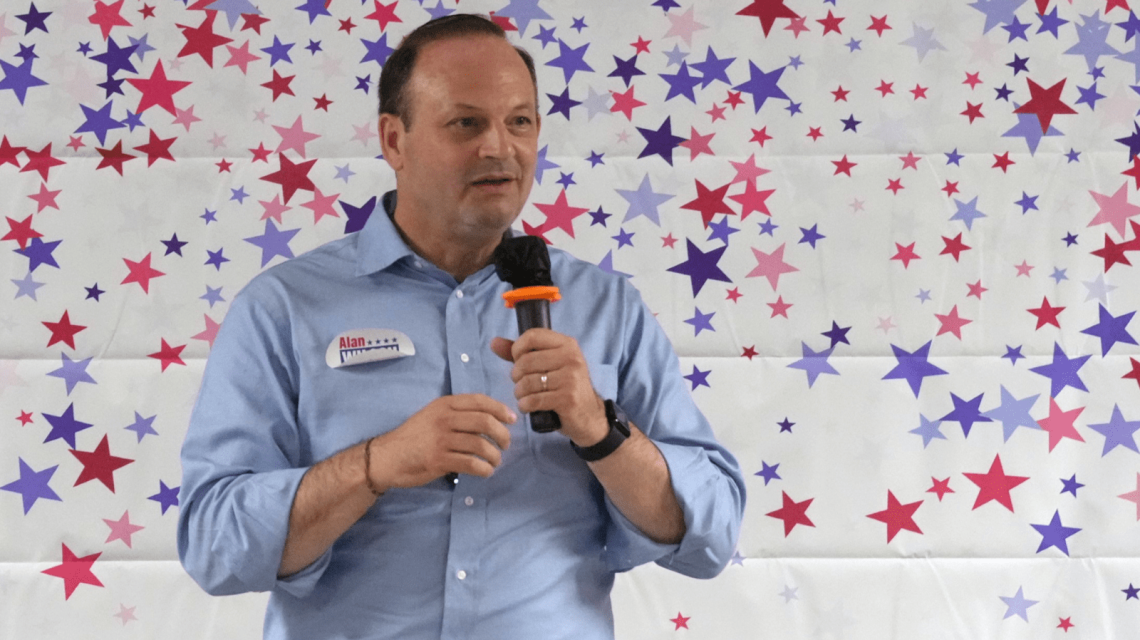
The latest poll released just before South Carolina Republicans head to vote shows Attorney General Alan Wilson with a commanding lead in the gubernatorial runoff. An InsiderAdvantage survey conducted on June 19-20 among 800 likely Republican runoff voters indicates Wilson has 61 percent support. This is compared to 29 percent for Lieutenant Governor Pamela Evette, with 10 percent of voters undecided.
Wilson’s late momentum could decide the nomination outright due to the low turnout typical in runoffs. Both candidates received endorsements from President Donald Trump, which has shifted the race’s focus to organization and turnout.
Key Points
- The InsiderAdvantage poll shows Wilson with 61 percent support, Evette with 29 percent, and 10 percent undecided.
- Earlier polling averages indicated a fragmented field with no clear leader.
- Prediction markets now heavily favor Wilson, showing his chances above 98 percent.
- South Carolina is a solid Republican state, making Tuesday’s winner the likely favorite for November.
How the Primary Unfolded
The runoff follows a crowded June 9 primary where no candidate secured a majority. This resulted in a second round with the top two finishers. Runoffs often rely on consolidating support from eliminated candidates, making late polling crucial. Evette previously received 28.9 percent of the vote to Wilson’s 26.1 percent. However, since then, Representatives Nancy Mace and Ralph Norman, who secured 12.1 percent and 17.1 percent respectively but did not advance, have supported Wilson. Governor Henry McMaster, an Evette endorser, is term-limited and cannot seek re-election.
Evette’s campaign spokesperson stated that voters have a “crystal clear” choice between a “proven business leader and conservative fighter” and a “career politician.” The campaign remains focused on voter outreach across all 46 counties, emphasizing turnout in this low-profile runoff.
What the InsiderAdvantage Poll Shows
The most recent poll, using a mixed-method text and panel approach, was weighted by age, race, and gender with a margin of error at 3.46 percent. The results were:
- Alan Wilson: 61 percent
- Pamela Evette: 29 percent
- Undecided: 10 percent
This margin marks a significant shift from earlier in the race, indicating a late consolidation around Wilson.
What Polling Averages Show
Before the initial primary vote, polling averages showed a close field without a strong front-runner:
- RealClearPolitics: Evette 20.2, Wilson 18.2
- Race to the White House: Evette 19.3, Wilson 17.6
- Decision Desk HQ: Evette 19.6, Wilson 18.5
- 270toWin: Wilson 18.8, Evette 18.7
- FiftyPlusOne: Evette 20.1, Wilson 17.4
The overall average showed Evette with 19.6 percent and Wilson with 18.1 percent, illustrating initial fragmentation.
What Prediction Markets Say
Prediction markets favor a Wilson victory:
- Kalshi: Wilson at 98.4 percent probability, Evette 1.5 percent
- Polymarket: Wilson at about 98 percent, Evette negligible
These markets aggregate diverse information streams but have limitations such as liquidity and participant representation.
What Forecasters Say About the General Election
Looking past the runoff, forecasters see South Carolina as firmly Republican:
- Inside Elections: Solid Republican
- Race to the White House: Likely Republican
- RealClearPolitics: Likely Republican
- Sabato’s Crystal Ball: Safe Republican
- Cook Political Report: Solid Republican
This consensus positions Tuesday’s winner as a likely favorite in the general election against Democratic nominee State Representative Jermaine Johnson.
What Happens Next
The data suggest that the race may be structurally decided, but runoffs can be unpredictable due to low turnout. Polls are open from 7 a.m. to 7 p.m., and any remaining uncertainty lies in voter turnout.
 Israeli Leader’s Upcoming U.N. Assembly Speech Marked by Controversy
  Republicans Call for Quick Resolution to Iran Conflict
  United States Secures Arctic Defense Pact
  Senator Warren Seeks to Restrict Private Equity in Restaurant Chains
  Marco Rubio’s Expanding Role in Trump Administration
  Byron Donalds Adjusts Campaign Strategy as Florida Governor Race Intensifies