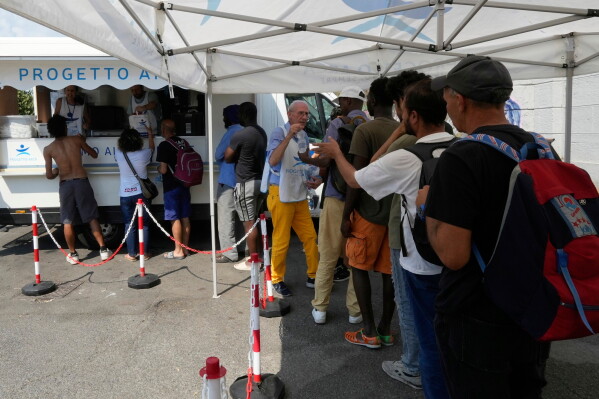
Recent research highlights a worrying trend: countries like Mexico, Kenya, and Italy are experiencing increased heat stress lasting one to two more months than several decades ago. Some regions, previously unaffected, now face these challenges as well. The rise in extreme feels-like temperatures, heat stress days, and tropical nights has intensified over the past sixty years. This change coincides with the ongoing burning of fossil fuels such as coal, oil, and gas. The study was published in Nature Climate Change.
Unlike previous studies that largely focused on ambient temperature, this research used feels-like temperatures to assess human heat stress. This involves factors like temperature, humidity, and wind speed. The Universal Thermal Climate Index helped model how the human body responds to environmental conditions. The danger of heat waves increases with humidity, as it affects sweat evaporation, the body’s cooling mechanism. Humid heat waves pose higher fatality risks compared to dry ones due to impeded cooling.
The study analyzed heat stress on three levels: strong (index temperatures ≥32°C or 89.6°F), very strong (≥38°C or 100.4°F), and extreme (≥46°C or 114.8°F). Many areas may experience up to 50 more strong heat stress days annually than in the 1970s. This includes regions in Southern and Eastern Africa, parts of Mexico and Central America, and Southern Europe. The U.S. also faces significant increases, especially southern states like Texas and Florida.
Lead author Rebecca Emerton, from the European Centre for Medium-Range Weather Forecasts, notes the expansion of heat stress into historically cooler regions. The feels-like temperatures during the ten warmest nights of the year have risen faster than those of the warmest days. This acceleration impairs people’s nighttime recovery from daytime heat. Today, one billion more people experience at least one extreme heat stress day annually compared to the 1970s.
The future impact of heat stress hinges on mitigation and adaptation measures. Jennifer Francis from the Woodwell Climate Research Center underscores that both temperature and humidity are rising, compromising the body’s cooling processes. Emerton emphasizes the need for climate risk assessments, heat health plans, and early warning systems. Addressing these issues will help in managing future climate challenges.
Alexa St. John is a climate reporter for the Associated Press.
 Potential Agreement on Permitting Reform
  Hurricane Season: Divergent Trends in the Atlantic and Pacific Oceans
  Understanding the Impact of a ‘Super’ El Niño
  Nor’easter Hits Mid-Atlantic and New England; Hurricane Nolo Advances on Hawaii
  Impact of Rising Diesel Prices on Economy and Consumers
  Managing Euonymus Scale Infestation in Pachysandra