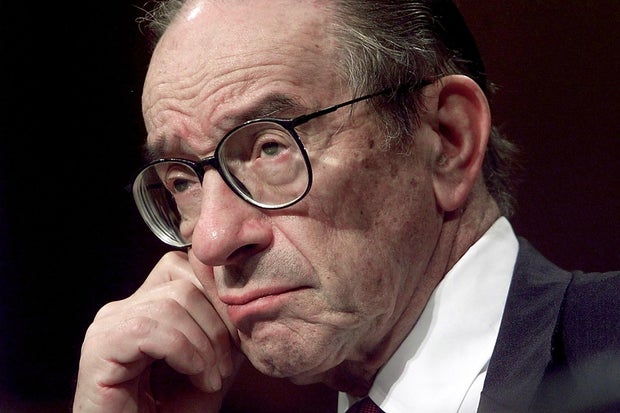
Alan Greenspan, renowned economist and former Federal Reserve chairman, passed away at the age of 100. His wife, Andrea Mitchell, confirmed that he died at his home due to complications from Parkinson’s Disease. Greenspan’s career at the Federal Reserve spanned terms under four U.S. presidents.
During his tenure, Greenspan played a key role during the Great Moderation, a period noted for its economic stability through the mid-1980s to 2007. This era featured low inflation and significant stock market growth. However, his time as chair also saw financial challenges, including the 1987 stock market crash and the dot-com bubble burst in the early 2000s.
Greenspan famously introduced the term “irrational exuberance” in 1996 to describe the inflated enthusiasm in the stock market, particularly in tech stocks. His legacy is also connected to the 2008 financial crisis and Great Recession. Critics believe his policies may have contributed to the housing market collapse, although it occurred after his departure in 2006.
In a 2017 essay, The Economist critiqued Greenspan for his belief in market efficiency and inadequate regulation. Greenspan defended his actions, attributing much of the backlash to “revisionist history.” He acknowledged underestimating human behavior’s impact on economics, a notion he later embraced as crucial to understanding market dynamics.
Known for his cryptic commentary, Greenspan advocated for the Federal Reserve’s transparency and reduced unexpected market surprises. “You don’t want to surprise the markets unless there is a purpose to it,” he recorded in a 2009 oral history for the Federal Reserve.
Born on March 6, 1926, in New York City, Greenspan faced familial financial struggles in his youth. He demonstrated exceptional mathematical ability early on. Initially pursuing music at Juilliard, he later earned multiple degrees in economics at New York University.
His early career included roles with the National Industrial Conference Board and his firm, Townsend-Greenspan & Co. Greenspan advised Presidents Gerald Ford and Ronald Reagan before becoming Federal Reserve Chairman in 1987. He served under Reagan, George H.W. Bush, Bill Clinton, and George W. Bush.
Greenspan married journalist Andrea Mitchell in 1997 and retired from the Federal Reserve in 2006. Reflecting on his tenure, he reportedly never received direct requests from presidents to alter interest rates, though they sometimes implied preferences.
 Tensions Rise Between Democratic Moderates and Progressives
  Republican Candidates Compete for South Carolina Senate Seat
  Conservative Activists Aim to Shape Judicial Perspectives on Birthright Citizenship
 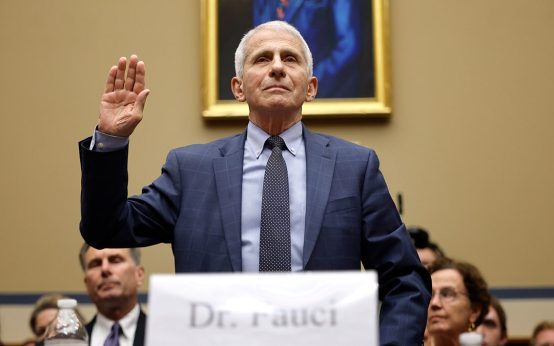 Understanding Contempt of Congress: Recent Case Involving Dr. Fauci
 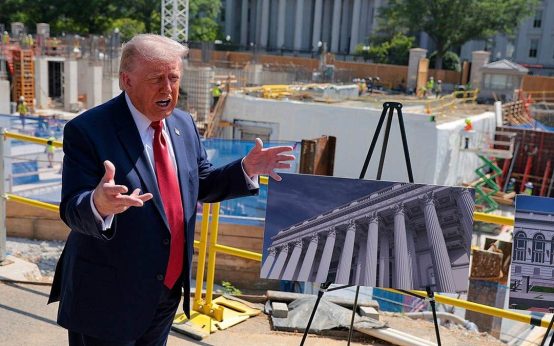 Legal Experts Predict Trump’s Success in White House Ballroom Case
 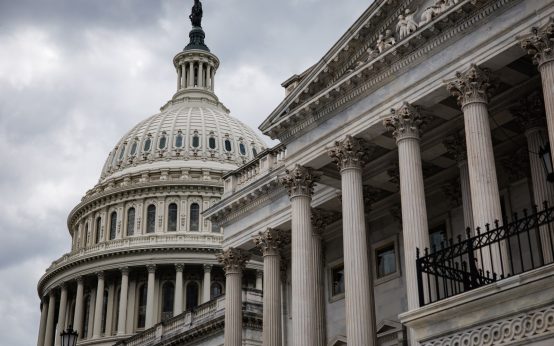 Senate Passes Stopgap Funding Bill, Affecting Key Policies