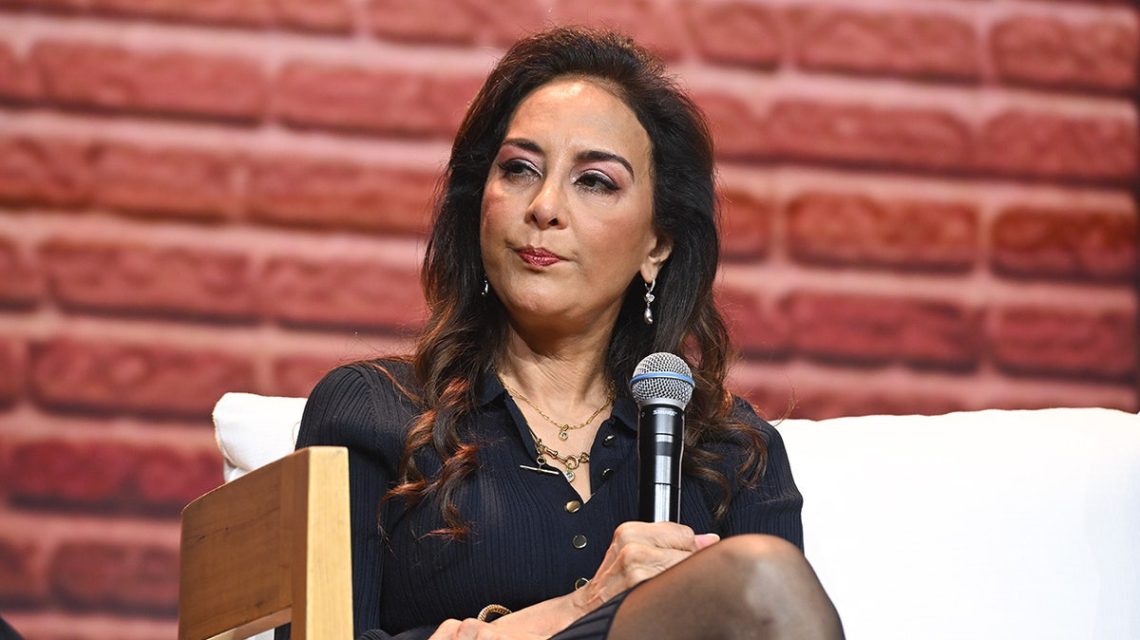
The federal government has expressed its intention to challenge reparations programs in the United States. These programs, according to government officials, are seen as efforts by state and local authorities to attract voters.
Assistant Attorney General Harmeet K. Dhillon of the Department of Justice (DOJ) Civil Rights Division stated, “Our philosophy here at this Department of Justice, consistent with recent Supreme Court precedent, is that all Americans are entitled to be judged on their own merits.” She further elaborated that reparations programs are not compatible with the Constitution because they cannot pass the stringent scrutiny required when racial classifications and governmental benefits are involved.
“I think that this reparations program, while obviously I understand the positive tensions, is an ill match for the Constitution.” – Harmeet K. Dhillon
The DOJ’s comments came as they joined a class-action lawsuit against Evanston, Illinois’s “Local Reparations Restorative Housing Program.” The lawsuit alleges that the initiative unlawfully distributes public benefits based solely on race and ancestry.
Dhillon noted that none of the program’s beneficiaries have directly suffered discrimination traceable to government actions. “We can’t have this system of spoils in this country where people who didn’t discriminate are being forced to pay people who didn’t suffer discrimination,” she added.
The DOJ argues that the program violates both the Equal Protection Clause of the Fourteenth Amendment and the Fair Housing Act due to its race-based financial assistance.
Evanston Housing Program
The program was approved by the city in 2019 and launched in 2021. It provides $25,000 grants to eligible Black residents or their descendants. The grants can be applied toward home purchases, mortgage assistance, property repairs, or taken as direct cash payments. Eligibility requires applicants to be Black and to have lived in Evanston as adults between 1919 and 1969, a period marked by systemic housing discrimination.
While some view the program as a step toward addressing generational economic disparities, the federal government asserts the program is not “narrowly tailored.” The government contends it relies only on race as a qualification without requiring evidence of personal financial or physical harm.
The lawsuit began in May 2024, led by Judicial Watch, a conservative legal group, representing six non-Black descendants of Evanston residents. U.S. District Judge John F. Kness allowed the lawsuit to continue after denying the city’s motion to dismiss.
To date, Evanston has distributed over $7 million from a $20 million fund. This fund arises from a local tax on legal recreational marijuana sales. Recently, the city’s Reparations Committee announced additional $25,000 payments to 44 more residents.
The City of Evanston released a statement affirming the legality of their reparations program, despite the DOJ’s ongoing intervention.
National Debate
Other areas, including Illinois and North Carolina, are considering reparations. Dhillon mentioned targeting Asheville, North Carolina’s program and stated they are reviewing others, noting that not all are identical.
Reparations programs are a focal point in the national discussion about racial reparative justice. Their legality and execution are under intense scrutiny as debates continue.
 Iowa Senate Election: Turek Leads in Polls Amid Economic Concerns
  Kamala Harris Joins Abdul El-Sayed in Michigan Senate Campaign
  Public Confidence in the Supreme Court at Record Lows
  Federal Authorities Arrest California Lawmaker’s Aide for Visa Overstay
  Hasan Piker Addresses Controversial Comments and Political Involvement
  Lukashenko and Putin Share Light Moments While Strengthening Ties