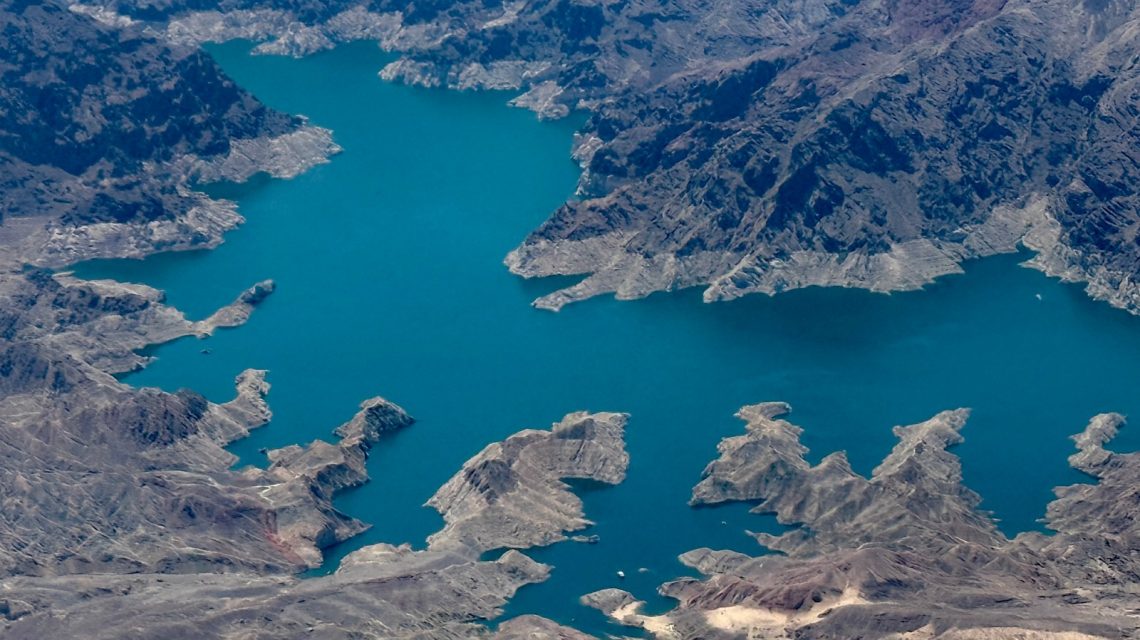
Federal projections suggest Lake Mead’s water levels may decline faster than anticipated. A new study by the U.S. Bureau of Reclamation (USBR) predicts that the reservoir could fall to 1,015.77 feet above sea level by July 2027. The recent 24-month study indicates a greater drop than previously forecast, which estimated a level of 1,020.76 feet in July next year.
The Colorado River network, vital for 40 million residents and over 5 million acres of farmland in the Western U.S., continues to face long-term drought conditions. This situation exacerbates water and electricity concerns at key reservoirs. A USBR spokesperson highlighted the vulnerabilities of the Colorado River system and stressed the need for new guidelines and updated procedures.
As of Tuesday, Lake Mead contained 7,454,257 acre-feet of water, representing 47 percent of the average for this time of year, according to USBR data. This level is only 29 percent of its total capacity.
“Recent projections highlight the ongoing vulnerability of the Colorado River system and emphasize the urgent need to develop new guidelines and establish updated procedures,” a USBR spokesperson told Newsweek.
What the Projections Indicate
The USBR’s 24-month study provides hydrological descriptions and projected operations for the next two years. Current projections indicate Lake Mead could decrease to 1,011.74 feet by the end of May 2028.
The agency notes that these studies are projections subject to change as actual hydrology, operations, and forecasts differ from those used in producing the reports.
Persistent concerns about power generation persist due to unfavorable forecasts for the Colorado River system. In a social media statement, the USBR noted that Lake Powell, the nation’s second-largest reservoir, risks reaching levels that endanger hydropower by spring 2027.
The study emphasizes the need for updated operational guidelines for the Colorado River, as the current ones are set to expire. Despite drought response actions, vulnerabilities remain.
Scientists have warned of a potential “system crash” due to the imbalance between water supply and demand in the Colorado River system.
Which States Rely on the River?
The states dependent on the river include Colorado, New Mexico, Utah, Wyoming in the Upper Basin, and Arizona, California, and Nevada in the Lower Basin. These states are attempting to negotiate updated water-sharing agreements as the existing guidelines expire this year, yet consensus eludes them.
Previously released satellite images illustrate the significant water level decline in Lake Mead over 25 years. The Landsat 7 mission, a partnership between the U.S. Geological Survey and NASA, captured the noticeable reduction in size from 1999 to 2024.
 Trump Administrations New Fuel Efficiency Rules: Impact and Reactions
  Winter 2026-2027 Weather Forecasts: A Closer Look
  Analyzing Oregon’s Wildfire Crisis and Its Implications
  Controversy Over Proposed MLB Stadium in Grand Teton National Park
  Ukraine’s Strategic Challenges in Air Defense
  Migrants Move North Through Mexico as U.S. Immigration Measures Intensify