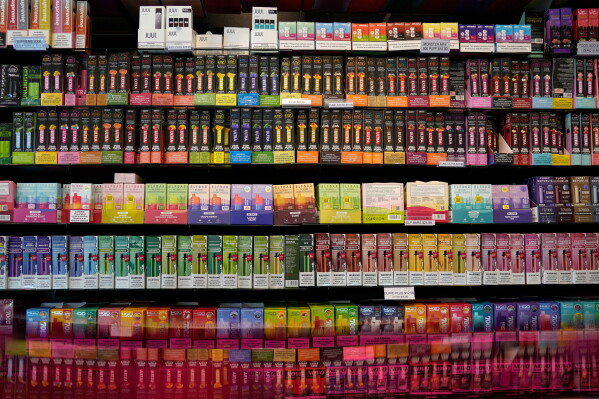
The Food and Drug Administration’s approval of fruit-flavored e-cigarettes has not demonstrated greater effectiveness in helping smokers quit compared to tobacco-flavored e-cigarettes. This recent development has raised questions about the agency’s decision-making process.
Last month, the FDA approved fruit-flavored vapes, endorsing them as a safer alternative to traditional cigarettes. This decision surprised many, as the agency has long stated that such flavors attract children. Approval for adults typically hinges on showing substantial health benefits.
Health advocates and lawmakers in Washington have criticized the FDA’s move, calling for clarification. A recent FDA memo offers more insights into the decision. The memo suggests regulators bypassed previous warnings about the dangers of sweet vaping flavors, even acknowledging gaps in data from Glas Inc., the vape maker. Companies must prove their products benefit public health by supporting adult smokers in switching or quitting cigarettes while avoiding teen appeal.
According to the memo, smokers using Glas vapes showed a higher likelihood of switching from cigarettes during a three-month study. However, data lacked clear statistical differences between those using mango and blueberry flavors and those using tobacco-flavored e-cigarettes.
This places Glas vapes beneath the benchmark set by other flavored products previously approved by the FDA, like menthol vapes from Juul and NJOY, which successfully demonstrated that menthol helped adults reduce or quit smoking more effectively than tobacco flavors.
The memo notes that Glas did not need to show added adult benefits, as young people were unlikely users. Glas’s e-cigarettes require unlocking through an age-verifying app, ostensibly deterring underage use.
This authorization diverges from FDA guidelines suggesting fruit and dessert flavors meet high evidentiary standards due to risks to children. Unlike fruit flavors, tobacco-flavored products generally face fewer regulatory hurdles. Unusually concise, the recent FDA document stretches only six pages. In comparison, authorization for Juul’s menthol e-cigarettes exceeded 90 pages, featuring detailed scientific data from research on 50,000 participants.
The short memo on Glas lacks specific details, such as the number of smokers studied. Typically, the FDA releases memos right after authorizing new products. However, the Glas memo appeared over a month later. Congressional inquiries followed, with 10 Democratic senators questioning the decision, calling it “reckless.”
Glas’s application, including menthol and tobacco-flavored vapes, took a complex route to approval. The Los Angeles-based firm submitted a request in 2021. Initial approval in February faced blockage by a senior official under then-FDA Commissioner Marty Makary. The mango and blueberry flavors eventually received approval during Makary’s final week, amidst criticism from industry stakeholders.
The Associated Press Health and Science Department is supported by the Howard Hughes Medical Institute’s Department of Science Education and the Robert Wood Johnson Foundation, with AP maintaining sole content responsibility.
 Rising Opioid Crisis in Austin Driven by a Potent New Drug
  AI Prescriptions in Health Care: Utah’s New Initiative
  Understanding Rising Stroke Rates in Younger Populations
  A Cat Sitter’s Medical Crisis: Understanding Brain Aneurysms
  A Mother’s Journey with Her Son Born with Clubfoot
  Building Resilience: Learning from Crisis Management in Healthcare