Drone technology and diplomacy highlight the interconnections between wars, shaping future conflicts.
Assessing the Impact of Conflicts
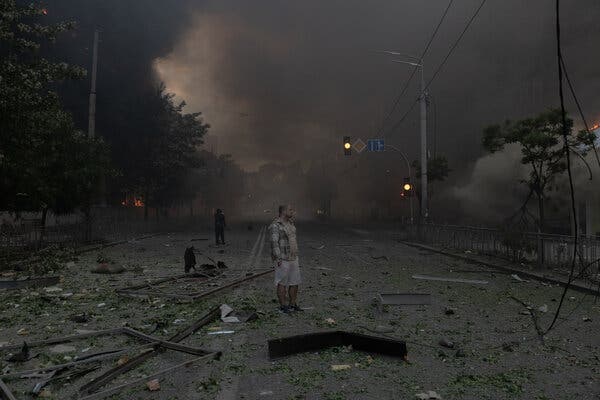
In Kyiv, damaged buildings stand as a testament to Russian strikes. The similarities between the war in Ukraine and the conflict involving the United States, Israel, and Iran are notable.
The trench warfare and artillery in Ukraine contrast with air and sea assaults by the United States and Israel on Iran. Yet, both conflicts reveal unexpected difficulties faced by powerful militaries.
Unmet Expectations
Russia and its President, Vladimir V. Putin, anticipated swift success after initiating their “special military operation” over four years ago. The operation has lingered beyond expectations.
Similarly, President Trump predicted a short campaign against Iran starting on February 28. This mission remains prolonged.
“There’s a lot of unmet expectations about their military operations,” remarked Nicole Grajewski, a scholar residing at Sciences Po in Paris. She attributed this to “hubris on both sides.”
Recent talks hint at a potential peace plan between Iran and the U.S., yet skepticism remains due to renewed American strikes on Monday. Whether a deal is struck or not, both conflicts have offered profound insights into evolving warfare strategies.
Technology’s Role in Modern Warfare
Asymmetric tactics have permitted both Ukraine and Iran to stall mightier military opponents. These countries have avoided conventional warfare where their forces are vastly outpowered.
 Senator John Fetterman’s Humorous Gaffe at Texas Tribune Festival
  California Enacts New Industrial Regulations Following Fire
  Pope Leo XIV Visits Lourdes: A Pilgrimage of Healing and Reflection
  Kentucky Governor Andy Beshear Defends Transgender Policies Amid Criticism
  Tom Kim’s Unique Opportunity at the Presidents Cup and Asian Games
  Senator Fetterman Critiques Democratic Party’s Stance on Israel