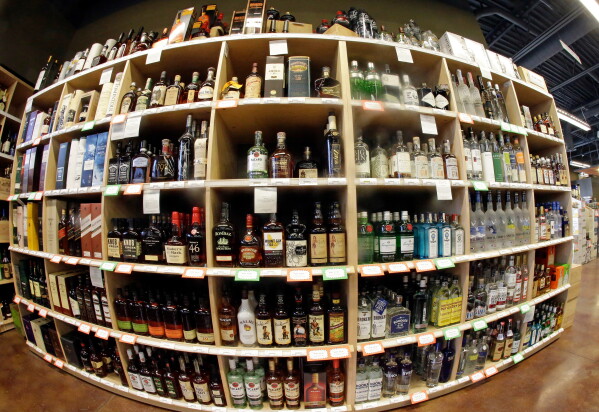
A study initiated by President Joe Biden’s administration on alcohol-related health harms has been released. This followed an earlier decision by President Donald Trump’s administration not to include the research findings in new dietary guidelines after facing opposition from the alcohol industry and a congressional committee.
The research, published in the Journal of Studies on Alcohol and Drugs, aligns with existing evidence. It states that health risks increase with even one drink a day, and no level of alcohol consumption is protective against mortality. Even moderate drinking raises the risk of premature death and over 200 diseases, including heart disease and cancer.
The study was part of two government reviews intended to inform new dietary guidelines. The earlier released guidelines recommended consuming less alcohol for better health. However, the authors of the released study argue it lacked detailed advice on drinking risks.
“The challenges confronting alcohol policy today are not rooted in scientific uncertainty,” wrote Robert Vincent, a former Substance Abuse and Mental Health Services Administration official involved in the study.
Vincent, who was laid off last year during a government workforce reduction, accused the Trump administration of sidelining the research. The administration denied such claims.
The study’s release highlights strained relations between the scientific community and the Trump administration. Industry and congressional Republicans expressed skepticism, criticizing the study as biased. The House oversight committee described it as having predetermined conclusions based on authors’ past work.
Emily Hilliard, spokesperson for the U.S. Department of Health and Human Services (HHS), stated the study underwent review alongside other scientific evidence to shape the 2025–2030 Dietary Guidelines. She emphasized that recommendations consider the entire scientific record, not a single study.
Vincent mentioned in an interview that the study was vetted for conflicts, describing the findings as scientifically sound. He claimed attempts were made during the Trump administration to halt the study, but he resisted. HHS had no immediate comment on this claim.
The researchers support making a more explicit recommendation that adults limit themselves to one drink or fewer a day. Dr. Timothy Naimi, an author of the study and director at the University of Victoria’s Canadian Institute for Substance Use Research, stated, “Less is best.” According to Naimi, providing specific quantity guidelines is crucial for informative dietary recommendations.
The study differed from other government-commissioned research by not considering overall mortality but rather focusing on alcohol-attributed mortality. Priscilla Martinez-Matyszczyk, another author from the Public Health Institute’s Alcohol Research Group, explained this method avoided confounding factors.
Some have argued that alcohol serves as a social connector, with the potential for positive health impacts. Martinez-Matyszczyk pointed out the lack of studies distinguishing the social from health effects.
Recent studies, like one in 2019 from Lancet, have shown even moderate drinking raises stroke and high blood pressure risks, without protective health effects. Initial beliefs about alcohol’s heart benefits have been challenged by better research methods, showing that earlier studies failed to prove causation.
Approximately half of Americans age 12 or older have consumed alcohol in the past month, making it a prevalent substance. A single drink is roughly equal to a 12-ounce beer, a 5-ounce glass of wine, or a shot of liquor.
The Associated Press supports its Health and Science Department through contributions from the Howard Hughes Medical Institute’s Department of Science Education and the Robert Wood Johnson Foundation.
 Concerns and Legal Actions Arise Over GLP-1 Drugs and Vision Loss
  Partner’s GLP-1 Use Spurs Financial and Dietary Concerns
  Starbucks Faces Lawsuit Over ‘Sugar-Free’ Protein Drinks
 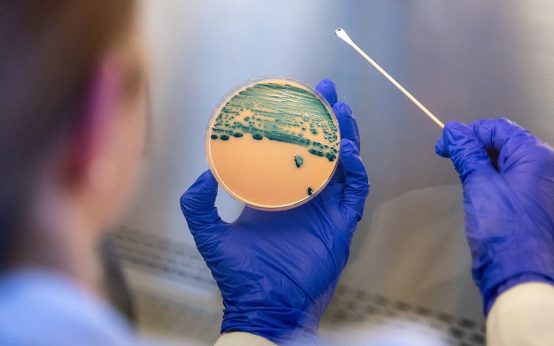 Rising Antibiotic Resistance in Shigella Infections
  Parent’s Journey Through Their Child’s Congenital Cataract Diagnosis
  Vicky Titcomb’s Cancer Journey and Treatment Advances