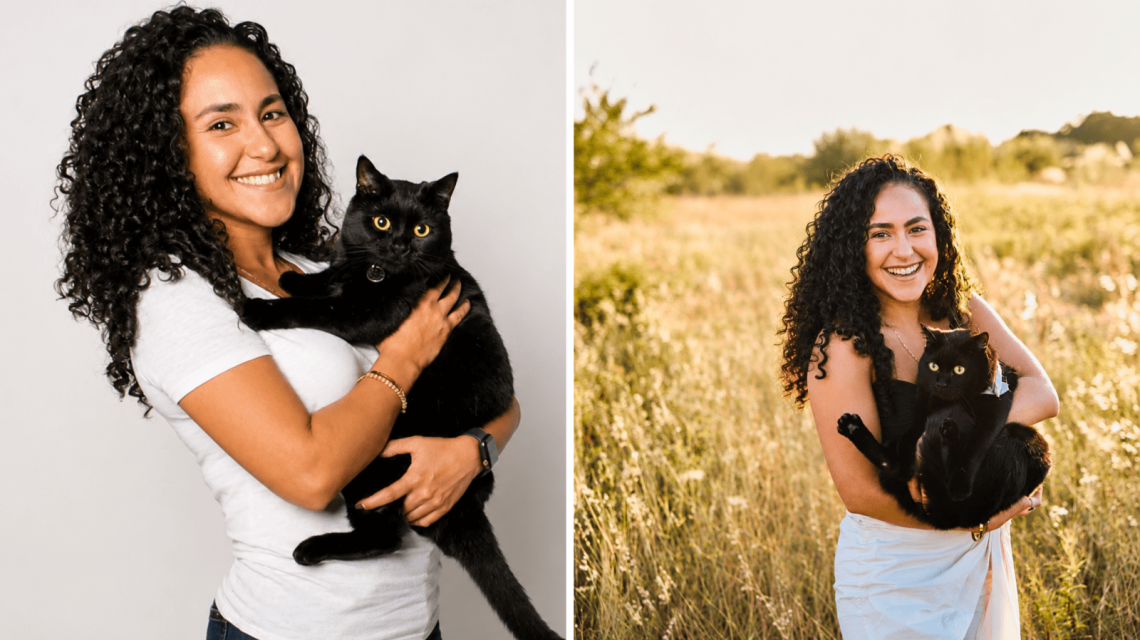
At 32, Yvette Ramirez hadn’t smoked and had no family history of lung cancer. Living in the Netherlands, she imagined a future that spanned decades. Her assumption shattered when a persistent cough led to a stage 4 lung cancer diagnosis. Now 36, Ramirez’s experience is emblematic of a trend where younger, non-smoking individuals are diagnosed with lung cancer due to genetic factors, often at advanced stages because they’re unexpected candidates.
Originally from Florida with Cuban and Salvadoran roots, Ramirez first noticed her cough in September 2022 after moving to the Netherlands. Believing it was a seasonal issue, she ignored it. But the cough persisted for months. In December, at her partner’s insistence, she sought medical advice. Her Dutch doctor suspected bronchitis and prescribed medication.
However, the cough remained unyielding. While visiting U.S. family that winter, a visit to the ER prompted a chest scan, revealing inflammation but no immediate concern. Returning to the Netherlands, her doctor suspected a respiratory infection. Multiple consultations led to a referral to a pulmonologist, who considered tuberculosis. Only after a PET scan did Ramirez receive a stark notification: a tumor was present.
In February 2023, Ramirez learned she had stage 4 EGFR-mutated non-small cell lung adenocarcinoma. This aggressive form had already spread to her brain, marking her diagnosis as stage 4. This news forced Ramirez to mourn not only her health but also the future she envisioned, including starting a family. Driven by this realization, she returned to a long-delayed project: writing children’s books that reflect her cultural roots.
She founded Kuro Libros, a bilingual publishing brand, and released the debut book, Mi Familia Cubana con Kuro / My Cuban Family with Kuro. The story features her cat, Kuro, visiting family in Miami and explores her heritage. Ramirez emphasizes that her cancer influenced her relationship with time but not the purpose behind her book. Sharing her diagnosis, she challenges stereotypes about lung cancer, highlighting that it affects young non-smokers too.
Ramirez began targeted therapy in 2023, initially using osimertinib, but later switched due to drug-related pneumonitis. She transitioned to erlotinib until mid-2025 before returning to osimertinib. As March testing revealed MET amplification, prompting additional treatment, she continues her regimen, balancing regular monitoring.
Ramirez sees living with cancer as managing a chronic disease rather than being defined by it. “Planning, creating, and pursuing meaningful work refuses to let cancer define me,” she states. Her journey exemplifies resilience and the complexity of modern cancer experiences.
 Whistleblower Reacts to Elizabeth Holmes Documentary
  Trump Establishes Women’s Health Division and Task Force
  The Emergence of Cychlorphine: A New Synthetic Opioid Crisis
  Infections Linked to 1 in 8 Cancer Cases Globally, Study Finds
  Cancer Concerns Rise Among Iowa Voters Due to Environmental Factors
  Choosing the Right Mouthwash for Braces