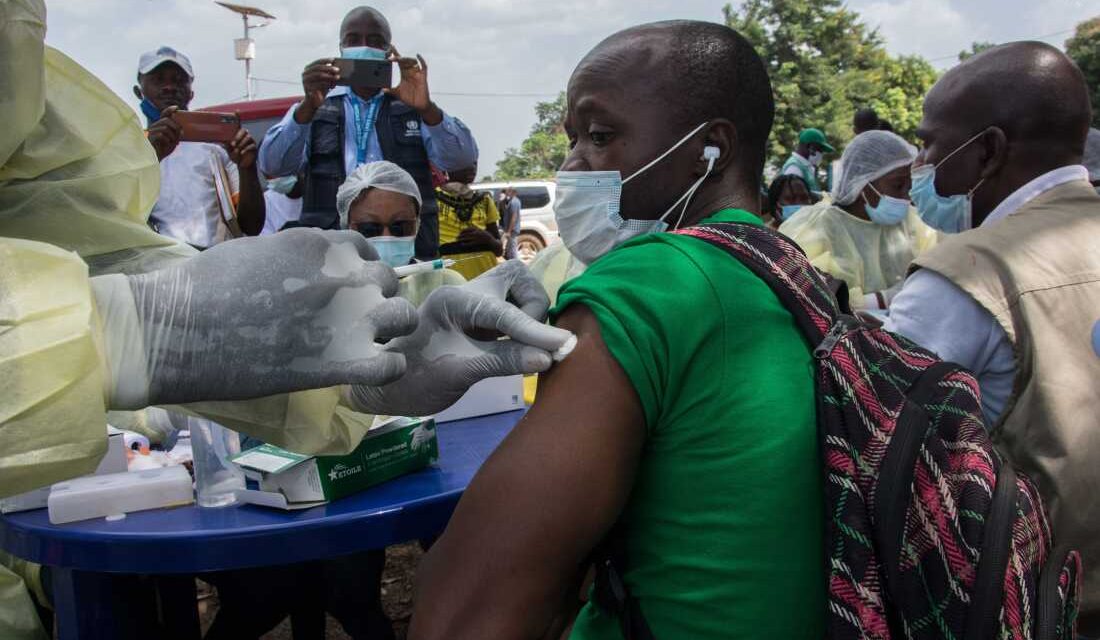
A health worker from the Guinean Ministry of Health prepares to administer an anti-Ebola vaccine in Gueckedou, Guinea, on February 23, 2021, following an outbreak.
The first Ebola vaccine gained approval for use in 2019, three years after a devastating outbreak in West Africa claimed over 11,000 lives. This vaccine targets a different Ebola species than the Bundibugyo virus, which is currently spreading in the Democratic Republic of Congo and Uganda. Experts believe Ervebo will be less effective against the Bundibugyo species. There are no approved vaccines or treatments for this variant.
This week, global vaccine organizations have committed over $100 million to develop a Bundibugyo-specific vaccine. The Coalition for Epidemic Preparedness Innovation (CEPI) pledged approximately $62 million towards research and development of three vaccine candidates. Additionally, Gavi, a global vaccine alliance, allocated $40 million to create a market for the vaccine pending its successful testing.
Nicole Lurie, CEPI’s executive director for preparedness and response, emphasized the need for an effective vaccine. Previous outbreaks have shown that vaccines significantly reduce Ebola morbidity and mortality when matched to the specific strain of the virus. Upon learning that the current outbreak is driven by the Bundibugyo species, efforts to accelerate development commenced.
Even with vast financial resources, effectiveness evaluation and widespread deployment of the vaccine will take time. With the DRC outbreak being one of the largest recorded and showing no signs of abating, a future vaccine could prove essential. WHO’s Anaïs Legand expressed optimism about fast-tracking vaccine candidates but highlighted the need for testing adhering to strict ethical guidelines.
“They will still need to undergo testing,” Legand noted during a press briefing.
Historically, the US collaborated on experimental Ebola vaccines amid outbreaks. However, following reduced US participation in WHO activities under the Trump administration, the US’s role remains uncertain. During the 2014 Ebola outbreak, the US National Institute of Allergy and Infectious Diseases (NIAID) led clinical trial efforts, eventually approving the 2019 vaccine.
Elizabeth Higgs, formerly affiliated with NIAID, acknowledged that strategic contributions from the global community have emerged, compensating for the US’s scaled-back involvement.
Current Vaccine Developments
CEPI funds three candidates: IAVI, University of Oxford, and Moderna. Each has its pros and cons regarding speed and ease of development and approval. IAVI’s project, initially tested about 15 years ago, uses a vesicular stomatitis virus (VSV) to engage the immune system. In 2014, research led by Thomas Geisbert showed high levels of protection in monkeys after exposure to the Bundibugyo virus.
Oxford University will receive $8.6 million to adapt the Oxford/AstraZeneca COVID-19 vaccine for Bundibugyo-targeted use. Together with Serum Institute of India, they anticipate doses ready within one or two months.
Moderna, awarded up to $50 million, focuses on an mRNA vaccine. Previously, an mRNA approach showed successful results against the Zaire Ebola species in guinea pigs. However, rapid outbreak intervention may require quick immunity, challenging a two-dose method.
Clinical Trials Amid Ebola Outbreak
These vaccine candidates will next be tested in clinical trials within the outbreak zones. Conducting trials around outbreaks requires predicting case locations, made more difficult due to conflict in northeast DRC.
Lurie from CEPI pointed out the widespread misinformation surrounding vaccines, fostering distrust among communities. False information circulates via social media, accusing aid workers of harming patients. Such conditions complicate participant enrollment and vaccine efficacy tracking.
Lurie stressed the importance of community engagement in trial readiness. Elizabeth Higgs underlined the efforts to establish rigorous trials assessing candidate vaccines’ safety and efficacy.
“We’re doing everything we can to establish trials that are going to quickly and rigorously assess the safety and efficacy of these candidate products,” Higgs stated.
 Mindfulness: Manage Stress by Embracing the Present
  Missouri’s Abortion Policy: Conflicting Amendments and Voter Decisions
  The Impact of Extended Job Searches on Mental Health
  Philanthropic Shift Towards Supporting Women in Midlife
  Measles Exposure in Philadelphia Raises Health Concerns
  Lawsuits Claim Vision Loss Risk from GLP-1 Medications