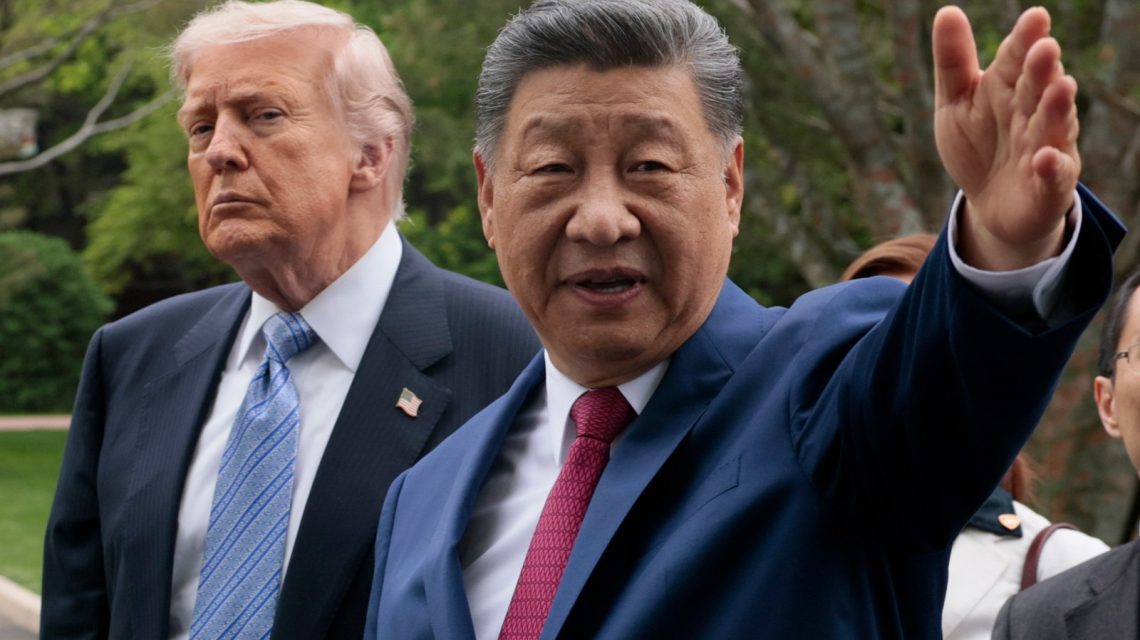
Chinese President Xi Jinping has highlighted the importance of mastering emerging technologies for China’s future in the global economy. Speaking to the ruling elites of his party, Xi stressed that a failure to grasp these technologies could result in China losing its competitive edge. He urged leaders at all levels to enhance their understanding of frontier science and technology and improve their decision-making capabilities regarding industry advancements.
In his speech, published in the Communist Party’s journal, Xi reiterated the need to advance in fields such as quantum technology, biomanufacturing, hydrogen and nuclear fusion energy, brain-computer interfaces, embodied AI, and 6G. These fields are seen as pivotal for China to achieve technological leadership. Identifying and controlling key industries and choke points has allowed China to dominate in areas like green technology and resource supply chains.
China’s Manufacturing Strategy
For two decades, China has invested trillions into becoming a global manufacturing powerhouse. This strategy has included significant state funding, land allocation, and enabling local companies to bypass certain norms, giving them an edge over Western competitors. Chinese companies have gained significant market positions in sectors like electric vehicles and technology.
BYD, a leading electric vehicle manufacturer, exemplifies this success. With government support in the form of loans and tax breaks, BYD has achieved a strong global presence, surpassing competitors like Tesla in sales. In Europe, it ranks third behind Volkswagen and BMW in the EV sector.
The United States has responded by blocking Chinese electric vehicles from its market. The European Union is considering shifting from tariffs to implementing price controls to address the competitive pressures from Chinese firms.
China’s Cyber Revolution Ambition
China is steering towards leading a cyber revolution, driven by advancements in artificial intelligence, robotics, and smart technology. The country aims to create a robust infrastructure that supports decades of AI research to become the foremost provider of online services and connected hardware, continuing its trajectory of technological growth. However, achieving parity with the U.S. in computing power remains a challenge.
This technological plan is designed to counter long-term economic challenges China faces, such as demographic changes and global resistance to deindustrialization policies.
Subsidies and Global Competition
According to a new report by the OECD, global industrial subsidies are at their highest since the 2008 financial crisis. Chinese firms have received 52% of the $108 billion in subsidies granted globally in 2024. These subsidies have significantly contributed to the growth of both Chinese and international firms from 2005 to 2023.
The report indicates that nearly 60% of Chinese firms’ market share gains internationally can be associated with subsidy support. Chinese enterprises received substantially more subsidies than competitors in OECD nations. While these subsidies provide short-term consumer benefits through lower prices, there is a risk that long-term innovation and competition may suffer, likened to ‘doping’ in sports.
The Chinese government argues its market dominance is due to product competitiveness.
 Controversy Surrounding Nidal Hasan’s Execution Livestream
  Exploring the Practical Uses of AI Agents
  Debate Over Livestreaming Execution of Fort Hood Shooter
  Controversy Surrounds Pennsylvania’s 10th Congressional Race
  Pope Leo XIV Labels Death Penalty an Assault on Human Dignity
  Advocating for Clean Slate Act to Remove Employment Barriers