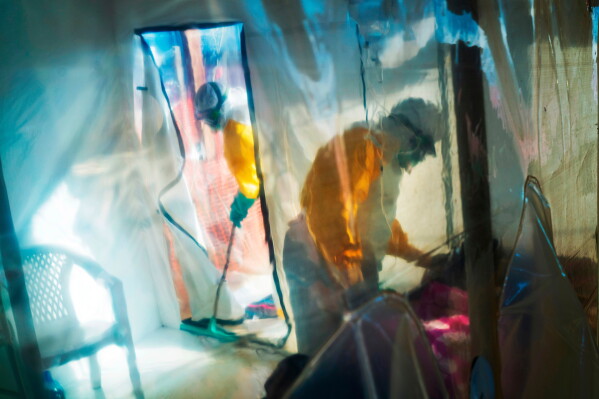
The World Health Organization (WHO) has declared the Ebola outbreak in the Democratic Republic of Congo and neighboring Uganda a public health emergency of international concern. This decision follows the report of over 300 suspected cases and 88 deaths. However, the WHO clarified that the outbreak does not meet the criteria for a pandemic like COVID-19, advising against closing international borders.
In a recent communication, the WHO mentioned a lab-confirmed case in Kinshasa, Congo’s capital, located approximately 1,000 kilometers from the epicenter in Ituri province. This suggests a potential wider spread of the virus. The Kinshasa patient had visited Ituri, and suspected cases have surfaced in North Kivu, one of Congo’s most populated provinces.
The government of Goma, the largest city in eastern Congo, confirmed its first Ebola case on Sunday. The infected individual traveled from Ituri and is currently in isolation. Goma experienced a rebel offensive in early 2025, and ongoing conflict between Congolese armed forces and Rwanda-backed rebels has displaced thousands of people.
Ebola: A Rare, Often Deadly Disease
Ebola is highly contagious, spreading through bodily fluids such as vomit, blood, or semen. Though rare, the disease is severe and frequently fatal. The WHO’s emergency declaration aims to prompt donor agencies and countries to take action. Such declarations indicate a serious event, international spread risk, and the need for a coordinated global response.
Previously, in 2024, the WHO declared global emergencies for monkeypox outbreaks in Congo and other parts of Africa. Yet, experts noted that this did little to expedite supplies like diagnostic tests, medicines, and vaccines to affected regions.
A Difficult-to-Treat Ebola Variant
The current outbreak, confirmed last Friday, results from the Bundibugyo virus, a rare variation of Ebola. No treatments or approved vaccines exist for this strain. While the Congo and Uganda have experienced over 20 Ebola outbreaks, this marks the third detection of the Bundibugyo virus.
Most cases are in Congo, with just two reported in Uganda. The Bundibugyo virus was first identified in Uganda’s Bundibugyo district during a 2007-2008 outbreak, infecting 149 and killing 37. A second outbreak occurred in 2012 in Isiro, Congo, with 57 cases and 29 deaths reported.
Dr. Richard Kitenge, from Congo’s Public Health Emergency Operations Center, recently traveled to Ituri. He noted past outbreaks managed without treatment, such as with the Zaire virus, which lacked treatment in several epidemics yet not all infected died.
Conflict and Migration Complicate Containment Efforts
Dr. Jean Kaseya, head of Africa’s Centers for Disease Control and Prevention (CDC), remarked on the high number of active cases in the community, especially in Mongwalu. This complicates containment and contact-tracing efforts significantly.
Violent conflict with militia groups, some linked to ISIS, and ongoing population movement due to mining within Congo and across borders with Uganda are substantial challenges to response efforts.
The initial spread of the disease was reported last Friday in Congo’s eastern province of Ituri, near Uganda and South Sudan. By Saturday, the African CDC recorded 336 suspected cases and 87 deaths in Congo.
Uncertainties remain about the true number of infections and the geographical spread. Tedros Adhanom Ghebreyesus, WHO’s director-general, expressed concerns regarding the extent of the outbreak and limited understanding of epidemiological links.
Two Ugandan cases have connections to Congo: one person died in a Kampala hospital and another also traveled from Congo.
The WHO noted a high positive test rate, spread to Kampala and Uganda, and death clusters in Ituri suggest a larger outbreak than reported, posing significant local and regional spread risks.
US CDC Says Risk to Americans Is Low
US health officials assess the risk to Americans as low. They have not outlined potential exposure risks to Americans. The US CDC is collaborating with health officials to manage the outbreak and prevent further Ebola spread, according to Dr. Satish Pillai, head of the CDC’s outbreak response.
The CDC has an office in Congo with 30 staff members and plans to deploy more workers to address the outbreak. On Friday, the agency advised Americans traveling to Congo to avoid those showing symptoms like fever, muscle pain, and rash.
The CDC is taking steps to identify symptomatic individuals at entry ports. More details were not immediately available.
Outbreak in Congo Resulted in 50 Deaths Before Detection
Kaseya highlighted that delayed detection hindered the response, allowing virus spread. “This outbreak began in April. We still do not know the index case, which means we lack an understanding of the outbreak’s magnitude,” he explained.
The earliest known victim, a 59-year-old man, developed symptoms on April 24 and died in an Ituri hospital on April 27. By the first alert on social media on May 5, 50 deaths were already recorded, according to the African CDC.
The WHO reported at least four deaths among healthcare workers showing Ebola symptoms.
Mike Stobbe of The Associated Press contributed to this report from New York.
This article was translated from English by an AP editor with the assistance of a generative artificial intelligence tool.
 CDC Director’s Stance on RFK Jr.’s Leadership
  Exploring the Potential of mRNA Vaccines in Cancer Treatment
  Challenges Faced by the Family of a Rare Cancer Patient
  Keys to Effective Post-Exercise Recovery for Adults Over 35
  Personal Journey in Understanding Neurodegenerative Diseases
  Artist Speaks Out on Rare Condition Impacting Her Career