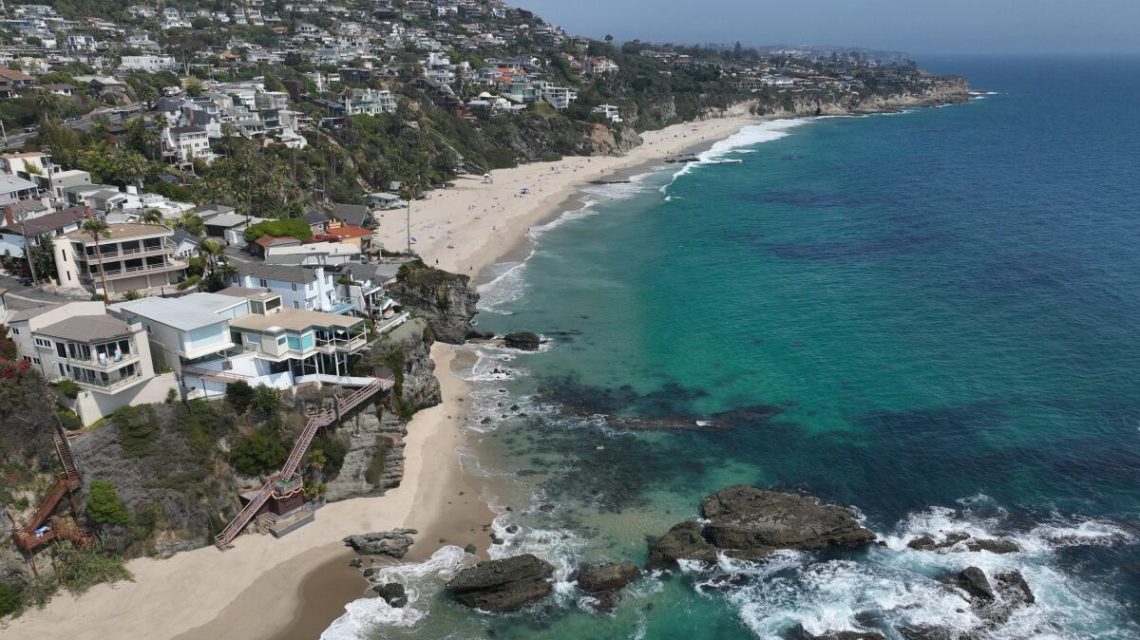
Southern California Beaches Face Water Quality Issues
As Memorial Day weekend nears, many in Southern California may be tempted to enjoy the sunshine at local beaches. However, researchers caution about unsanitary waters in certain areas. The Santa Monica Pier area has been named one of California’s dirtiest beaches for the fifth consecutive year by the environmental nonprofit Heal the Bay. This ranking is part of their annual Beach Report Card, which assesses fecal pollution along the West Coast from Baja California to Washington State.
Health Risks Linked to Beach Pollution
Heal the Bay’s report highlights the health risks associated with polluted waters. Even a single exposure to contaminated water can cause illnesses such as rashes, ear infections, upper respiratory issues, and gastrointestinal diseases. Tracy Quinn, CEO of Heal the Bay, emphasizes that water quality is a critical public health concern affecting everyone who visits California’s beaches and rivers.
Current Beach Pollution Statistics
The report evaluated 490 beaches from 2025 to 2026. The top dirtiest beaches include locations in San Mateo County, San Diego County, and Humboldt County, with the Santa Monica Pier being the only Los Angeles County beach on the list. Despite recent infrastructure improvements in Santa Monica, pollution remains a challenge, especially north of Pico and south of Wilshire boulevards.
Efforts to Improve Water Quality
Santa Monica has made significant investments in infrastructure like stormwater capture systems and bird-deterring netting to reduce pollution. Yet, bacteria levels have risen, indicating that more maintenance and investment are needed. Shannon Parry, Chief Sustainability Officer for Santa Monica, acknowledges the quality of other nearby beaches but questions why the pier area remains problematic.
Finding Solutions
In response, Heal the Bay has partnered with Santa Monica to form a task force aimed at identifying pollution sources and developing mitigation strategies. The task force comprises various stakeholders, including government agencies, scientists, businesses, and the community. They are examining bacteria data collected over the past 20 years to identify trends and causes of contamination.
Research and Analysis Efforts
Recent studies show that increased bacteria levels have persisted since 2020, with monthly averages reaching up to 20 times the safety limits. This suggests a possible structural or environmental change. Researchers from Heal the Bay and the Southern California Coastal Water Research Project will use microbial source testing to pinpoint pollution sources, analyzing bacteria DNA to determine links to humans, birds, or dogs.
The city is also investigating how water circulation around the pier, influenced by the breakwater, may affect pollution. Last September, researchers used a nontoxic pink dye to study these dynamics, and analysis is ongoing.
Expert Recommendations for Beachgoers
Parry advises residents and tourists to enjoy high-quality water at beaches located 100 yards north and south of the pier. Heal the Bay provides a list of the 10 dirtiest beaches, with only Santa Monica Pier representing Los Angeles County. Among 490 monitored beaches, 21 made the “honor roll” for water quality, down from 62 last year. Researchers link this decline to Southern California’s higher-than-average seasonal rainfall, given that Northern and Central California do not monitor water quality year-round.
- Dirtiest Beaches:
Playa Blanca (Tijuana, Mexico), Santa Monica Pier (Los Angeles County), and several in San Mateo County. - ‘Honor Roll’ Beaches:
Bluff Cove (Los Angeles County), Capistrano County Beach (Orange County), and others with high water quality.
 Medicare Lab Test Payments: Upcoming Changes and Their Implications
  Gen Z Faces Economic Barriers to Dating and Intimacy
  Presley Gerber’s Death Highlights Concerns in Addiction Treatment Approaches
  Communities Continuing Recovery from Hurricane Helene Explored through Graphic Novel
  Understanding VA Disability Benefits and Latest Legislative Developments
  Fat Bear Week 2026 Highlights: Meet the Competitors