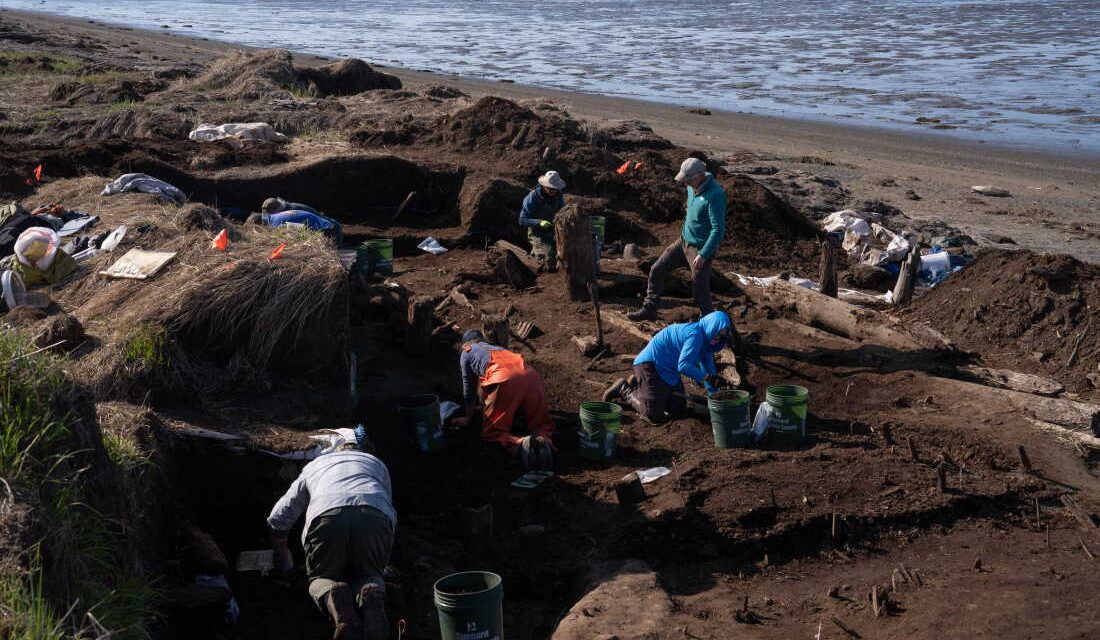
In the coastal village of Quinhagak, Alaska, a group of volunteer excavators and archaeologists meticulously searches for artifacts at the Nunalleq dig site. This is a crucial mission as erosion threatens to destroy connections to the past.
Last October, Typhoon Halong swept through western Alaska, causing significant flooding and displacing over a thousand people. In Quinhagak, the storm caused considerable damage, with beach erosion revealing many cultural objects. After the storm, Jenny Matthew and her husband discovered a wooden bowl while assessing the damage. The bowl, carved between 400 and 600 years ago, was once buried at the Nunalleq site.
The Nunalleq site is renowned for its rich cultural heritage. It offers insights into the Alaska Native Yup’ik culture before Western contact. The area has been archeologically significant since the early 2000s, with thawing permafrost uncovering numerous objects. These include hand-carved animals, sewing needles, and wooden masks. The frozen ground has preserved their state over the centuries.
Led by principal archaeologist Rick Knecht, the team works with a limited budget, supported by organizations like the Pacific Northwest Archaeological Society and the Daughters of the American Revolution. The emergency dig space is compact, focusing on remnants of ancient sod houses.
Archaeologist Charlotta Hillerdal expressed deep concern over the site’s vulnerability to erosion, fueled by human-caused climate change. She shared her distress when the storm damage came to light. The site is perilously close to the encroaching Bering Sea, with high tides at times reaching the excavation pit.
As storms threaten further devastation, the archaeological team plans to return next summer. They are fundraising through a GoFundMe campaign and Quinhagak Heritage Inc.
At the Nunalleq Culture and Archaeology Center, artifacts are preserved for public access and for descendants of the original creators. Elizabeth Church, director of Quinhagak Heritage Inc., emphasized the community’s responsibility to protect their ancestors’ artifacts. The center helps community members connect with their heritage.
The artifacts show evidence of past adaptability to environmental changes. Church noted the resilience of the people who originally made the items, highlighting how this strengthens local cultural identity. As fall storm season approaches, the urgency to preserve these relics grows.
 Lucas Museum of Narrative Art Unveils in Los Angeles
  Lonnie G. Bunch III Reflects on His Legacy at the Smithsonian
  A Decade of Impact at the National Museum of African American History and Culture
 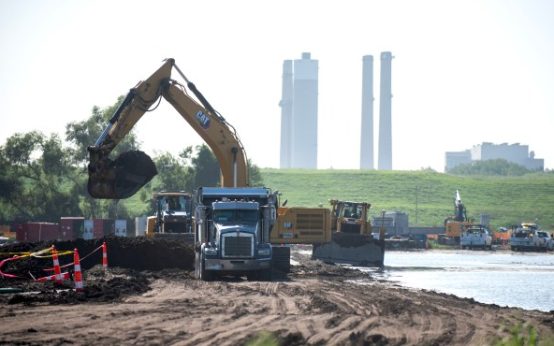 Concerns Rise Over NIPSCO Permit In Jasper County
  Reader Reactions on Grizzlies and Data Centers
 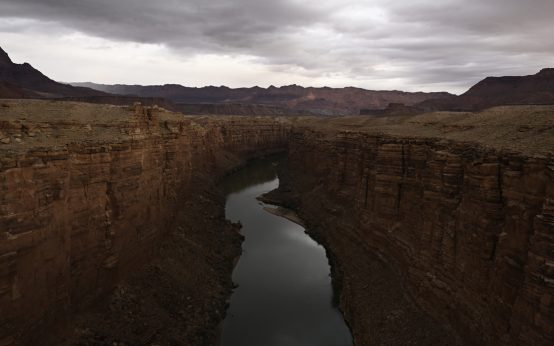 Managing the Crisis of Drying Rivers