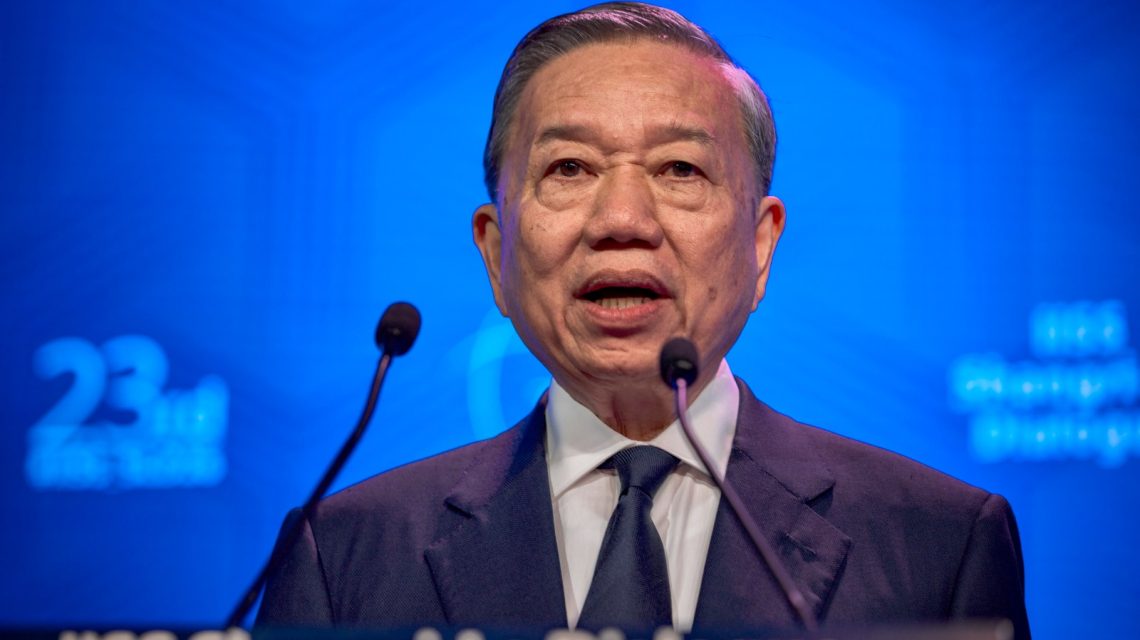
The global landscape is shifting as powerful nations disregard international law when it benefits them, leading to a predatory dynamic, highlighted Vietnamese President To Lam in his recent address. This issue is one of three critical challenges shaking the foundation of the international community, noted To at the Shangri-La Dialogue, Asia’s prominent defense summit.
To emphasized that while the world can adapt to ongoing changes, it must do so by adhering to rules, exercising self-restraint, and engaging in dialogue rather than resorting to coercion or force. He warned that crises begin when international law is selectively interpreted, inconsistently applied, or dominated by a mindset where strength prevails over justice.
“In such an environment, states—particularly small and medium-sized countries—face mounting pressure to choose sides and are increasingly vulnerable to coercion in the economic, technological, financial, and security domains,” To highlighted.
Vietnam has adopted a ‘bamboo diplomacy’ approach, pragmatic yet adaptable, balancing relationships with China—its powerful neighbor and major economic partner—and the U.S., with which it has strengthened security ties. Despite stable relations with Beijing, disagreements persist regarding territory and fishing rights in the South China Sea.
The U.S.-Israeli conflict with Iran has also impacted the region. A three-month disruption to shipping through the Strait of Hormuz, a vital route through which Vietnam sources around 85% of its oil imports from the Middle East, has strained energy supplies and escalated costs.
To also spoke about a crisis of strategic trust. He described this issue as “silent but deadly,” affecting how countries perceive each other’s actions, often with mistrust and anxiety, which can lead to miscalculations.
“When trust declines, defensive measures may even be perceived as provocation,” To stated. “A difference of interest may escalate to confrontation.” Strategic trust can coexist with competition, but it must be established within a rules-based framework to ensure that competition remains predictable, responsible, and controlled.
The third crisis To addressed involves development models supporting prosperity, including globalization, supply-chain integration, and trade and investment. These are under significant strain due to rising public debt, sluggish economic growth, tariffs, and climate change threats impacting hundreds of millions of livelihoods.
For many countries, development cannot be separated from security. “Economic fragility can quickly evolve into social and political instability and even strategic uncertainty,” To cautioned.
 Israeli Leader’s Upcoming U.N. Assembly Speech Marked by Controversy
  Republicans Call for Quick Resolution to Iran Conflict
  United States Secures Arctic Defense Pact
  Senator Warren Seeks to Restrict Private Equity in Restaurant Chains
  Marco Rubio’s Expanding Role in Trump Administration
  Byron Donalds Adjusts Campaign Strategy as Florida Governor Race Intensifies