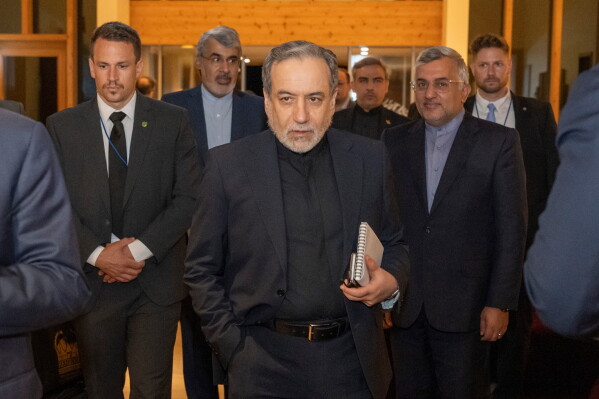
U.S. Vice President JD Vance arrived in Switzerland on Sunday to initiate negotiations with Iranian leaders to address nuclear concerns and reinforce a fragile interim deal aimed at ending the conflict in Iran. Vance, accompanied by his wife, Usha Vance, landed at Emmen Air Base near Lucerne at approximately 6 a.m. local time, as stated by his office.
The framework for negotiation was finalized last week, commencing a 60-day effort by U.S. and Iranian negotiators to resolve technical details with significant implications for the global economy and security. However, the negotiation period saw complications arising from intense military exchanges in Lebanon between Israel and Hezbollah, a group backed by Iran. Additionally, Iran’s military announced the closure of the Strait of Hormuz, a vital passage for a significant portion of world oil and gas trade.
Vance was due to arrive at the scenic Bürgenstock resort on Friday, but escalated conflicts in Lebanon delayed his departure from the U.S. after Iranian officials canceled attendance at initial talks. Despite Iran’s claim of closing the strait, U.S. Central Command refuted this, asserting continued surveillance to ensure uninterrupted traffic flow.
Special envoy Steve Witkoff and Jared Kushner have already started delving into the technical aspects of the nuclear discussions. Vice President Vance joins key figures including Pakistani Prime Minister Shehbaz Sharif, Pakistan’s army chief Field Marshal Asim Munir, and Qatari mediators to facilitate discussions.
Though Vance stated his Switzerland visit would last “a day or two,” leaving Witkoff and Kushner to handle the detailed aspects, his involvement has intensified the focus on him, coinciding with his contemplation of a 2028 presidential campaign.
Both Trump and Vance meet with criticism from within the Republican ranks, comparing this agreement unfavorably to the nuclear deal from the Obama era, which many GOP members argue was ineffective in halting Iran’s nuclear pursuits. Under the new agreement, Iran can freely trade oil and access billions in currently frozen assets, while committing to reduce its stockpile of enriched uranium, reportedly concealed beneath nuclear sites targeted by U.S. strikes last year.
The agreement permits commercial vessels passage through the Strait of Hormuz for 60 days without a toll, but future fees by Iran remain a possibility. Trump threatened to impose U.S. tolls on the strait post-agreement, citing “services rendered” to Middle Eastern countries.
Challenges persist as neither Israel nor Hezbollah are included in the U.S.-Iran deal. Israeli Prime Minister Benjamin Netanyahu maintains military presence in southern Lebanon while Hezbollah demands an Israeli withdrawal for cessation of hostilities. Recent skirmishes following the U.S.-Iran pact resulted in 47 casualties in Lebanon and four Israeli soldier fatalities.
Reporter Kim contributed from Washington.
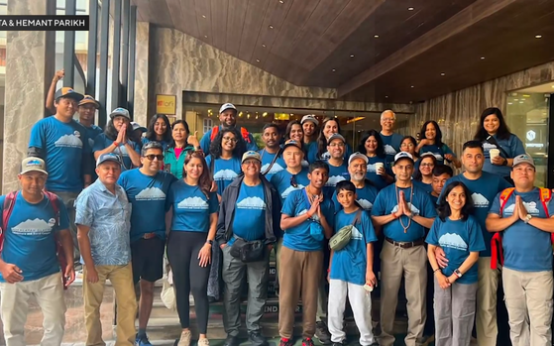 Couple’s Fortunate Detour Saves Them from Himalayan Disaster
  Senator Criticizes Planned White House Welcome for Xi Jinping
 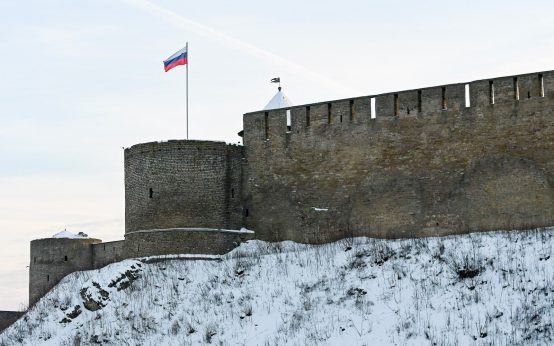 Potential Russian Incursion in Estonia Tests NATO’s Resilience
  Senators Urge Action for American Journalist Detained in Iran
  Irish Athletes Urge Boycott of Matches Against Israel Amid Growing Tensions
 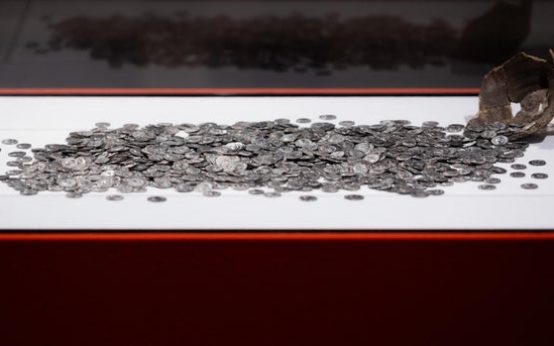 Amateur Archaeologist Uncovers Largest Roman Coin Treasure in Germany