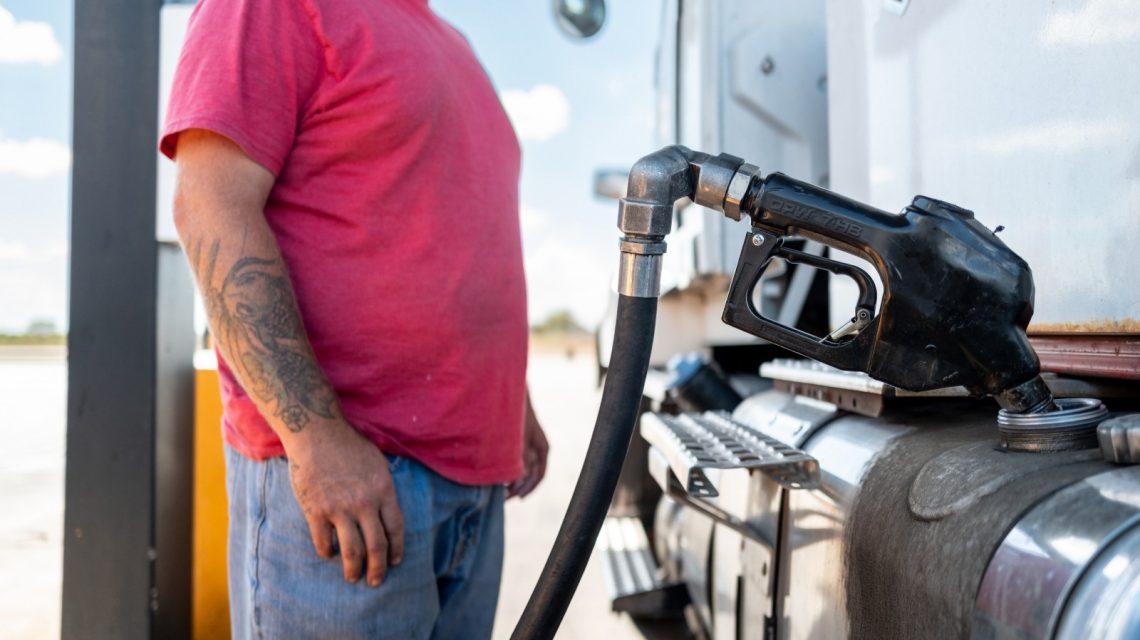
The rumor of a nationwide trucker strike in the U.S. on October 1 due to soaring diesel prices has rapidly spread on social media. Despite significant chatter, concrete evidence of an organized strike remains elusive. Video clips and AI-generated posters circulate, warning of potential disruptions to freight deliveries and food shortages should a strike occur.
Social Media Chatter or Real Action?
The Owner-Operator Independent Drivers Association (OOIDA) labeled the strike talks as “limited to social media chatter” in a statement to Newsweek, yet they continue to monitor the situation. The rapid spread of these claims online might fan the flames and turn speculation into reality. Amid financial pressures, truckers face a real challenge with fuel costs rising, prompting some to voice struggles in affording to keep their trucks operational.
“Fuel is one of the biggest operational costs for owner-operators.” — OOIDA statement
Small business truckers represent over 90% of America’s trucking companies and are acutely affected by price jumps. Many operate load-to-load, unable to adjust rates to match fuel spikes contrary to bigger companies. Mirroring large oil companies’ soaring profits, diesel price increases have devoured shrinking margins for mom-and-pop trucking operations.
The Effect of Diesel Pricing
Diesel reaches record highs, averaging around $6.51 a gallon, a significant increase from $5.58 the prior month, according to the American Automobile Association (AAA). Comparing diesel costs to the previous year’s average of $3.70, the rise is evident. The escalation follows the war with Iran initiated by former President Donald Trump on February 28, impacting global oil supplies and shipping routes, spiking fuel costs.
The conflict remains unresolved, with tangible relief distant as energy flows face continuous disruption. Trump commented that oil prices might only drop post-November midterm elections.
Truckers React
The strike speculation originated from an Instagram post by user red_pill_patriot_1776. An unidentified man claimed truckers were “done” and ready to strike unless diesel prices fell, pointing to potential nationwide food shortages. Amplified through social channels, such claims gained momentum.
Visual evidence is scarce, but videos showcasing truck drivers appealing to Trump regarding diesel costs are circulating. An example includes a video on the Republicans against Trump X account where a man pleads with Trump: “I’m begging you right now, you got to end it. Diesel fuel just broke $6 a gallon.” Highlighting his vehicle, he notes the high fuel cost prevents its use.
The video received over 325,000 views, while another compilation on The Tennessee Holler features men disillusioned with fuel prices, despite earlier support for Trump. As of writing, the posts attracted substantial attention.
Newsweek couldn’t authenticate identities or confirm those featured as truck drivers. An additional interview involves truckers in Colorado struggling to work due to fuel price impacts.
“We carry 200 gallon tanks, and if it’s six bucks per gallon, it’s talking about 1200 bucks each fill-up.”
These individuals state the possibility of quitting temporarily amid current price challenges.
Historical Strikes vs. Today’s Scenario
In a stark contrast to today’s situation, nearly 50 years ago, American truckers organized widespread protests during the 1979 Iranian Revolution’s impact on oil prices. The trucking industry’s dynamics have evolved since, making similar collective actions more challenging.
Back then, the Teamsters Union represented over 60% of truckers, providing substantial organizational power. But by 2001, representation plummeted below 20%. Deregulation beginning in the late 1970s intensified competition, weakening Teamsters’ influence as more nonunion carriers entered the scene.
Current fragmentation involves hundreds of thousands of independent businesses, complicating coordinated efforts due to minimal union representation.
The looming question remains whether a strike emerges, while truckers endure high fuel costs, awaiting much-needed relief.