U.S. officials have dismissed worries regarding stockpiles of key missiles, including interceptors designed to safeguard U.S. military bases in the Middle East. President Donald Trump affirmed on Truth Social that the U.S. possesses substantial amounts of munitions, particularly certain types, addressing recent claims from outlets suggesting the depletion of important weapons such as air defense missiles aimed at intercepting Iranian ballistic missile attacks.
After a mid-June ceasefire agreement between the U.S. and Iran collapsed, Tehran and Iranian-backed groups attacked several countries in the Middle East. U.S. military bases in Kuwait, Bahrain, and Jordan experienced ballistic missile strikes by Iran. From June 18 to July 28, Iran or its proxies executed numerous attacks: 57 in Kuwait, 38 in Bahrain, and 27 in Jordan, according to data from the Armed Conflict Location and Event Data (ACLED), which tracks global violent conflicts. This source may count multiple simultaneous drone or missile firings as one strike.
In July, three U.S. service members died during an Iranian missile and drone assault on the Muwaffaq Salti Air Base in Jordan. A ballistic missile bypassed air defenses, a senior U.S. official explained to The New York Times.
The U.S.-made Patriot and Terminal High Altitude Area Defense (THAAD) systems are known to intercept Iranian ballistic missiles. Ballistic missiles travel faster than cruise missiles or drones, making interception difficult due to their unpredictable paths and steep descent toward targets, leaving air defenses minimal time to respond.
Before hostilities commenced on February 28, initiated by U.S. and Israeli strikes against Iran, the U.S. had approximately 452 THAAD interceptors. The Center for Strategic and International Studies (CSIS) reported that by July’s end, stocks dwindled to as few as 234. Similarly, pre-conflict figures for Patriot interceptors stood at around 2,330. By July 27, inventory reduced to as low as 759.
The demand for THAAD and Patriot systems, and their missiles, has increased globally, noted by Ukraine’s lamentation over Patriot interceptors being redirected from its cities to the Middle East amid the Iran conflict. During Wednesday’s extensive Russian ballistic missile attack on Kyiv, not a single missile was intercepted. Ukraine attributed casualties and destruction to interceptor shortages.
Without interceptors, U.S. bases in the Middle East might be vulnerable. Iranian ballistic missiles can potentially hit NATO member Greece, Ukraine, and Russia, endangering all regional U.S. facilities.
U.S. Bases Across the Middle East
The U.S. maintains tens of thousands of personnel in the Middle East, stationed at various bases in U.S.-aligned states. These bases range from permanent installations to smaller sites or joint operations. Experts note the presence of 19 bases across the Middle East, with eight permanent facilities.
In Bahrain, the U.S. Fifth Fleet headquarters directs naval operations across the Middle East, Central Asia, and South Asia, augmented by the largest deployed U.S. Coast Guard unit overseas and the Fifth Marine Expeditionary Brigade in Manama. Bahrain’s Khalifa bin Salman Port accommodates U.S. aircraft carriers crucial for regional air operations coordination.
Kuwait houses major U.S. Army presence at Camp Arifjan, plus the Ali Al Salem Air Base near the Iraqi border. Under Kuwaiti government agreements, another air base is accessible, alongside a training facility at Camp Buehring. Air defenses operate at Camp Patriot in Kuwait, while logistics are coordinated from the Port of Shuaiba, where an Iranian strike resulted in casualties and injuries among U.S. Army Reserve soldiers in March.
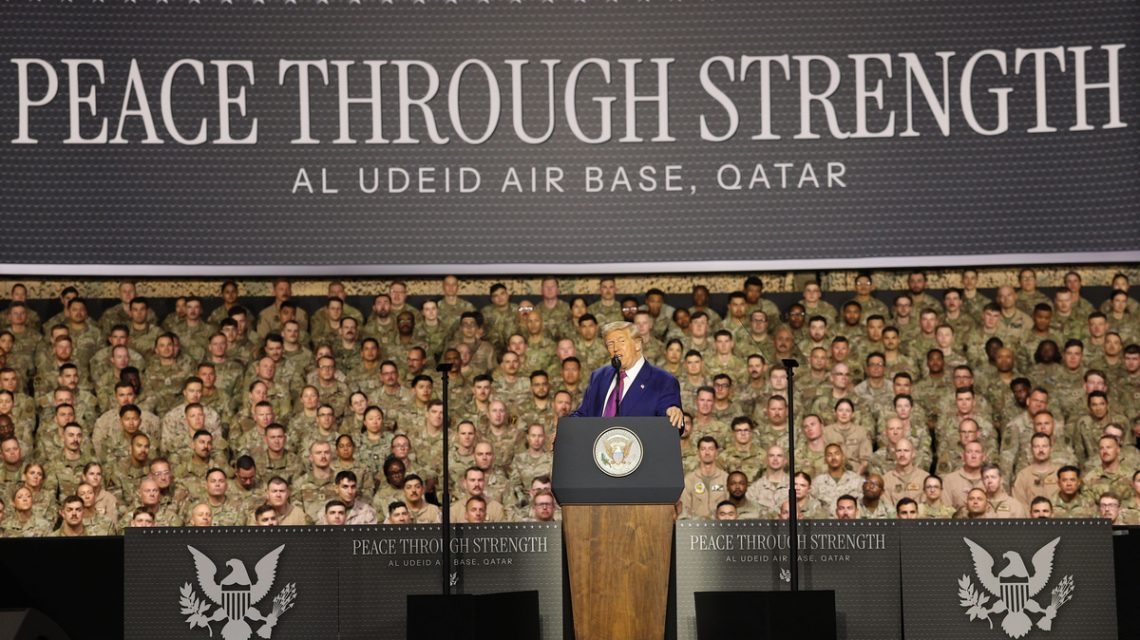
Around 13,000 American soldiers are typically stationed in Kuwait. Qatar, serving as a U.S.-Iran mediator, faced seven Iranian assaults from mid-June through July. Qatar’s Al Udeid is the largest U.S. base in the region and a military target for Iran. Satellite images from the conflict’s onset revealed damage at Umm Dahal, where a U.S.-produced radar system was once positioned.
Jordan’s Muwaffaq Salti Air Base, 62 miles from Amman, has suffered repeated Iranian attacks. Iran has claimed responsibility for attacks on Iraq, including an Iraqi Kurdistan command center. Iraqi Kurdistan officials, backed by a U.S.-led coalition, urged Iran to cease hostilities around Erbil.
A U.S. soldier, Sergeant Michael Emmanuel Swinton, died during a controlled detonation of a downed drone near Erbil. The United Arab Emirates shares the Al Dhafra Air Base with U.S. forces south of Abu Dhabi, while frequently hosting U.S. Navy operations at Jebel Ali Port in Dubai. Frequent Iranian attacks have struck Saudi Arabia’s Prince Sultan Air Base near Riyadh, leading to the death of Sergeant Benjamin N. Pennington.
 Diplomatic Dynamics: Finland and Ukraine’s Stance on Russia
  Severe Nor’easter Hits Northeast: Floods, Power Outages, and Travel Disruptions
  Relief through Routine: Spokane Students Find Comfort amid Loss
  UK Police Arrest Suspects Near US Airbase Under Explosives Act
  Four American Tourists Among Victims in Athens Explosion
  Starbucks to Shut Down 250 Stores in North America