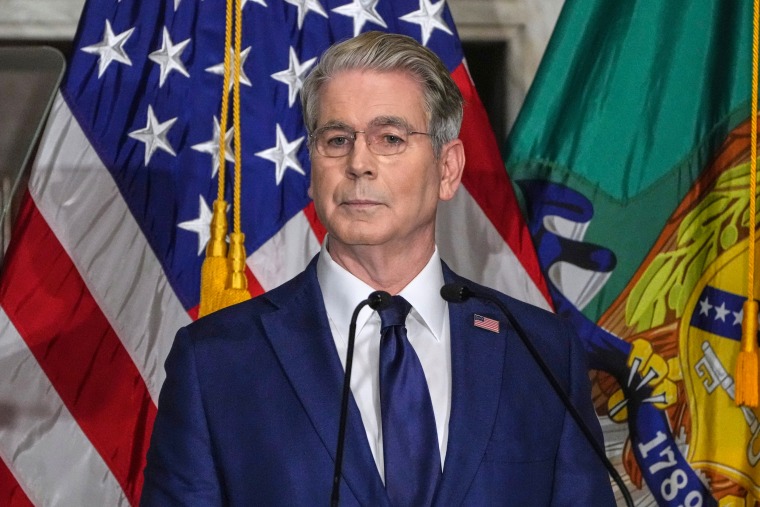
Treasury Secretary Scott Bessent announced an expansive new wave of sanctions aimed at isolating Iran further. These measures target international entities involved in various Iranian trade sectors such as shipping, oil, crypto, gold, and aviation. The initiative comes as part of what Bessent called an ‘economic onslaught’ to sever Iran’s global financial connections.
Bessent stated that President Donald Trump is actively contacting world leaders, requesting them to halt trading with Iran. The Treasury Department detailed sanctions against nearly 60 corporations, individuals, and vessels that allegedly support Iran’s ‘recklessness,’ including Chinese nationals. However, China opposes complying with unilateral U.S. sanctions.
The U.S. aims to remove any entity involved in money laundering for Iran from the U.S. dollar system, emphasizing that no one is above U.S. sanctions. Bessent proposed a ‘cure period’ for nations to end targeted relations with Iran, though no immediate actions against other countries were specified.
Historically, Iran has maneuvered around U.S. sanctions by establishing front companies. Bessent declared an unprecedented financial offensive to sever Iran’s economic lifelines, potentially isolating any country partnering with Iran. This initiative also targets secondary nations benefiting from Iranian trade.
The U.A.E., a close U.S. ally, announced the cessation of all trade relations with Iran, reflecting the escalating tensions. Experts suggest the sanctions’ effectiveness depends on Iran’s major trading partners—China, India, and Russia—and their response to U.S. threats.
Since the U.S. and Israel’s attack on Iran to prevent nuclear weapon acquisition, the economic costs for the U.S. have been substantial. Defense Secretary Pete Hegseth estimated the war costs at $37.5 billion, impacting U.S. households and contributing to political liabilities for Trump ahead of the midterm elections. Higher energy and grocery costs have been significant, alongside turmoil in the bond market.
Mohammad Bagher Ghalibaf, speaker of Iran’s Parliament, expressed skepticism about U.S. economic position and the impact of Bessent’s assertions. Iran’s trading partners reportedly dismiss U.S. statements, challenging the credibility of enforced isolation strategies.
Deputy Foreign Minister Kazem Gharibabadi questioned the efficacy of Bessent’s plan, suggesting it coincides with an acknowledgment of U.S. shortcomings in dealing with Iran’s capabilities. Abdolnaser Hemmati, head of Iran’s Central Bank, stated that the U.S. efforts do not present new restrictions beyond existing sanctions.
Iran had anticipated challenging conditions and began stockpiling foreign currency to support essential goods and medicine, according to reports. The nation’s Grand Bazaar saw increased police, with frustration over the currency’s value amidst rising gas prices.
The possibility of protests due to economic strain is a concern for Iranian authorities, with historical unrest resulting in violence and repression by Iran’s regime. President Trump hoped for an uprising against Iran’s hardline rulers, yet their grip on power appears tight despite leadership changes following the Supreme Leader’s death.
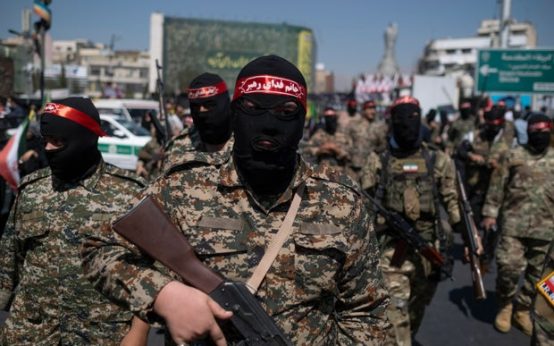 Tensions Escalate in Iran Conflict as Global Leaders Weigh Options
 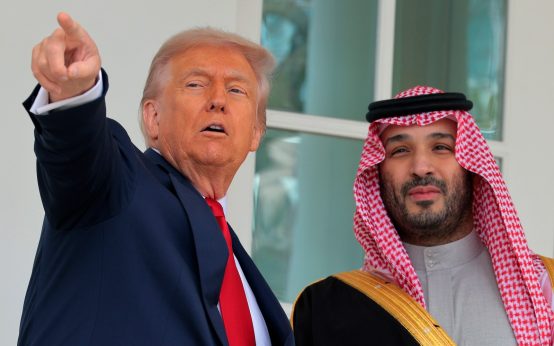 White House Approves F-35 Sales to Saudi Arabia Amidst Regional Tensions
  Inside the Secret Deals Powering the President’s Push to Deport Migrants to Countries Not Their Own
  Navigating the Challenges of Third-Country Deportations
  Midair Altercation on Bangladesh to London Flight
  Ukraine Missile and Drone Barrage Hits Russia Amidst Elections