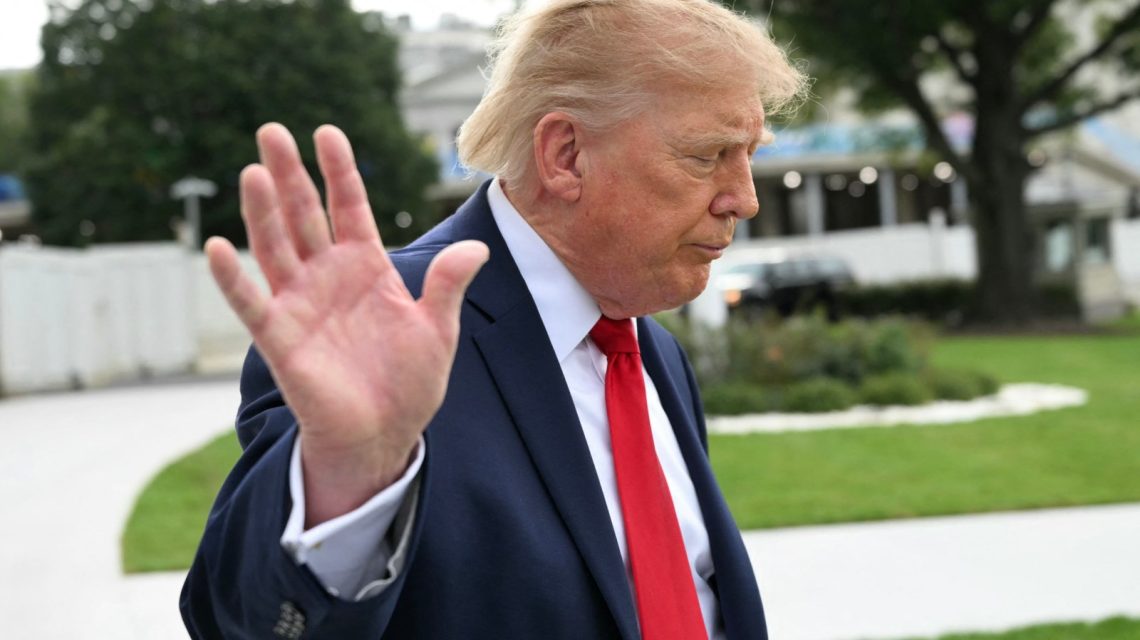
President Donald Trump’s net approval rating has fallen in 10 major beef-producing states following his announcement of a temporary increase in beef import quotas aimed at reducing beef costs, according to polling data. The decline in approval ratings across states such as Florida, Kansas, Kentucky, Missouri, Montana, Nebraska, North Dakota, Oklahoma, South Dakota, and Texas was reported by Civiqs’ rolling online tracking survey.
The White House stated that permitting additional imports might lower beef prices for consumers. However, critics expressed concerns that increased competition from imported beef could negatively impact U.S. ranchers as they work to rebuild the national cattle herd. Trump’s administration faces competing pressures: reducing grocery costs while safeguarding cattle producers from heightened competition with imported beef. These political stakes are especially high in states with significant cattle industries that have voiced concerns over this approach.
All 10 states experienced a decline in net approval during the period. The movement, though relatively modest, was consistent. In Kentucky, Trump lost three points, moving from -8 to -11, while in Oklahoma, he dropped from +4 to +1. His net approval fell by two points in Kansas (from +4 to +2), Missouri (from -24 to -26), Montana (from +3 to +1), North Dakota (from +14 to +12), South Dakota (from +5 to +3), Texas (from -18 to -20), and Florida (from -13 to -15). The smallest decline occurred in Nebraska, moving from -3 to -4. Across these states, the average decline was 2.1 percentage points, with a median decline of 2 points.
While the data show a notable pattern in cattle-producing regions, they don’t definitively link Trump’s beef policy to the shifts in approval ratings. Presidential approval can change for numerous reasons; the measured changes ranged between one and three percentage points.
Details of Trump’s Beef Importation Plan
Trump announced the beef plan on August 21, aiming to reduce elevated grocery store prices. The U.S. would temporarily allow an additional 300,000 metric tons of beef imports for ground beef production over 90 days, eliminating the higher out-of-quota tariffs typically applied. In his message on Truth Social, Trump stated, “for the next 90 days, the United States will allow up to 300,000 metric tons of product for ground beef to be imported with no out of quota tariff. We have a commitment that this beef will be sold at 25 percent below current market prices. This deal will reduce prices for Americans while giving space for our Great American Beef Herd to grow again.”
This announcement was made amidst consumer pressure due to elevated beef prices. At the time of the announcement, beef and veal prices had risen 9.4 percent compared to the prior year, while the nation’s cattle supply was at historically low levels.
Industry Response and Concerns
The plan faced opposition from sections of the cattle industry and Republicans in economically significant ranching states. The National Cattlemen’s Beef Association argued that increasing supplies of below-market imported beef might undermine efforts to rebuild the American cattle herd. CEO Colin Woodall stated that the policy “sacrifices long-term stability for short-term messaging.”
NCBA is disappointed by the President’s statement. While America’s cattle producers share the goal of keeping groceries affordable for consumers, flooding the market with government-subsidized, below-market beef is not the way to rebuild the American cattle herd. Cattle markets have already turned sharply lower this morning, to the detriment of farmers and ranchers,” said Woodall in a press release.
Outgoing Republican Representative Thomas Massie critiqued Trump’s proposal as a “nothing-burger.” He argued on X that it is “already legal for farmers to process their own meat, and people can buy a cow and do the same. The problem is it’s currently illegal to sell it ‘by the cut.’ So what exactly is being promised that Trump’s corporate meatpacking bosses will allow?”
Despite declines in approval, Trump maintained positive ratings in five states as of September 21. North Dakota showed his highest net approval at plus 12, followed by South Dakota at plus 3, Kansas at plus 2, Montana at plus 1, and Oklahoma at plus 1.
The administration has presented this beef action as part of its effort to address affordability leading up to the November midterm elections. The 90-day measure is set to continue beyond Election Day on November 3.
For further details on this story, contact Newsweek editor Edward Pearcey.
 Improving the Transparency of Public Records
  Death of Jim Copenhaver Brings Attention to Butler Rally Security Issues
  Republican Senator Proposes Major Overhaul of U.S. Immigration System
  Upcoming Changes to SNAP and Medicaid Set to Impact Millions of Americans
  AI Concerns Emerge Amid High-Level Discussions and Industry Warnings
  Election Details for Illinois Voters: Importance of Participation and Key Information