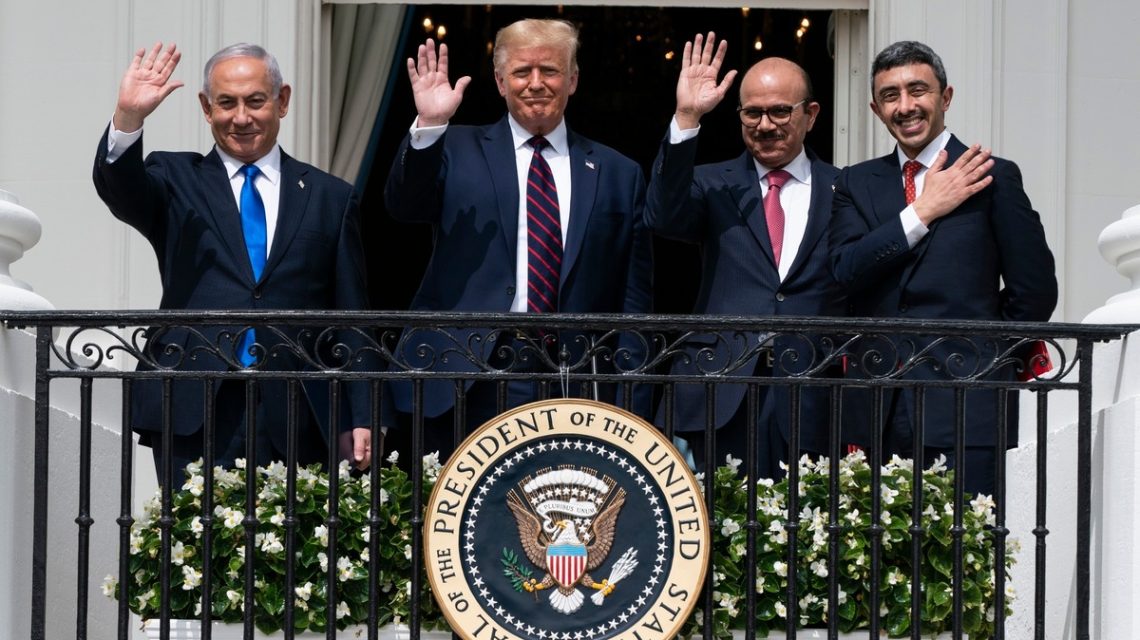
President Donald Trump has proposed that several Arab states, along with Pakistan and Turkey, should participate in the Abraham Accords as part of a peace agreement with Iran. This suggestion introduces a new element to the already challenging peace negotiations between the United States and Iran. It may further delay the chances of swiftly reaching a deal.
In a recent social media update, Trump stated that it should be “mandatory” for nations like Saudi Arabia, the United Arab Emirates (UAE), Qatar, Pakistan, Turkey, Egypt, Jordan, and Bahrain to enhance their relations with Israel. The UAE and Bahrain have already joined the Abraham Accords, which are US-brokered agreements with Israel that were established during Trump’s first term. These accords are widely regarded as his significant foreign policy achievement. However, for influential countries like Saudi Arabia, joining the accords presents political challenges due to its commitment to a Palestinian state, a stance affected by the conflict in Gaza in late 2023.
Trump emphasized that not all listed countries must agree to join the accords, “but most should be ready, willing, and able to make this Settlement with Iran a far more Historic Event than it would, otherwise, be.” He instructed US officials to engage these nations in the Abraham Accords.
U.S. Senator Lindsey Graham, a supporter of Trump, praised this statement as “simply brilliant,” suggesting it could lead to significant changes in the Middle East. However, reaching the initial accord required years of diplomatic efforts. Peace talks with Iran face complex issues, including the country’s nuclear ambitions and the strategic Strait of Hormuz.
The United States and Iran have disagreements over uranium enrichment and the reopening of the Strait of Hormuz, which Iran has been blocking, causing global fuel prices to rise. The Abraham Accords, referencing the religious figure Abraham important in Christianity, Judaism, and Islam, were signed during Trump’s first term and helped normalize relations between Israel and several Arab nations.
The UAE was the first to join, followed by Bahrain. Although Sudan agreed to normalize relations with Israel in 2020, the official signing was postponed due to internal issues. Morocco and Kazakhstan also established ties with Israel in subsequent years, with Kazakhstan’s move seen as an effort to strengthen ties with the US.
Peace Deal Timeline
US Secretary of State Marco Rubio acknowledged that finalizing a deal with Iran may “take a few days,” dampening expectations for a speedy resolution as the US carried out strikes against Iran.
US forces targeted missile sites and Iranian vessels in “self-defense strikes” on southern Iran, according to Captain Tim Hawkins from the US Central Command. Reports indicate that the US sank two Iranian ships, and Iran responded with missile attacks on US aircraft. In retaliation, the US struck Iranian missile launchers near Bandar Abbas, close to the Strait of Hormuz.
Iran’s Islamic Revolutionary Guard Corps (IRGC) has stated that it is “legitimate” for Iran to retaliate against ceasefire violations. Despite a ceasefire established in April, intermittent confrontations have occurred, raising concerns about the stability of the truce.
The IRGC also claimed responsibility for downing an MQ-9 Reaper drone and engaging US military aircraft in Iranian airspace. Brigadier General Abolfazl Shekarchi warned that Tehran’s response to any US aggression would be “devastating,” as reported by the IRNA state news agency.
 The Impact of Arts and Closure on Democracy
 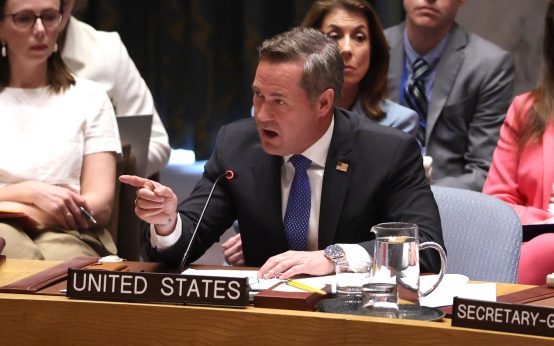 U.S. Ambassador Comments on Iran War Duration Amid Political Concerns
 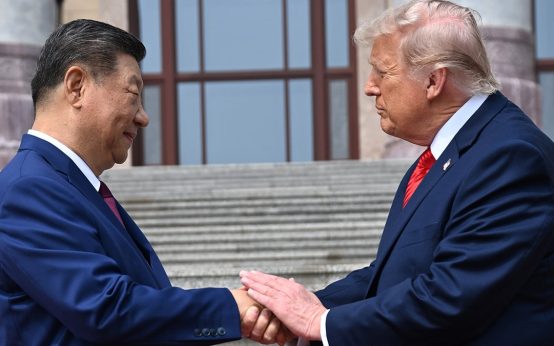 US-China Relations Under Scrutiny: Expert Warns of Escalating Tensions
  No Timeline for End of Iran Conflict
 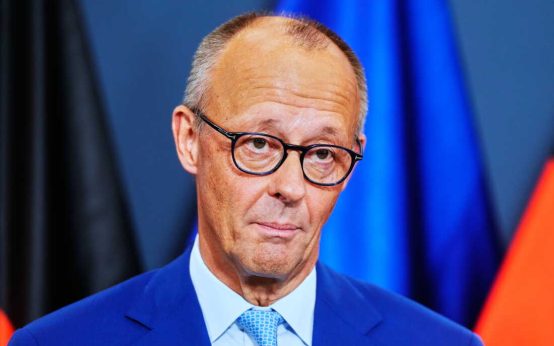 German Chancellor Merz Vows to Pursue Reforms Despite Election Setbacks
 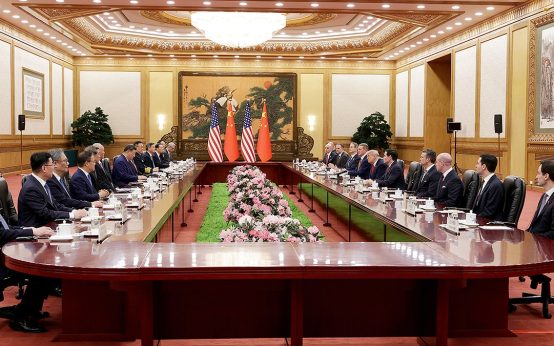 The Technology Rivalry: Trump’s Meeting with Xi and the AI Ecosystem Clash