President Donald Trump revealed plans to establish an ‘AI Force’ alongside appointing an artificial intelligence ‘czar,’ indicating a shift from previous views that emerging technology sectors do not require new regulations. In a post on Truth Social, Trump stated the new initiative aims to supervise AI while avoiding rules that might hinder innovation.
He emphasized that the administration would support the AI industry’s growth without imposing restrictions, maintaining that existing criminal and civil laws are sufficient to manage misconduct by AI companies.
For this purpose, I am forming the AI Force, similar to the Space Force, which was a tremendous SUCCESS during my First Term. I will soon announce the AI ‘Czar’—Only individuals with a high IQ need apply! AI is the next Industrial Revolution or Internet, and it will be larger and more impactful, possibly contributing as much as 25% of our Country’s GDP.
The president’s proposal arrives as AI remains a prominent issue in U.S. economic, national security, and technological policy. Tech leaders like Dario Amodei of Anthropic, Sam Altman of OpenAI, and Elon Musk advocate for enhanced safeguards or slowed development for powerful AI systems, stressing the need for safety measures in tandem with technological growth.
Trump frames AI as a strategic competition with China, underscoring the necessity of U.S. leadership in the sector. The announcement follows recent remarks dismissing concerns about advanced AI systems and asserting that a ‘strong and smart’ president is the sole requirement for managing the technology.
John Walsh, chief technology officer for government and critical infrastructure at IGEL, stressed the importance of creating an environment that brings together various stakeholders on AI safety and security. Reference was made to the automotive safety industry, citing it as a model for effective regulation through independent evaluation against recognized certifications.
Regulation shouldn’t exist for its own sake. It should foster standards, testing, validation, and economic incentives to demonstrate the trustworthiness of AI. Safety and security should translate into competitive advantages.
Walsh also referred to the global nature of technology markets, proposing that the U.S. work with industry and standards organizations to establish practical and measurable requirements for trustworthy AI.
If countries set rigorous criteria for AI, technology providers eager for broad commercial acceptance will aim to meet those criteria, prompting international adoption as these standards gain importance in market access, contrasted with fragmented and inconsistent requirements.
Industry experts stress the urgency in establishing engineering disciplines for verifiable identity, least-privilege access, defined boundaries, and human intervention, especially as AI progresses from generative models to agentic systems capable of independent actions.
Industry and Bipartisan Calls for AI Regulation
Trump’s announcement coincides with increasing calls for regulatory oversight from technology executives and politicians alike. Amodei recently urged the industry to decelerate development for better safety protections, while Altman concurred on the cautious advancement of frontier AI development. Musk also supported heightened attention to risks from advanced AI systems.
AI researcher Jacob Coxon warned of the potential existential threats posed by powerful AI systems, expressing fears that they could lead to dire consequences. His resignation from Anthropic illustrated concern over the industry’s swift inertia towards self-improving superintelligence.
Several researchers and experts argue for governmental oversight, addressing misinformation, cybersecurity issues, and national security threats associated with AI. Legislative voices, including those of Independent Vermont Senator Bernie Sanders and other bipartisan representatives, have proposed federal AI regulations to pause development and prevent artificial superintelligence.
The proposal from Representatives Ted Lieu and Nathaniel Moran highlights the necessity for developers to ensure intervention capabilities for advanced AI systems, allowing the Secretary of Homeland Security to order system slowdowns or shutdowns if deemed potentially harmful.
What Happens Next
As the U.S. prepares for discussions with China concerning AI and technological competition, the Trump administration’s steps towards establishing the proposed ‘AI Force’ could steer both domestic policy and the global discourse regarding governance of powerful AI systems.
Newsweek used Martyn, an AI assistant, to contribute to this story. For further information, contact Newsweek editors Steve Mollman and Anthony Murray.
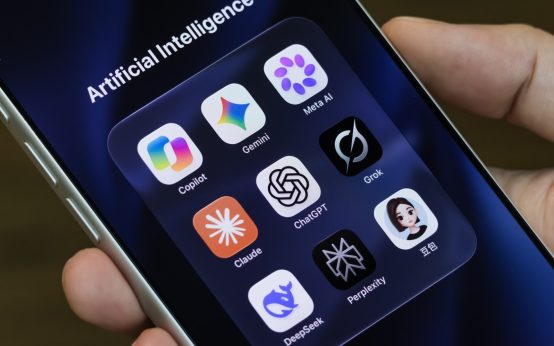 AI Talent and Geopolitical Challenges Between the U.S. and China
  Exploring AI’s Impact on Health Care and Integration Challenges
  Challenges in AI Development
  Democrats Urged to Act on AI Regulation
  China’s New Exit Rules for Tech Talent
  Trump Plans AI Oversight Amid Rapid Tech Advancements