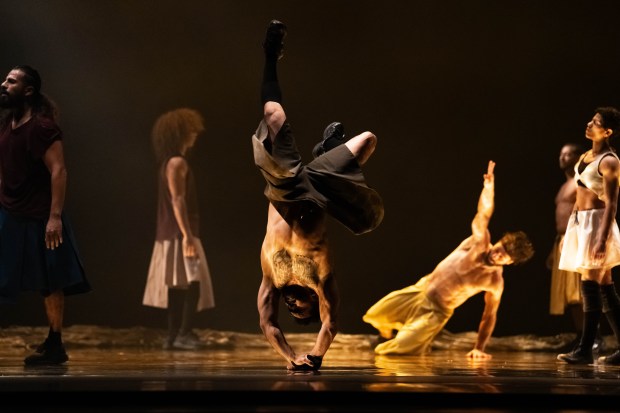
In ‘Sol Invictus,’ choreographer Hervé Koubi offers more than just a dance performance. He creates what he calls a ‘manifesto for life.’ The audience at the Harris Theater in Chicago witnessed the premiere of this work. Koubi’s company, primarily known for street dance, takes inspiration from his Algerian ancestry. This connection is evident through the integration of breakdancing, a style embraced by African nations.
American viewers will find familiar B-boy moves, yet the presentation infuses Koubi’s unique touch. The diverse lineup of performers, including exceptional B-boys and acrobat-artists, serves as a testament to the universality Koubi aims to convey. The diversity is intentional. Dancers from different nationalities unite, challenging historical conflicts among nations and faiths.
Understanding this context enriches the experience. The 90-minute performance celebrates joyful rebellion with movements that include playful skips, cartwheels, and somersaults. Koubi incorporates Afro-Brazilian martial arts influences like capoeira into the choreography. Folk dance elements from diverse cultures also make appearances, creating a vibrant atmosphere reminiscent of festive gatherings from bygone eras.
‘Sol Invictus’ may seem like a whirlwind of activity, yet it is meticulously coordinated. Dancers collaborate in duets, trios, and quartets, forming visually captivating scenes. An eclectic sound score supports the performance, featuring compositions by Mikael Karlsson, Maxime Bodson, Steve Reich, and Beethoven. The ‘funeral march’ from Beethoven’s Symphony No. 7 brings intensity to the darker moments.
The piece, although lengthy, delivers an immersive experience. Painterly tableaux offer visual breaks amidst the fluid choreography. Ultimately, the performance achieves Koubi’s goal of brightness. The show culminates in a stunning display of gold hues through lighting by Lionel Buzonie and a golden fabric that transforms the stage. This fabric, at times serving as a crown or toga, enhances the spectacle.
‘Sol Invictus,’ named after the Roman sun god, succeeds in transporting audiences to a world where societal barriers dissolve. Here, dancers with contrasting backgrounds come together in harmony. The work stands as a powerful statement of unity through dance.
 Johnny Depp’s Quest for Solitude in the Bahamas
 Chad Michael Murray Reflects on Iconic Roles and Imagines Their Futures
 Richard Sterban of Oak Ridge Boys Passes Away at 83
 Erin Murphy’s Reflections on Bewitched
 Tammy Slaton’s Upcoming ‘Snow in Love’ Wedding
 Netflix Renews ‘Virgin River’ for Record Ninth Season