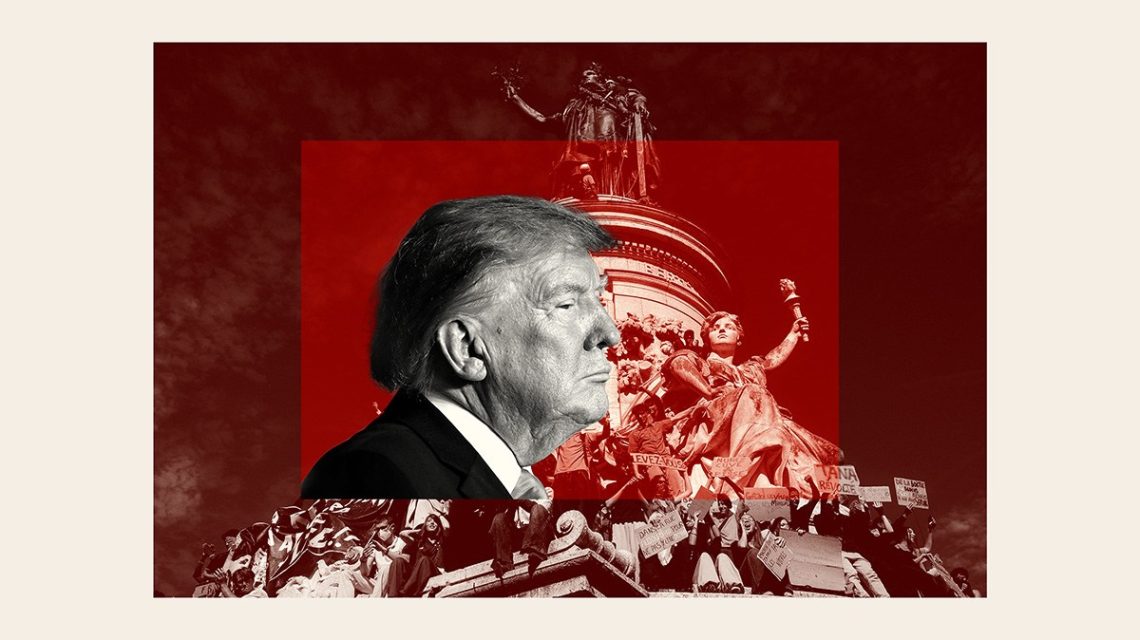
In a recent Truth Social post, Donald Trump offered his view on French students protesting their schools, attributing the unrest to Islam “wanting to take over a once great Country.” This post is a stark example of Trump’s characteristic style of criticism.
The ongoing movement involves French students protesting issues like overcrowded classrooms, absent teachers, and deteriorating school infrastructure. Official figures report over 250,000 participants rallied for education funding. Despite these clear concerns, Trump suggests a different narrative without presenting evidence connecting the protests to Islam. His message asserts that the protesters are misrepresenting their motives.
France serves as a tempting backdrop for such assertions due to its longstanding debates over Islam, immigration, and national identity. While understandable anxieties exist regarding Islamist extremism, a nuanced approach to secularism and religious integration is necessary. Trump’s narrative, however, simplifies the matter. He presents a version where France is imperiled, blaming Islam. This reductionist view contrasts with the complexity of real issues like staffing and facility problems in French schools.
The French context involves extensive deliberation on republican values, citizen expectations, and universal belonging amid religious diversity. Trump’s portrayal bypasses these discussions, transforming the protests into a moral dilemma. He casts France as a fallen hero, with Islam as the advancing threat.
Trump’s commentary does not contribute to understanding France’s genuine challenges with political Islam and extremism. Despite the need for dialogue, his post generalizes, suggesting a cultural crisis based solely on the school protests.
The broader implication of Trump’s message appears aimed at Americans. It conveys a cautionary tale about the consequences of allowing Muslims into a country. Where students advocated for educational improvements, Trump redirected the narrative, warning against the purported danger of Islam.
 Support for White Nationalism Among Young White Men in the U.S.
  Senate Race Prognosis: Democratic Surge in Key Battlegrounds
  Los Angeles Councilmember Nithya Raman Calls for Leadership Change Over Immigration Raids
  Debate Surrounds Kamala Harris’s Potential 2028 Presidential Run
  Illegal Migrants and Violent Crimes: A Focus on Recent Incidents
  James Talarico’s Bid for Texas Senate Gains Celebrity Support