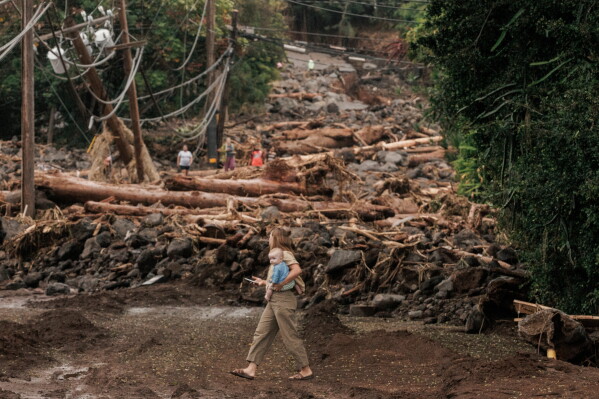
The U.S. hurricane season is underway, with storms like Amanda and Boris appearing in quick succession. You might wonder why tropical cyclones receive specific names every year. This practice of naming storms is linked to the broader human tendency to name the world around us, a tradition that has existed since the advent of language.
Reasons for Naming Tropical Cyclones
Formal naming practices for events of significance, such as storms or military operations, serve more functions than merely distinguishing one from the other. Names help tell stories and facilitate communication. Shannon Murphy, CEO of Nameistry, states that any entity with a name holds meaning and will appear in conversations or communications.
The World Meteorological Organization, responsible for naming tropical storms globally, asserts that assigning names is the fastest method to convey warnings and raise public awareness. This helps limit confusion when multiple cyclones are present and assists in research and record-keeping.
How Are Cyclones Named?
Tropical storms are named based on lists pre-established by five regional tropical cyclone bodies. These lists can be cyclic, starting with ‘A’ each year or creating new lists annually. In the Atlantic region, names starting with Q, U, X, Y, and Z are omitted due to the difficulty in finding examples. Until 1979, the U.S. used only female names for storms. This changed, introducing alternating male and female names, with Boris succeeding Amanda in the Eastern North Pacific.
Historical Shifts in Naming Practices
Military operation names have undergone change, thanks to British Prime Minister Winston Churchill during World War II. Originally used for secrecy and differentiation, military names like Overlord and Torch evolved in significance following Churchill’s input. Ruben Stewart from the International Institute for Strategic Studies notes that Churchill’s input in naming Operation Overlord marked the importance of operation names.
Churchill advocated in 1943 against names implying boastfulness or frivolity. Names should not suggest negativity or discomfort. For example, the name Operation Bunnyhug could have caused distress to families who lost loved ones.
Evolution in U.S. Military Naming Conventions
Post-Korea/Vietnam periods reshaped U.S. military naming practices. Names like Operation Killer led to public relations issues, while names like Operation Just Cause during the Panama Invasion reflected legitimacy. Military operations now often feature evocative names, differing from the UK’s automated choices. Joint operations have diverse names, such as Operation Desert Storm by the U.S. versus Operation Granby by the UK.
Some criticize the use of bombastic operation names, which can affect public perception. Ruben Stewart highlights the importance of clear, memorable, culturally safe, and politically defensible names.
Impact of Naming Practices
The naming of events like storms is continuously evolving. Devastating storms like Sandy and Katrina have their names retired to prevent future use. Names are replaced with ones like Katia and Sara for clarity.
Changes in naming practices extend beyond storms. Historically, diseases were named after their identifiers or places, such as Alzheimer’s disease. The World Health Organization discourages these naming conventions due to the powerful associations names create.
Meteorologist Andrew Charlton-Perez suggests further research into the effects of naming. As climate change leads to more severe weather events, effective communication is essential to avoid harm. One possible naming alternative involves crowdsourcing, as demonstrated by Britain and Ireland, where the public can submit storm name ideas.
 EPA Dismantles Greenhouse Gas Rules, Causing Concern
  How Battery Innovations Transform Renewable Energy
  Data Centers Stir Controversy in Texas Amid Growth Boom
  Urgent Archaeological Efforts in Quinhagak Stay Ahead of Erosion
  Concerns Rise Over NIPSCO Permit In Jasper County
  Reader Reactions on Grizzlies and Data Centers