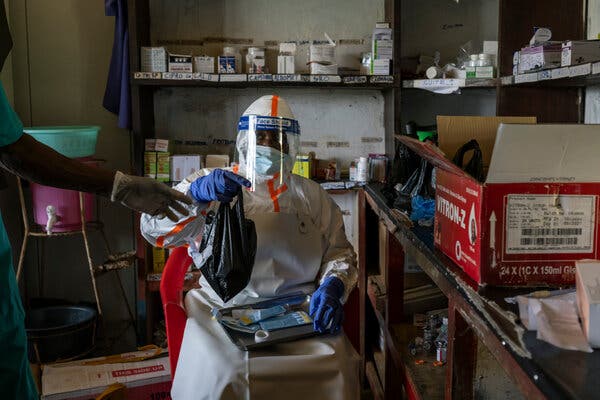
In the town of Mongbwalu, Democratic Republic of Congo, a health worker collects medication for patients suspected of having Bundibugyo virus. The virus has led to a significant outbreak, with at least 695 infections and 138 deaths recorded.
Trials have commenced on several drugs showing promise against the virus in preliminary studies. These efforts aim to address the need for specific treatments targeting Bundibugyo virus, which differs from the more commonly known Ebola virus.
Current Efforts to Treat Infected Patients
In Rwampara, an Ebola treatment center has been rapidly set up. Dr. Papys Lame and his team provide essential care, such as rehydration therapy, transfusions, and oxygen for those in distress. Monitoring vital signs like heart rate and blood pressure, they also manage severe pain in patients.
Dr. Lame, the Ebola response coordinator for the Alliance for International Medical Action in Congo, noted improvements in treatment options compared to past outbreaks. He states, “Today we have more options, and more people survive.” However, a specific treatment for the Bundibugyo virus remains elusive.
The Challenge of Developing Treatments
Unlike the well-researched Ebola virus, there are no approved treatments for Bundibugyo virus. Although the World Health Organization endorses two drugs for Ebola, these may not be effective against Bundibugyo due to significant evolutionary differences.
As scientists focus their efforts on developing effective treatments for Bundibugyo virus, the ongoing trials bring hope. Meanwhile, the commitment to patient care continues, as demonstrated by the healthcare workers’ dedication in Congo.
 Presley Gerber’s Death Highlights Concerns in Addiction Treatment Approaches
  MAHA Activists Challenge Trump and RFK Jr. on mRNA Vaccines
  Fraud Task Force Saves Billions by Targeting Obamacare Fraud
  Understanding VA Disability Benefits and Latest Legislative Developments
  Nationwide Recall of Pasta Products Due to Listeria Risk
  Vice President JD Vance’s Task Force Targets Fraudulent Enrollments in Health Care Program