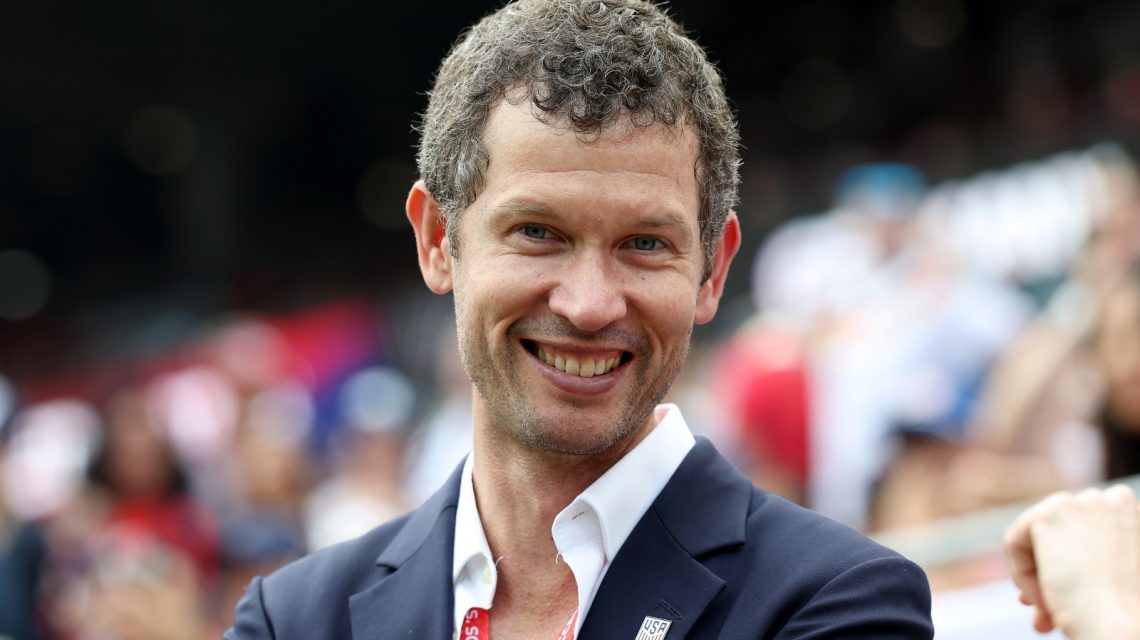
Sports often create unforgettable moments. You’ll likely remember the first game you saw or the triumph of your favorite team securing a major win. As the 2026 FIFA World Cup approaches, JT Batson, CEO and Secretary-General of the U.S. Soccer Federation, reflects on his early soccer memories.
Batson recalls, “My earliest memory was playing at the YMCA in Augusta, Georgia. The jerseys were not advanced in terms of technology, making for a hot experience under the Georgia sun. Our parents, who were more familiar with sports like baseball, football, and basketball, didn’t know much about soccer back then. Nevertheless, we were lucky to have players from Augusta College, now Augusta University, who had global experience in soccer, and became our coaches. This exposure to ‘real soccer’ was foundational for me.”
His participation in various sports like baseball, basketball, tennis, and golf eventually took a back seat to soccer. He says, “I stuck with soccer because I had better coaches, it was more enjoyable, and my friends played it as well. The impact of those coaches was substantial.”
A World Class Opportunity
With the United States co-hosting the World Cup with Canada and Mexico, the conversation about American soccer is evolving. U.S. Soccer aims for success not just on the field. Batson highlights making soccer accessible for millions more Americans as a priority.
The appeal of soccer lies in its simplicity; a ball is often all that’s needed for a game. However, other sports are more prominent in the U.S., often occupying public spaces and people’s interests. Batson notes, “Most parks have a basketball hoop, making basketball more accessible. Our Soccer Forward Foundation focuses on initiatives like Soccer at Schools in partnership with Bank of America, aiming to bring soccer to every U.S. school.”
The initiative, alongside ‘Places to Play,’ ensures children have access to safe places to play, whether in urban or suburban areas. Batson emphasizes, “Playing shouldn’t be limited to beautiful fields. It should happen on old tennis courts, blacktop surfaces, and high school gyms. Our teams now reflect America’s diversity, an achievement we’re proud of.”
Coaching’s Role in Soccer’s Growth
Coaching is pivotal in nurturing interest and skills in soccer, as evidenced by Batson’s own experience. U.S. Soccer’s responsibility for coaching education across America proves crucial. With offerings for all levels, from beginners to professional aspirations, the demand for quality coaching becomes clear.
Batson states, “We’re committed to investing in coaching education. For soccer to thrive, we need great coaches—this helps everyone feel included in the sport and paves the way for success.”
Addressing Access and Affordability
The 2026 World Cup raises concerns about access and affordability. Even with filled stadiums, not every fan can attend the matches. Batson discusses participation in FanFests and community events as ways to engage fans unable to attend in person.
“Most World Cup followers will watch on TV,” Batson says, highlighting efforts to enhance fan experiences outside the stadiums. The launch of new jerseys with Nike exemplifies reaching fans beyond ticket sales. He compares this effort to personal memories of watching the World Cup in 1990 with friends, underlying the essence of community through soccer.
Striving for On-Field Success
On-field success is imperative for U.S. Soccer. Winning matters, and it aligns with U.S. Soccer’s objectives. Preparing the men’s and women’s teams for success is crucial.
Batson emphasizes hiring top-notch coaches like Mauricio Pochettino and Emma Hayes. Their leadership and commitment to long-term goals reflect a strategic approach to nurturing and sustaining soccer in the U.S.
Defining Success for U.S. Soccer
Batson outlines what success means for U.S. Soccer at the World Cup. He asks if millions of Americans believe in and feel connected to the team. While setting attendance records is expected, he notes the real legacy will unfold over the next decade.
With increased participation, ongoing investment, and sustained success, the 2026 World Cup is poised to leave a lasting impact on U.S. soccer. It’s about more kids playing soccer and continued growth in the sport’s influence.
 Chicago Blackhawks’ Rookie Roman Kantserov Tackles Shortened Training Camp
  Owen Crouch’s Breakout Moment for Jacobs
  Impact of Storm Damage on Marian Catholic and Exciting Tournament Wins for St. Laurence
 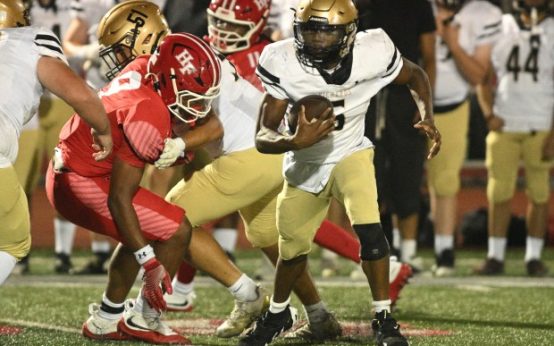 Football Season Midpoint Analysis and Playoff Outlook
 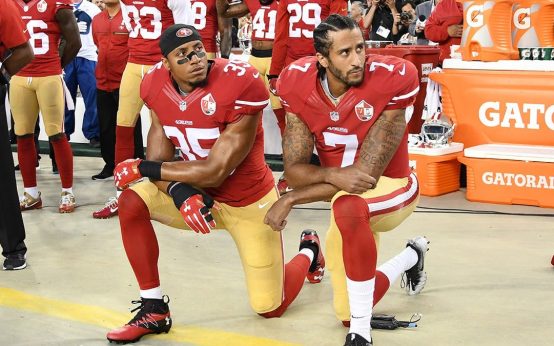 Colin Kaepernick’s Press Tour Raises Unasked Questions
 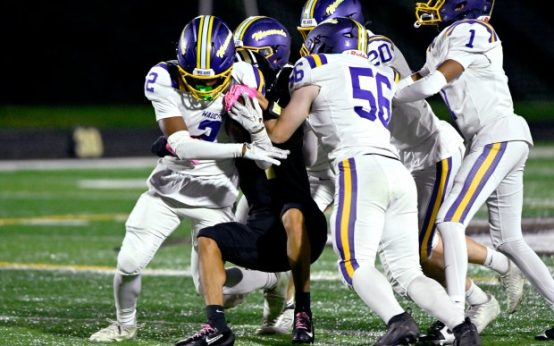 Jarren Cooley’s Journey from Sprinter to Football Starter