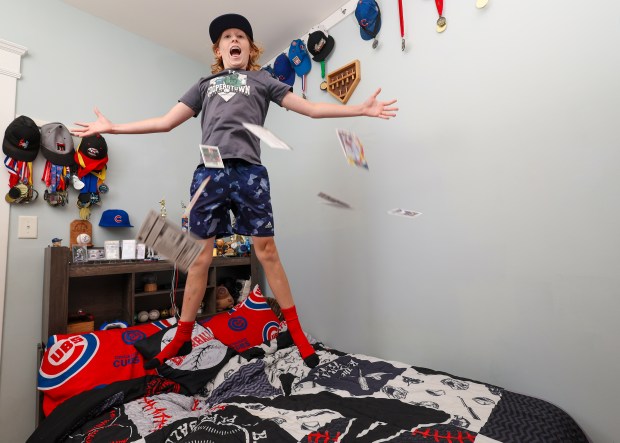
In Rosemont, young attendees dominate the National Sports Collectors Convention, a gathering famed for sports cards and memorabilia trading. These children, some as young as grade school students, handle inventories valued beyond the average adult’s earnings. Zach Grygier, a sports card dealer, notes the unusual power these young collectors wield, saying they could afford a house down payment even before obtaining a driver’s license.
Last week, the National Sports Collectors Convention made its 16th appearance in Chicago, drawing hundreds of dealers and tens of thousands of collectors for five days of intense trading. This event coincides with the industry’s predicted growth from $15 billion to over $50 billion within the next decade.
Ronnie Holloway, a collector with shops in North Center and Belmont Cragin, observed that the event attracted more young people than ever. Holloway attributes this surge to the pandemic, which he believes accelerated the industry’s spread. Today’s resurgence contrasts sharply with the ‘junk wax era’ of the 1990s, when overproduction diminished market value.
Companies like Fanatics and Panini have reignited interest by focusing on scarcity and autograph inserts. Recently, Topps announced the sale of a Shohei Ohtani autographed card for $11 million. The hobby now thrives both in physical stores and online platforms.
“The technology changed and kids changed with it,” Holloway said.
Young collectors navigate online marketplaces, track sales, and engage with livestreams where influencers unveil sealed boxes. At the convention, children like Cam Ruetz and JT Brown showcased collections worth tens of thousands or even millions of dollars.
Adolescent development experts are unsurprised that children readily adapt to this digital shift. Ellen Wartella, a professor emerita at Northwestern University, explained that kids are early technology adopters, embracing risks that adults might avoid.
One notable young collector, Nathan Massel, discovered lucrative opportunities during the pandemic by reselling sports card boxes and engaging in streaming.
Grygier, who founded CompKiller Sports Cards in 2022, highlights the market success stories as vital for young people in an unstable economy.
Despite their skills, some children overlook the risks associated with volatile card prices or scams. Michael Osacky, a memorabilia appraiser, warns of the potential dangers young collectors face.
“There’s a lot of hustlers out there, and it’s not an even playing field for kids,” Osacky said.
The stakes are high, and children can experience financial losses, such as when a prized rookie card’s value plummets after market shifts.
In this world of speculation, experts compare the hobby’s risks to those present in sports betting. Companies have transformed collecting from a simple hobby into a high-risk market, leading many children to chase profits obsessively.
Pizza Hut CEO Aaron Powell and Curtis Granderson appeared at the convention to engage young collectors. Educational initiatives like the Youth Collectors Card Initiative attempt to instill responsible collecting practices.
Educators like Samuel Evans aim to teach the financial literacy skills necessary for navigating this industry. Experiences within the trading card world provide real-world lessons in entrepreneurship and finance that formal education often overlooks.
The convention offers children exposure to high-value memorabilia, inspiring both awe and ambition among young attendees. Through initiatives, organizers hope to foster a responsible appreciation for the hobby, avoiding pitfalls inherent in speculative trading.
 Exploring the Lucas Museum of Narrative Art
  Converse Apologizes and Withdraws Controversial Ad Amid Criticism
  Lucas Museum of Narrative Art Unveils in Los Angeles
  Lonnie G. Bunch III Reflects on His Legacy at the Smithsonian
  A Decade of Impact at the National Museum of African American History and Culture
  Urgent Archaeological Efforts in Quinhagak Stay Ahead of Erosion