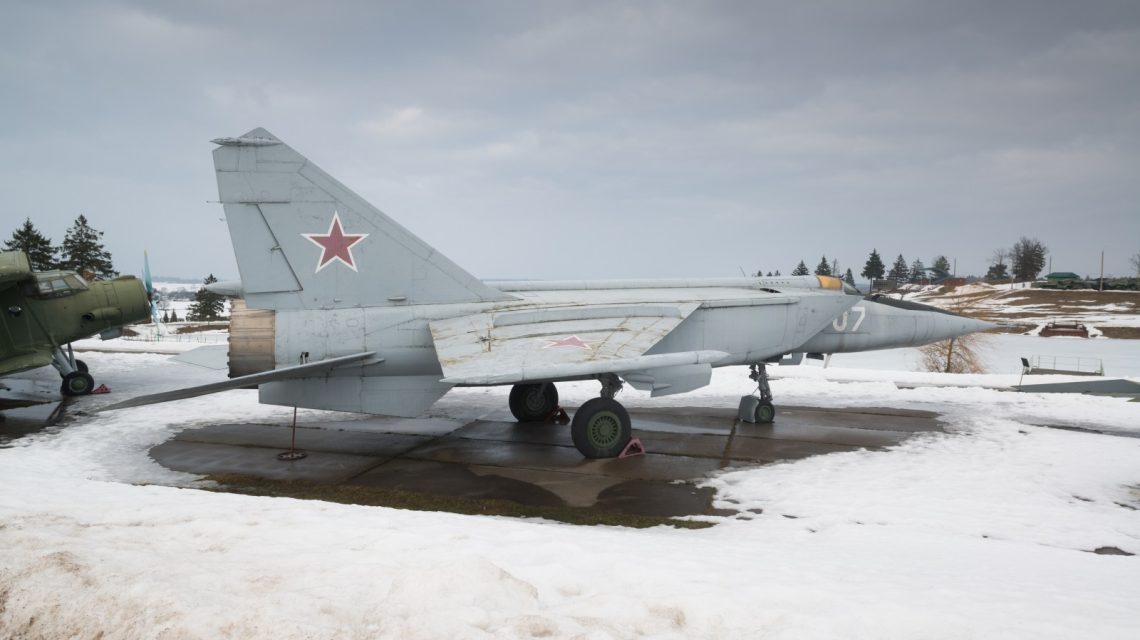
Fifty years ago, Soviet pilot Viktor Belenko made a historic decision. On September 6, 1976, during a routine training mission, he diverted his MiG-25 Foxbat to Japan, narrowly landing with minimal fuel. His daring defection became a significant intelligence win for the United States.
Belenko’s move granted America insights into Soviet military technology. His request for asylum was fulfilled, and he later gained U.S. citizenship, contributing to American industry and retiring peacefully.
Today, Russian President Vladimir Putin faces challenges of his own, with several key figures defecting since the invasion of Ukraine. Though no one has defected through such a spectacular means as a top-secret fighter jet, notable defections have occurred.
High-Profile Defections
Anatoly Chubais, an architect of Russia’s economic reform, resigned and relocated to Israel, establishing the Center for Russian Studies in Tel Aviv. His departure marks significant loss of experience for Russia.
Gleb Karakulov, once part of Russia’s Federal Protective Service, defected after 180 trips with top officials. His revelations about Putin’s security practices were eye-opening.
Miroslav Simonov, a part of an elite Russian drone unit, utilized a Ukrainian initiative to defect. His insights shed light on Russia’s drone operations.
Incentives for New Defectors
The Ukrainian government offers substantial rewards for defectors bringing military hardware. Kyiv’s law promises $1 million for a combat aircraft and $500,000 for a helicopter. New identity documents and safe residence are also on offer.
In August 2023, pilot Maksym Kuzminov flew a Russian helicopter to Ukraine. While not the most advanced, the helicopter still provided valuable intelligence.
Kuzminov met a tragic end in Spain, his body found riddled with bullets. His death sends a dire warning to potential defectors.
Barriers to Defection
The Russian legal system imposes severe penalties for defection, with desertion or surrender carrying substantial prison terms. Gleb Karakulov’s colleague, Mikhail Zhilin, learned this when deported from Kazakhstan, now serving time in Russia.
Despite technology or secrets not always accompanying defectors, the number of emigrations represents a challenge for the Kremlin. In September 2022, 66,000 Russians entered the EU, demonstrating a marked increase in migration.
Analyses indicate over 650,000 Russians have left, many being young and educated. They are skilled workers from IT, culture, and science sectors, highlighting a brain drain in Russia.
Viktor Belenko gave the West valuable insights without facing retribution. It remains uncertain if contemporary defectors will achieve similar outcomes. However, their departures add continuous strain on the Russian state.
 U.S. Strategic Goals Remain Unmet Amid Prolonged Conflict
  New Photos Reveal Damage from Iranian Strikes in the Middle East
  Assassin of Chilean Diplomat Orlando Letelier Faces Deportation 50 Years After Assassination
  Gorillaz and Macklemore Respond to Controversy Over Israel-Palestine Statements
  Investigation into Lion Deaths in Tanzania
  Merz Stays Resolute Amid Electoral Shifts in Germany