When Americans defend free markets, they focus on real-world outcomes and refer to economists. In contrast, when radicals defend communism, they often overlook history and ignore those who experienced it personally.
The omission is intentional. Survivors of communist regimes challenge the ideology as they reveal its real effects. These individuals know what occurs when the government gains the control it claims is for the public benefit.
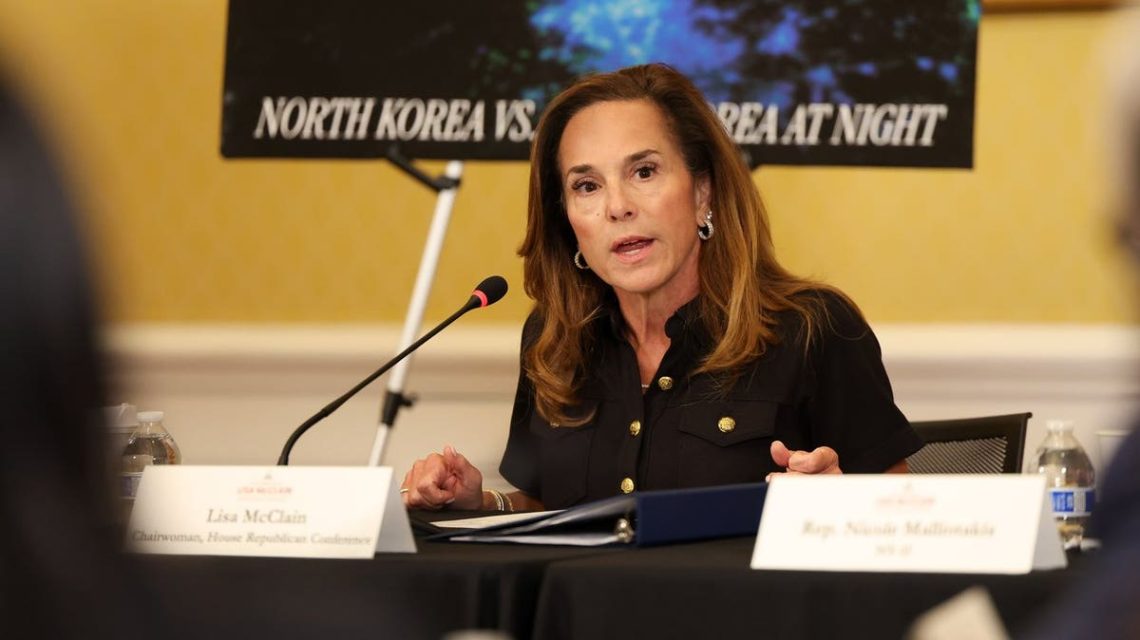
Recently, survivors from communist regimes gathered at the Capitol to share their stories. They came from countries such as Cuba, Venezuela, the Soviet Union, and China. While one survivor endured torture in prison, another witnessed empty grocery shelves as their community crumbled. Some saw schools become tools for indoctrination, and churches treated as adversaries of the state.
José Daniel Ferrer spent over 12 years in Cuban prisons. He endured both physical and psychological torture and watched fellow citizens die from similar abuse and malnutrition he suffered. He understands the deception used by communists, which enabled these prisons.
Ferrer described these communists as “scam artists.” Leaders such as Fidel Castro and Hugo Chávez initially denied communist intentions until they consolidated power.
For example, Castro disguised his true intentions while gaining power. Similarly, Chávez positioned himself as a democratic reformer before transforming Venezuela into an authoritarian state. This deception continues with American politicians who claim the label of “Democratic Socialists.” They point to differences from communism while embracing a concentration of economic and political power characteristic of communist movements.
Communism advocates often excuse the failures experienced by witnesses like Ferrer. They cite factors such as sanctions, corruption, foreign interference, or the betrayal of an otherwise noble idea. Their theory remains innocent, while the people who suffered claim false experiences.
Daniel Di Martino’s family in Venezuela faced similar deception. Prior to the Bolivarian Revolution, they enjoyed a stable middle-class life. The promises vanished, leading to empty shelves and government rationing. Milk and meat became scarce, and the government limited shopping days, requiring fingerprint scans to restrict purchases.
Di Martino emphasizes how communism disrupts free enterprise. The state controls food, employment, and housing, stripping citizens of the ability to provide for themselves without bureaucratic approval. There is no need to imprison every dissident; the state can seize income, homes, or meals. Reliance on the state for sustenance makes individuals subject to the whims of their captors.
Communism also targets belief systems and independent thought. Mike Gonzalez, recalling his childhood in 1970s Cuba, shared that he faced harassment for attending church and pressure to join communist youth organizations. As a result, faith, family, and national traditions remind people that the state isn’t the ultimate truth or devotion target.
Communists view religious freedom as a threat that hampers their totalitarian control. They attack independent institutions demonstrating loyalty beyond state power. This is why they disparage national history, culture, and traditions, promoting the destruction of institutions as liberating acts.
Pastor Ezra Jin experienced firsthand the regime’s hostility when faith conflicted with state doctrine. Arrested in China alongside other church leaders, Jin’s experience highlights the lack of protection offered by constitutional rights under a regime dismissing any authority superseding itself.
Regardless of the Marxist label, each ideology follows the same blueprint. They aim to undermine institutions that restrict their authority by controlling economic freedom, education, religion, and public speech. Defenders of communism prefer abstract notions, while survivors recount tangible suffering, from prison cells to emptied stores, destroyed businesses, and childhoods clouded by fear.
It is crucial to approach politicians labeling themselves as “Democratic Socialists” with skepticism. Before accepting their promises, listen to those who lived under leaders making similar claims.
 Facing the Reality of U.S. National Debt
  Ari Emanuel: A Hollywood Insider’s Journey
  Reader Reactions on Grizzlies and Data Centers
  Embracing Change: Navigating Political Shifts and Biases
  The Debate on ‘Fair Share’ in Taxes
  Diversity at Football Games Should Be Celebrated, Not Criticized