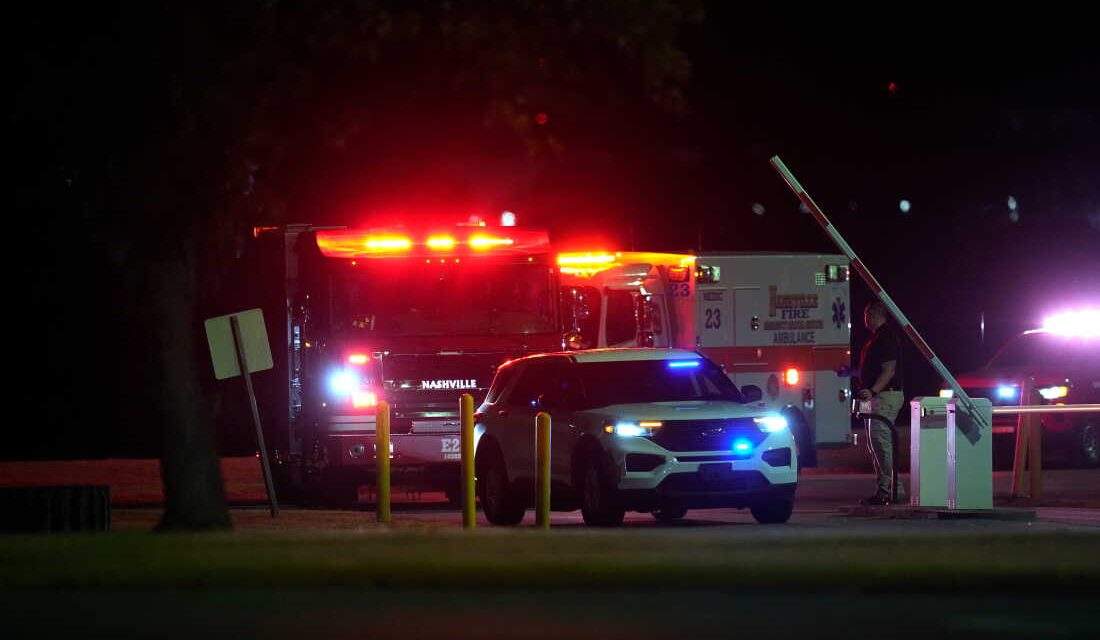
An unexpected turn of events unfolded at Riverbend Maximum Security Institution in Nashville, Tennessee, when the execution of Christa Gail Pike was halted. Scheduled to face death for a 1995 murder, Pike’s execution was disrupted after two doses of a lethal drug were administered.
Tennessee Governor Bill Lee announced the cessation of further executions for 2026. He called for an in-depth, independent review to uncover the circumstances surrounding the incident. Pike, alive and snoring loudly, was taken to a hospital, raising questions about her condition. She was due to be the first woman executed in Tennessee in over 200 years.
An appeals court had initially halted the lethal injection an hour before the scheduled execution at 10 a.m., but the U.S. Supreme Court later overturned the stay. Pike’s attorneys revealed in court filings that officials administered two doses of pentobarbital.
Governor Lee emphasized the state’s obligation in executing lawful sentences, stressing the necessity for both legality and effectiveness. The Tennessee Department of Correction stated adherence to approved protocols, which include a secondary set of drug syringes if the initial set is ineffective. However, details on actions if the inmate remains alive after the second set are not specified.
“What Pike experienced is singular and unparalleled,” stated Robin M. Maher, Death Penalty Information Center’s Executive Director.
Similar problems have seen executions halted due to vein access issues, but Pike’s case stands out as drugs were administered yet she survived. Kathleen Walter, opposed to the death penalty, prayed outside the institution amid the stirring developments.
Media witnesses described the scene as curtains revealed Pike strapped to a gurney. Despite her words of being at peace, Pike voiced discomfort and raised her head. The second dose was given by 8:26 p.m., yet she continued snoring until the curtains closed at 8:53 p.m., ending media observations.
Pike’s attorneys swiftly petitioned the Tennessee Supreme Court to halt the execution, citing unnecessary agony and violation of her constitutional rights against cruel punishment. Previous issues with the execution process were noted, as earlier this year, Tony Carruthers’ execution was called off due to IV insertion failures.
Pike’s crime holds a grim history marked by the 1995 murder of Colleen Slemmer, involving a pentagram carving and fears of Satan worship. Initially scheduled for execution in the morning, witnesses awaited closure as a stay was eventually appealed by the attorney general’s office.
The Supreme Court allowed the process to proceed, despite dissent from its liberal members who favored reviewing Pike’s claims further. Pike acknowledged her guilt, with supporters urging consideration of her age, mental health, and abuse history.
An ongoing debate on executing young offenders resurfaced, fueled by Assistant Federal Defender Stephen Ferrell who labeled Pike’s case an exception. In her clemency plea, Pike shared regrets over her inability to stop during the crime, revealing years of realization.
May Martinez, mother of victim Slemmer, sought justice and felt the crime’s impact deeply, longing to see Pike’s execution fulfilled. Prosecutors recounted Pike’s violent acts, driven by jealousy, detailing her brutal assault on Slemmer.
Executions of women remain rare since the death penalty’s 1976 reinstatement. Pike stood poised to be the 30th American executed this year. Tennessee switched to single-drug execution using pentobarbital after issues surfaced with previous drug series protocol.
 Execution Set for Christa Pike After Supreme Court Lifts Delay
  DOJ Investigates Former Trump Aide Cassidy Hutchinson Amid Defamation Case
  Legal Proceedings in Lindsay Clancy Case
  Judge Rules in Favor of Wone Estate in Wrongful-Death Settlement
  Court to Consider Criminal Contempt Inquiry into Trump Administration Deportation Actions
  Texas Man Accused of Murder Faces Extradition Challenges