
McKenna West, a surrogate from Alaska, has taken her legal battle to the U.S. Supreme Court after a lower court ruled in favor of a California couple claiming legal parentage of a medically fragile newborn. West’s attorneys filed an emergency application asking Justice Elena Kagan to temporarily halt the Los Angeles court ruling.
West, a cardiac nurse, carried the child under a surrogacy agreement with Nausheen Gilkar and Omar Ahmed. Detected with hypoplastic left heart syndrome (HLHS) in a 20-week ultrasound, the condition prompted the couple to request an abortion according to their agreement’s terms for serious fetal abnormalities. West, however, refused to terminate the pregnancy, offering alternatives like raising the child herself or facilitating adoption.
After West fled to Texas, she claimed attempts to continue the pregnancy could result in significant financial penalties. Meanwhile, the California court established Gilkar and Ahmed as the baby’s legal parents while West’s appeal to maintain jurisdiction in Alaska failed. A subsequent Texas ruling enforced life-saving medical intervention for the baby, born in Texas on August 12.
Despite three rejections from state courts, West insists she was not properly served, arguing that the case should not have been settled in California. She contends that addressing court issues doesn’t imply consent to its authority.
Gilkar and Ahmed, who call the baby ‘Rumi,’ remained present during the baby’s first of three open-heart surgeries and accuse West of opposing their parental rights. They stress their commitment to the child’s healthcare needs, accusing West of fighting to take their son away.
West, now excluded from any decisions regarding the child, plans to end her custody pursuit if it is shown Gilkar and Ahmed are dedicated to life-saving care. Nevertheless, a recent Texas judge’s decision backed the California ruling, effectively removing West from the legal process.
West’s legal team is now appealing to the Supreme Court, questioning whether a challenge to a court’s jurisdiction can equate to consent. They argue for intervention, suggesting that without it, West will lose any voice in the child’s ongoing treatment and condition updates.
The application warns that relief offered too late could result in protection coming after the child has passed. The case highlights broader constitutional implications about jurisdiction and parental rights, awaiting further attention from the Supreme Court.
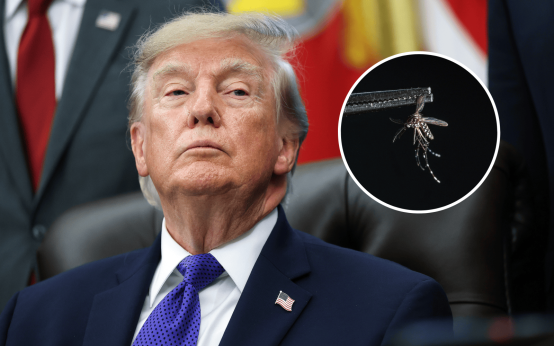 Trump’s Executive Order Targets Mosquito and Tick Control
  Efforts to Restrict Voter Registration Funding Trigger Concerns for Nonprofits
  News Outlets Fight White House Ban in Federal Court
  Michigan Senate Candidate Questions Football’s Ethics and Safety
  The Department of Homeland Security Urges Migrant Caravan to Avoid U.S. Border
  Kentucky Trooper’s Murder Sparks Manhunt and Mourning