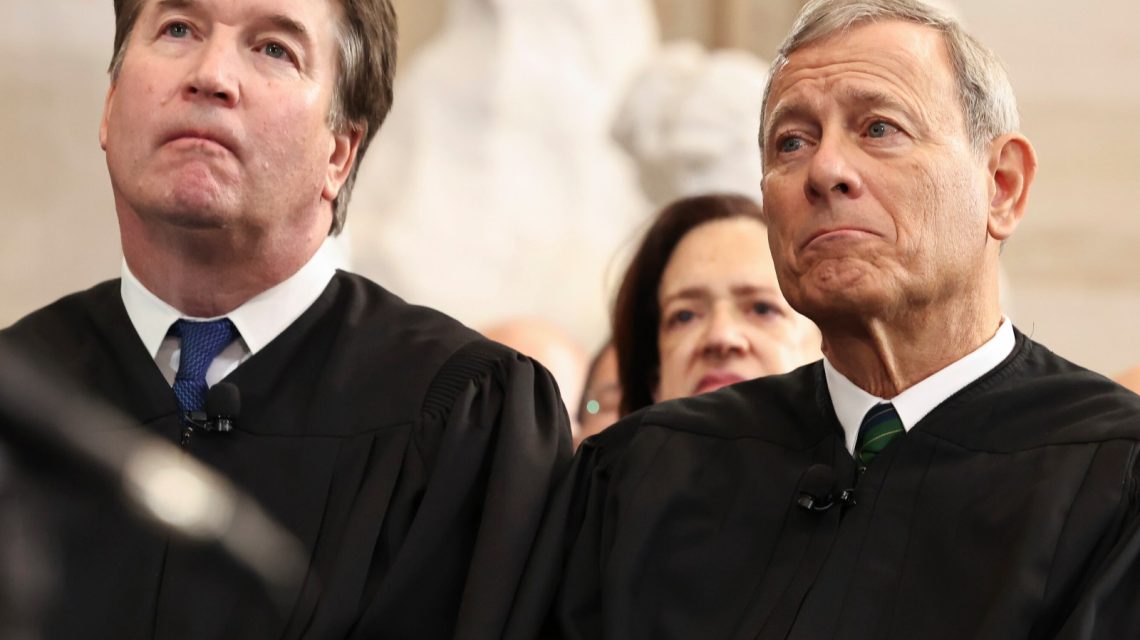
The Supreme Court has allowed Terry Pitchford, a Black death row inmate from Mississippi, to pursue new challenges to his conviction in a decision that split the typically conservative court. Chief Justice John Roberts and Justice Brett Kavanaugh joined the liberal justices, resulting in a 5-4 ruling.
This decision underscores differences within the court on addressing racial bias during jury selection. It reaffirms the prohibition against racial discrimination of Black jurors, reopening a long-standing legal battle. Pitchford’s case will return to lower courts for reconsideration of his conviction and death sentence.
“Mr. Pitchford is now entitled to a fair trial in the state court,” Joseph Perkovich, who represented Pitchford in the Supreme Court, said to the Associated Press.
A Fractured Conservative Block Over Racial Bias
The central issue was the conduct during Pitchford’s 2006 trial for the murder of Reuben Britt. Prosecutors were accused of improperly excluding Black jurors, resulting in a jury with only one Black member. Defense attorneys argued that these strikes were racially motivated.
The court referenced its 1986 decision in Batson v. Kentucky, which prevents excluding jurors based on race and demands scrutiny of prosecutors’ reasons for juror strikes. Pitchford’s lawyers claimed they lacked a meaningful chance to argue against the prosecutors’ justifications, a view supported by a federal judge in 2023 who overturned Pitchford’s conviction. However, this ruling was reversed by the 5th U.S. Circuit Court of Appeals.
The Supreme Court’s decision challenges the 5th Circuit’s reasoning, allowing reconsideration of Pitchford’s claims. Justice Kavanaugh, writing for the majority, noted Pitchford’s counsel was not given a fair opportunity to rebut the race-neutral reasons of the prosecution. He acknowledged failures in the trial process regarding Batson claims.
In dissent, Justice Neil Gorsuch argued that the prosecution presented legitimate reasons for juror exclusions, criticizing the majority’s treatment of those explanations. He highlighted issues with prospective jurors, such as late arrivals and connections to violent offenders.
Return of Doug Evans and the Shadow of Flowers v. Mississippi
This case resembles Flowers v. Mississippi from 2019, where the Supreme Court overturned a conviction due to racial bias, involving the same prosecutor, Doug Evans. Justice Kavanaugh described Evans’ efforts as persistently seeking to exclude Black jurors.
Pitchford’s trial judge, Joseph Loper, presided over both cases, with similar criticisms about racial discrimination during jury selection.
Who is Terry Pitchford?
Terry Pitchford was 18 when he participated in a 2004 robbery leading to Britt’s death. His accomplice, who was not eligible for the death penalty, fired the fatal shots. Pitchford was convicted and sentenced to death in 2006. His appeals have centered on perceived racial bias affecting his jury selection.
Pitchford remains on death row, contesting his conviction based on alleged constitutional violations. His case highlights broader patterns in Mississippi involving racial bias accusations. The Supreme Court’s intervention reflects the need for comprehensive evaluation of such claims.
This article includes information from the Associated Press.
 Texas Man Accused of Murder Faces Extradition Challenges
  Federal Judge Orders Return of Deported Teen Asylum Seeker
  Spotlight on Grieving Father in Lindsay Clancy Case
  Veteran Customs Agent Found Guilty of Attacks on Sex Workers
  Juror in Lindsay Clancy Case Retains High-Profile Lawyer
  Florida Plastic Surgeon Faces Trial for Allegedly Murdering Attorney