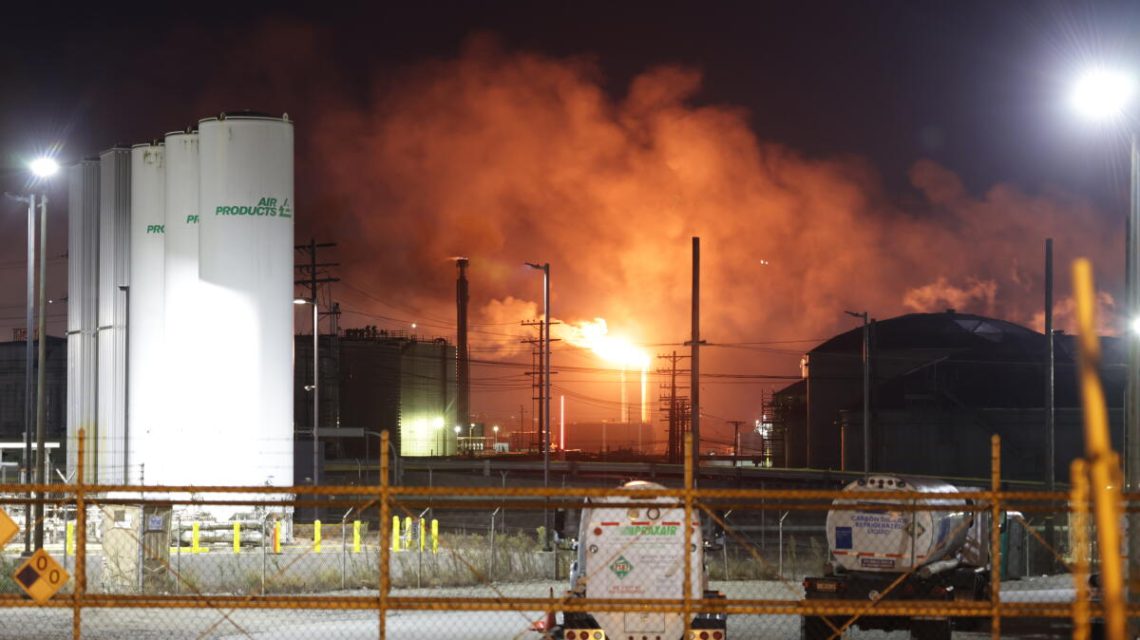
The Supreme Court is set to begin its new term, tackling significant issues related to climate change and immigration policy. The court will hear arguments to decide if the oil and gas industry could be held liable for damage linked to climate change, including extreme weather events. This decision follows nearly ten years of judicial delays and could potentially be postponed again.
In 2023, California joined more than twenty states and municipalities in a lawsuit against five major oil companies. The accusations include decades of misinformation on climate risks aimed at maximizing profits. Such climate lawsuits have drawn parallels to those targeting the tobacco and opioid industries, both accused of hiding the risks of their products.
Climate-related lawsuits have faced hurdles. Judges question whether these claims should be addressed in federal or state courts, and under which legal framework. Boulder County, Colorado won a state Supreme Court ruling allowing its 2018 lawsuit to proceed, based on common law claims like public nuisance and civil conspiracy. The Colorado judges stated that such claims aren’t preempted by federal laws, which focus on pollution control.
Opposing views highlight concerns about state courts independently influencing national energy policy. Oil companies argue that states shouldn’t impose liability on energy providers. They’re backed by the previous US administration, which warns against states unilaterally addressing global issues like climate change.
Legal experts challenge the industry’s reliance on federal law for protection from state-level suits. They argue that neither the Constitution nor the Clean Air Act offers immunity from liability for climate damage. Nonetheless, there are concerns about the broad interpretation of public nuisance claims regarding energy products and global pollution.
Justice Samuel Alito has withdrawn from the climate case due to potential conflicts of interest, adding uncertainty to potential court decisions. A decisive ruling favoring Boulder could advance climate suits in state courts. Conversely, a ruling shielding oil companies might halt active lawsuits, including California’s.
The court might not decide on the merits due to procedural questions about jurisdiction and a lack of a final ruling in Boulder’s case. Without Alito, the court could reach a 4-4 tie, leaving Boulder’s initial victory intact but not establishing a precedent.
In its new term, the court will also address immigration issues. The Trump administration’s policies are under review in two cases. One case assesses the denial of bond hearings for certain undocumented immigrants. Previously, bond hearings were typically offered to avoid indefinite detention of non-criminal immigrants.
An enforcement provision from a 1996 law has become central, stating that people entering the US illegally “shall be detained.” This provision was previously applied to those arrested near borders.
Another case involves deportation to third countries, even when the original country of origin isn’t an option. Critics label this practice as inhumane, noting instances where deportees face peril in assigned countries. Despite government assurances against abuse, legal hearings for individuals are denied.
Judge Brian Murphy ruling in Boston advocated for deportees’ rights to meaningful notice about their destination and the chance to challenge deportation when fearing persecution. The Supreme Court is expected to hear arguments on adequate legal measures in these cases.
Additionally, the Supreme Court will examine gun rights concerning semiautomatic rifles like the AR-15. California and other states have adopted bans, largely in reaction to mass shootings. Gun rights proponents argue that such weapons should be permitted nationwide under the 2nd Amendment.
After years of reviewing the issue, the court will engage with 2nd Amendment challenges brought by Cook County, Ill., and Connecticut. The ruling could influence gun regulations nationwide.