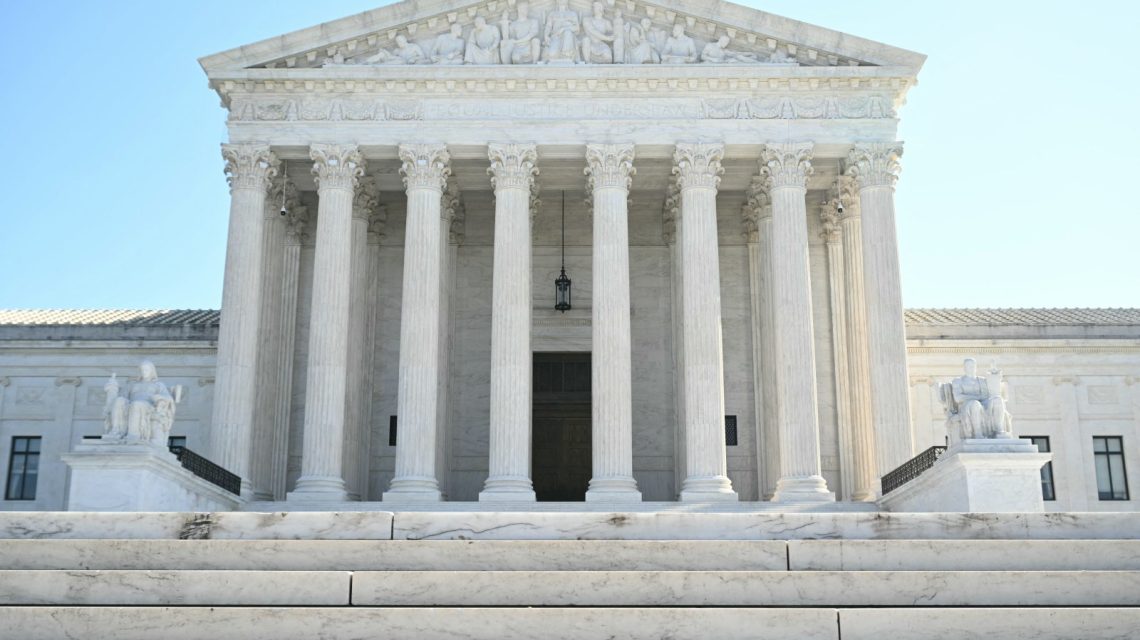
The Supreme Court granted the Trump administration a win in a dispute concerning political advertising rates. In FCC v. Brown, the court blocked a Fourth Circuit ruling that required the Federal Communications Commission (FCC) to act rapidly on a challenge to its advertising policy. The FCC’s rules dictate that broadcasters must offer favorable rates during the lead-up to an election.
Four Democratic candidates, Sherrod Brown, Jon Ossoff, Roy Cooper, and Kristen McDonald Rivet, contested the FCC’s guidance. This guidance extended discounted rates not only to candidates but also to political parties and joint fundraising committees involved in coordinated activities. The Supreme Court criticized the Fourth Circuit for demanding an expedited decision, noting that federal law requires the FCC to review applications without imposing a strict deadline.
Justices Sonia Sotomayor and Ketanji Brown Jackson dissented, arguing against the stay. The court’s decision means the FCC is not obligated to resolve the dispute hastily.
Federal law grants political candidates access to a broadcaster’s “lowest unit charge” during the 45 days before a primary and 60 days before a general election. In March, the FCC expanded this benefit to include political parties and joint fundraising committees.
Brown, Ossoff, Cooper, and McDonald Rivet believe this interpretation favored parties disproportionately. Their legal team called for a review by the entire FCC. The Fourth Circuit initially sided with this perspective but was stayed by the Supreme Court.
Supreme Court’s Rationale
The Supreme Court intervened twice in the matter. Initially, it stayed a Fourth Circuit ruling, insisting that the FCC’s full review was necessary before court action. A month later, the Fourth Circuit ordered a rapid decision by the FCC. The court again intervened, denouncing the circuit’s interference in the FCC’s decision-making process.
According to the Supreme Court, forced rapid decision-making undermines the separation of powers. The court acknowledged potential harm to the FCC’s procedures if forced to act prematurely.
While Sotomayor and Jackson would have allowed the Fourth Circuit’s order, no written dissent was provided. The stay holds while Supreme Court review is pending. If the justices decline further involvement, the stay ends automatically.
Implications for Midterm Elections
As the midterm elections approach, the FCC’s interpretation stays effective, allowing discounted rates for political parties and fundraising committees. This ruling impacts multiple political entities, with Republican groups supporting the FCC’s stance.
The case does not solve whether these groups legally rate discounts. The main focus of the ruling was on if the Fourth Circuit could demand swift processing by the FCC, leaving broader implications unresolved.
 The States Project Surpasses Fundraising Goals
 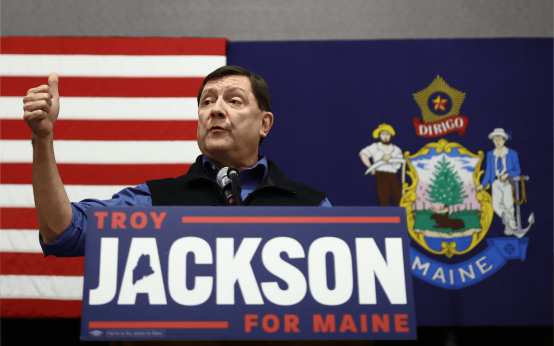 Scrutiny on Relationship in Maine Senate Race
  Democrat Scott Colom Challenges Senator Hyde-Smith in Mississippi Race
 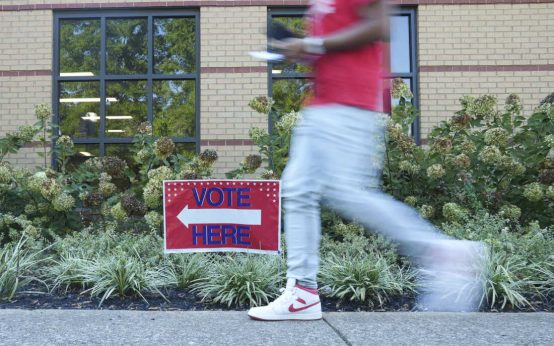 Voters Express Frustration with Trump Ahead of Midterms
  Livestreamed Execution Sparks Debate on Religious and Ethical Grounds
  Judge Orders Trump Administration to Initiate 2027 Diversity Visa Lottery