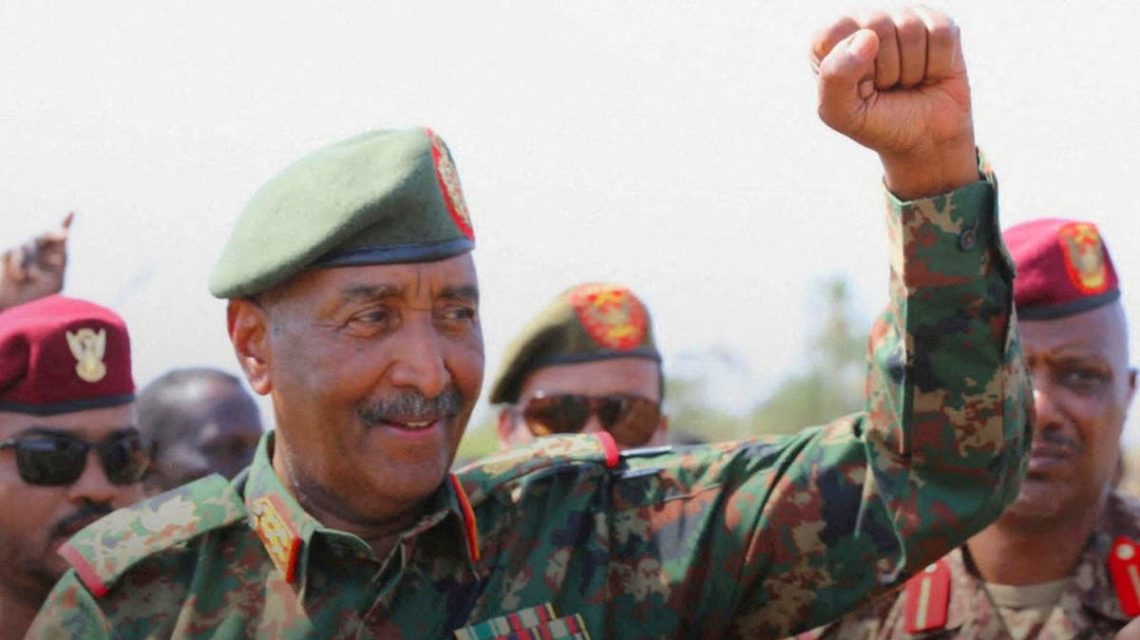
UNITED NATIONS — Sudan’s military leader, Gen. Abdel Fattah al-Burhan, defies a U.S.-backed ceasefire initiative after his visa was withheld for the U.N. General Assembly. The move highlights a deepening rift about a war marked as a major humanitarian disaster and a regional power struggle.
Burhan, head of Sudan’s armed forces, had planned to attend the UNGA in New York but faced visa denial over a proposed 90-day humanitarian truce. He responded defiantly in Khartoum.We will keep our heads high. We will not accept bargaining, sell ourselves cheaply to anyone or bow to anyone. We do not need a visa to any country or anyone’s permission,
Burhan declared on Saturday, cited by Anadolu Agency.
The State Department criticized both Burhan’s Sudanese Armed Forces (SAF) and the rival Rapid Support Forces (RSF) for failing to seriously commit to an immediate truce.
Spokesman Tommy Pigott remarked on Sept. 22 that neither faction represents legitimate governance for Sudan, disqualifying them from governing the country.
The U.S. has urged both sides to cease combat operations and drone strikes killing civilians, seeking their commitment to an inclusive dialogue leading to civilian government.
A senior advisor to Burhan, Dr. Amjad Farid Al-Tayyib, disputed U.S. claims during an interview, stating Sudan did not reject the ceasefire proposal but submitted comments on it.
We never rejected this proposal. The Sudanese government wants war with no one,
Farid claimed. He said a negotiating team aimed to join Burhan and criticized Washington for hampering diplomacy.
The State Department did not comment on Burhan’s visa, focusing on wider diplomatic efforts with Egypt, Saudi Arabia, and the UAE through the Quad. This initiative seeks linking humanitarian aid to a permanent ceasefire and civilian transition.
Burhan’s advisor accused the U.N. and Western governments of false equivalence between Sudan’s military and RSF.
U.N. Secretary-General spokesman Stéphane Dujarric acknowledged denying Burhan’s visa and emphasized neutrality in the conflict. He outlined severe violations committed by RSF in Darfur, including mass killings and sexual violence.
Cameron Hudson, a former African affairs director, stated the RSF commits egregious war crimes unlike any by SAF. He specified mass rape, killings, and torture among RSF acts.
U.N. reports find both SAF and RSF responsible for attacks on civilians, yet they distinguish RSF as responsible for crimes against humanity.
Hudson highlighted RSF ties to foreign financial networks and SAF’s backing from nations like Egypt and Turkey. The UK assessment links external support from various countries to the ongoing conflict, stressing foreign actors as prolonging the fighting.
Hudson critiqued Washington’s pressure approaches and urged direct diplomatic engagement to increase trust and progress toward peace.
Secretary of State Marco Rubio echoed frustration, saying external actors sustain the war by supporting factions.
Rubio warned that meaningful progress requires states pressuring proxies to honor commitments.
Sudan’s strategic value is underscored by its rich resources, including gold and agricultural potential. Conflict extends to its Red Sea coastline, drawing regional competition.
Hudson argues Washington needs more personal diplomacy in Sudan, less reliance on public statements.
Effie Lachter reports Sudan’s war has displaced millions, causing severe humanitarian challenges in the region.
 The Department of Homeland Security Urges Migrant Caravan to Avoid U.S. Border
  Adam Brody’s Discussion on Political Activism and Israel-Palestine Conflict
  A Test of Leadership in Global Crises
  Investigators Uncover New Evidence in Missing Women Case Linked to Philadelphia Home
  WFP’s Challenge in Global Hunger Amid Conflict and Climate Change
  Counterpressure as the Key to Russia’s Retraction